Take three brilliant young female photographers in the GDR in the 1980s. All are desperate for artistic freedom. All are running up against a brutal political system. The Stasi secret police are monitoring and harassing them.
Tina Bara, Cornelia Schleime and Gabriele Stötzer, the artists in question, are the subjects of Pamela Meyer-Arndt’s new feature documentary Rebels, screening as a world premiere in DOK Leipzig’s Competition for the Audience Award this week.
The project started with Tina Bara, whom the director already knew. “I always wanted to do something about her work, especially about the series she did from the end of the 1970s to 1983,” Meyer-Arndt explains. She then tracked down Schleime and Stötzer.
“Three I am very, very happy with. I think it is the ideal choice,” she says of her trio of protagonists, although she acknowledges there were others whose stories could equally well have been told.
Bara was “a little bit shy” and took some convincing to appear in the documentary. Schleime was also hesitant initially. At first, she didn’t want to steep herself in the bad old days of the GDR. However, she had recently recovered pictures she thought she had lost forever, and was keen that her work would be acknowledged. Stötzer, meanwhile, was enthusiastic from the outset.
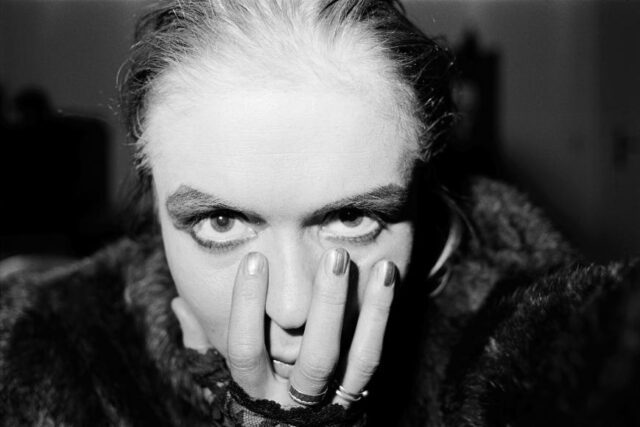
The women have extraordinary stories to tell. Western curators and critics who look at their art don’t always realise its painfully autobiographical roots. Their pictures of women tied by their hair or wrapped in foil or with bags over their heads weren’t just abstract and conceptual but were referring directly to their own suffering.
“It takes a little bit of time to understand the art – and it takes a little bit of interest,” the director suggests. “For me, what is essential is the longing for freedom. I personally am very interested in that.”
The three photographers were living and working in a society in which their most basic freedoms was severely curbed. “They were really young women, beautiful and full of light but kept down by the system.”
It wasn’t unusual for them to be taken away by the Stasi, interrogated for hours on end, intimidated or even locked up. “Their lives were being destroyed…I think that is just a crime really. That is what I try to express in this film, also with the photographs of them being young.”
These were artists in the darkest situation imaginable and yet they were able to keep on creating, often using humour as a tool. “They were independent from each other. They all did it for themselves,” the director says. “Getting to your own personality, your own identity by fighting for your freedom, that is something that intrigues me a lot.”
These days, there has been a strange nostalgia for the old East Germany in sections of the western media. TV shows like Deutschland 83 and films like The Lives Of Others have exposed the dark side of the GDR but have also made the country seem mysterious and even strangely alluring. That’s not how the three photographers regarded their time in East Germany. They were in “a very dark situation.”
Meyer-Arndt acknowledges that the world of the GDR “has a certain attraction” in pop culture but also points to the extreme suffering of the artists.
“They have been traumatised and are still struggling a lot. It was a nightmare for them. They are still hurt. There is no cosy kind of remembering mode,” Meyer-Arndt suggests. “They’re not at all at ease. It is still difficult for them to speak about it [what happened in the GDR]. Sometimes, we had to stop our shooting and I had to get out and take a breath and sit down. If somebody speaks about a trauma, you feel it physi
cally. The film crew, we could feel it. We were drained. It was just an hour of talk but it felt like a marathon.”
Some of the stories the women tell are astonishing. For example, Gabriele explains how a Stasi informant used a transvestite as bait to try to get her arrested for taking pornographic pictures.
Meyer-Arndt talks of the “sarcastic, ironic and aggressive way” in which the women would turn the table on the Stasi informants who preyed on them. One walked up and down past the informant’s house with a pram tied to her hair. “I was amazed and amused by it. You have never seen something like that before. This underground women’s art hasn’t been recognised properly.”
The photographers suffered in their lives but had an intense focus in their art. Now, following the collapse of the GDR, they are “still looking for the right way to deal with this freedom that is suddenly there.” They started their careers in an atmosphere of repression and intimidation. Now, they do what they want.
“Cornelia Schleime makes wonderful paintings and she is a very successful artist. Tina Bara is a professor of photography. She works with students nowadays. Gabriele Stötzer discovered her work from the GDR which is now being sold in New York for very high prices, so she is busy with that,” the director explains the turns the three women’s professional lives have now taken.
Rebels was made through Berlin-based Medea Film Factory. “They were completely open. What I really loved was that they said, ‘let’s do a film for cinema.’” Meyer-Arndt says of her producers. “I told them it’s more than just TV.”
Meyer-Arndt is delighted that the screenings of Rebels at DOK Leipzig all quickly sold out.
So why has the film caught the public’s imagination? “It’s a true view into the past. It is a discovery and it’s [about] authentic female existence…a very inside view and a very true view of the female side [of life in the GDR],” she ends.