The astute, elegant and insightful observational gaze of Austrian documentary-maker Nikolaus Geyrhalter is focussed on Covid-1 and lockdown in his new film The Standstill (Stillstand). The documentary offers a haunting and thoughtful examination on this dark and challenging period as it impacted on his home country of Austria, and Vienna in particular.
There has been a glut of films that have trod a similar path as they told lockdown stories, all brought out speedily as the world eventually lurched back towards a semblance of what it was, but Geyrhalter’s film benefits from that little bit of distance, juggling science, sadness, humour and anger in its revealing interviews, and offering striking images of just what it was like in those awful lockdown days.
The Standstill follows the first three waves of the Covid-19 pandemic, from March 2020 to December 2021, with Geyrhalter located in Vienna, a major city and home to two million people and with a relatively well-functioning health system and an efficient infrastructure. He takes his camera to shops, institutions, intensive care units, emergency shelters, schools and cinemas as lockdown is followed by eased restrictions, which are in turn followed by more lockdowns. As with so many cities around the world, public life in Vienna was repeatedly brought to a halt for months at a time: borders and businesses were closed, open spaces became prohibited areas, and many struggled with being confined within their own four walls.
The film opens with the image of an elderly individual in a hospital, hooked to a machine with a large oxygen-feeding device over their head as assistance is needed to slowly breathe in and out. “Now your lungs and your breathing can relax. You’re getting lots of oxygen right now,” says the attending doctor. With his static camera beautifully capturing this challenging environment, it is typical, observational Geyrhalter. He started shooting in the very early days of the pandemic, when crews were only allowed to film in public spaces under the most rigorous safety standards, and – very much reflecting the credo of the time – he gives appropriate distance to his subjects.
To begin with he offers snapshots and sequences of deserted locations – from closed roads and empty parking lots to solitary figures and barren cityscapes – and interviews with people for whom the term “state of emergency” had suddenly become an unexpected and unmoveable reality. A doctor speculates as to whether they can make it through. “It is our job…but naturally we are worried – what happens if we run out of resources.”
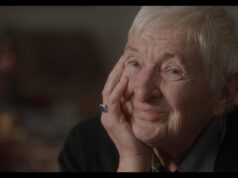
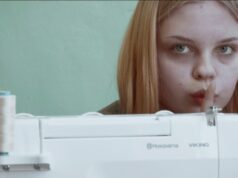
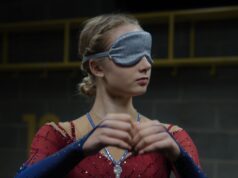
His interviewees speak directly into camera as they explain how they are dealing with this new way of life. Time and again he visits a flower shop as the owners talk about their family life; follows a teacher in an empty classroom as she starts teaching by zoom, and films a priest giving his Easter Sunday service in an empty church, live-streaming his sermon to the congregation via a tablet. Lockdown followed by eased restrictions followed by more lockdown sees people start to emerge and wander the streets only to have their hope taken away again. His camera registers how paralysis in the face of a natural disaster is superseded in some people by anger at the restrictions and as protestors start to demonstrate.
There are gentle moments of humour – such as a table tennis game at a medical centre – and as students head back to school, a sign saying “great to have you back” is positioned next to a basin where they wash their hands. Footage of a campaigner against vaccines and lockdown is swiftly followed by footage of a black lorry delivering coffins. Geyrhalter never overtly dwells on pain or suffering, but the message is clear.
Nikolaus Geyrhalter says of his work on The Standstill: “In many interviews, people spoke to us of their hopes for long-term positive change to our society, of their desire for more closeness, cohesion and solidarity. Certain aspects of the crisis were often seen in a very positive light. But what will remain of the plane-free blue skies and car-free streets, of the sudden lack of stress and the extra time spent with family? What do we want to go back to? And what do we wish to change going forward?”
Austria, 2023, 137mins
Dir: Nikolaus Geyrhalter
Production: NGF – Nikolaus Geyrhalter Filmproduktion GmbH
International sales: Autlook Film Sales
Producers: Nikolaus Geyrhalter, Michael Kitzberger, Wolfgang Widerhofer, Markus Glaser
Cinematography: Nikolaus Geyrhalter
Editor: Gernot Grassi