Jean-Pierre Rehm dismisses immediately any suggestion that his festival operates within the margins of cinema, that it embraces a narrow and singularly experimental aesthetic.
“No, I think we at FIDMarseille are simply looking for what we think is reflecting today’s situation… It’s not about ‘margins’, it’s about refusing to be bored,” Rehm underlines.
But the FIDMarseille director nevertheless articulates a wider frustration about commercial cinema and its, at times, less than inspiring output. “I am so much of the time kind surprised to see that so many monies are [invested] in films that are, at best, looking like novels, with nothing to relate to them either to cinema or to [this] time,” Rehm adds.
In 2021 FIDMarseille will screen 110 films from 39 countries out of 2648, which marks a significant increase on the live 2020 event which programmed 82 films. This year’s International Competition comprises 15 films from 15 countries, while 11 films will compete in French Competition. In Flash competition 18 ultra-short films are selected, representing 15 countries. In First Films Competition audiences can view 7 films from 6 countries. CNAP competition presents 8 films.
In summary, there will be 50 films in competition (including 43 world premieres and 4 international premieres), from 21 countries, by 29 male directors and 24 female directors. Out of competition the festival will screen 60 films, including 34 world, international and French premieres.
Rehm refuses to isolate individual films from the programme for particular exposure, given the intense process of paring the selection down to 110 works, but he concedes that refusing so many gems can be “heart-breaking” and a “long and difficult process.”
“But it’s also completely thrilling,” he adds. “Because you realize that so many people are working with devotion, with a true love for their actors, for the situation and for the tools of cinema.”
“And we [FIDMarseille] have throughout the years gained trust, because people know that their films might have a lot of chance to travel afterwards,” Rehm continues. He further suggests that the festival programme also takes on a sense of organic balance as a result of careful and considered curation. “We are also working in that direction, that putting them [the selections] together makes sense. You know, it’s not that they are alike [but]…yeah, the films are responding to each other.”
The festival director points out that the majority of filmmakers (French and international alike) will attend in person, many with their production team in tow. “People want to rejoice,” says Rehm. “And for us, it’s great to have this good vibe.”
The festival is operating under restrictions in 2021 whereby auditoria admitting 50+ spectators will demand to see “proof of non-contamination” courtesy of a health pass. This is applicable to all audience members over 12 years. Rehm concedes that this may “slow things down” but a live event is infinitely preferable to an online iteration whereby films are viewed on a screen “the size of a matchbox,” which Rehm points out is “not cinema.”
He adds that his audience may be of all ages and demographics, but are all “cinema lovers,” who have historically turned up in excellent numbers despite all the other attractions of Marseille in July. He says of his festival’s cinematic offer: “it’s like food, who doesn’t want to eat good food…and it’s the best food actually.”
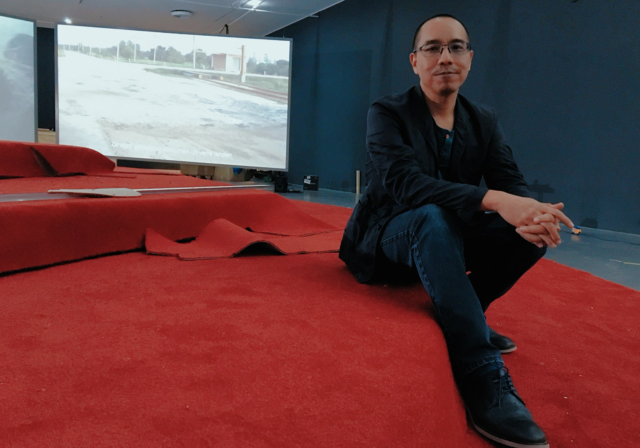
The FID Marseille guest of Honour in 2021 is Apichatpong Weerasethakul, whose close association with the festival goes back over two decades. The multiple Cannes winner French-premiered his first movie Mysterious Object at Noon in International Competition at FIDMarseille 2000. He was also at the festival with The Anthem (Out of Competition, 2006), Phantoms of Nabua (International Competition, 2009) and Mobile Men (Out of Competition, 2011). This year he will screen his latest movie, Memoria with Tilda Swinton and Jeanne Balibar, which was in Official Competition at Cannes 2021.
In addition to a retrospective screened in his presence, Apichatpong Weerasethakul will give a masterclass at FID Marseille on July 21.
“I am still beaming,” says Rehm of Weerasethakul’s involvement at FIDMarseille this year. “I was in Cannes for Memoria, because it was impossible to see it before, and since we’re going to show it I needed to see it. And there was a standing ovation, mark my words, for 25 minutes. Twenty-five minutes! He was overwhelmed. It was very moving.”
“This guy is a blessing for earth and, for me, he is one of the very huge living directors,” Rehm concludes.