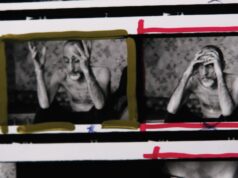
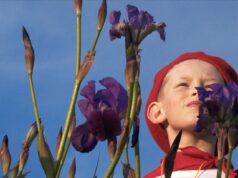
Impact producers Miriam Ayoo and Chloé Genga came to Impact Days in Geneva to describe the campaign they devised for Sam Soko’s 2020 Sundance winner Softie, a film about the brilliant photographer and political activist Boniface “Softie” Mwangi as he runs for office in a regional Kenyan election, a decision that puts pressure both on his young family and on his convictions.
Chloé Genga kicked off, explaining how she and colleague Miriam work at the ‘intersection’ of stories and social change. Softie (2020) was their of their first impact campaign projects.
She described how the story of the film was that of a man living two lives. “On one hand, we see him as the people’s watchman,” she said, underlining how this impression was a constant among most people in Kenya. “If you need justice and you’re going against influential people, that’s who you call. But this has come at a sacrifice. He has a very supportive wife and three kids. And so he constantly struggles with ‘should country come first or family come first?’ This is a struggle that a lot of people go through, especially back home in Kenya.” This struggle was “the heart” of their subsequent impact campaign, Chloé underlined.
Miriam agreed that they knew that the family story would be the heart of the film. Nevertheless the themes of politics and social change were also so enormous in the film.
“We knew we had a prime space to have conversations around these themes. And we decided to focus our campaign on the idea of active citizenship. We had key messages around the idea of being an active citizen, and that being a way to express love for our country. We knew that we cannot separate the personal from the political and that we have what it takes to help catalyze change in our own small ways in our own communities. We set our target audiences to be youth, activists, lower middle class, schools, universities and the Kenyan diaspora. And our main goals were to unpack the role of voters, to [shine] new light on activists and activism in the Kenyan context, and to increase civic engagement by providing information and also community building so that people feel more empowered to demand more accountable and transparent leadership.”
Their impact strategy had two ‘pillars.’ The first was distribution and awareness, before moving to community engagement. “This was really important for us because we knew we had to get the Kenyan audience buy-in,” said Miriam. “Getting the film as wide and far as we could in terms of distribution was our first kind of goal.” The first strategy was therefore to seek prominent worldwide and local premieres, and then push for a theatrical run (which was not so common for a documentary of this nature). All this was to be supported by robust press, PR and award strategies.
“So we had a really strong community engagement, community screenings plan, in addition to social media engagement and creating tools such as the Citizen’s Handbook that had information around our leaders, political and democratic processes,” explained Miriam.
The film hit pay-dirt from the start with its selection for Sundance World Cinema Documentary competition, where it won for Best Editing. The whole family went to Sundance, “which helped set the dynamic of the protagonist being part of our impact campaign from the beginning.”
But then came Covid, which meant that all plans had to go on the back burner.
The idea of sharing the film online in Kenya during the pandemic was daunting, especially as potential audiences were unlikely to use their data bundles on feature-length docs. “So we just decided to step back and wait to see when things would open up, when theaters would open up, when institutions would open up…but we did shift our attention to trying to put the film as much into online festivals just to keep the name of the film up [there]. And we did a lot of social media work that especially targeted our youth audience.”
They also had clear objectivess in terms of audience numbers, the first being 500,000 Africans to watching Softie, both Kenyan and pan-African via various platforms. They also planned to target a community of 10,000 Kenyans “who are responsible and informed about challenging the status quo through our different community engagement activities and tools.”
In September 2020 the country’s theatres started to re-open, and so they decided on a local premiere in Nairobi, starting off with a stakeholder screening. “We were able to get people in the civil society sector, we were able to get activists and we also got a lot of influencers who came to the screening, gave us great feedback on the potential of the film in terms of its impact and really were advocates for us to get people to come to the [national] premiere.”
A potential hurdle arose when the film was given an 18-rating, which the team went along with, planning to get a lower rating later. But the Kenyan premiere was nevertheless a triumph. An initial two-week theatrical run was extended to 8 weeks because of high demand, making it the most-viewed nonfiction film in Kenya’s history, with 5,000 tickets sold.
What’s more, audiences took ownership of the film, especially by posing before posters with a closed fist of activism. “And our press was great. The family dynamic mixed with the political dynamic worked as a good way of getting people into the theaters and being able to start these conversations.”
But they wanted the film to reach even further, so they cut it down to a 52-minute version, which allowed for reclassification resulting in a General Exhibition rating and broadcast on TV. “But even before the day of broadcast, KTN were threatening to pull it off because they were just really scared about government retaliation,” said Miriam. “But somehow we were able to get it running and we got a viewership of 1.5 million on that broadcast, which was amazing.” What’s more, the likes of Icarus Films, POV and BBC Storyville picked it up internationally.
Furthermore, on December 12, Kenyan Independence Day, the film was shown on YouTube, geo-blocked for three days. “We were able to get a reach of over a hundred thousand views in the three days that it was up, and 5,000 comments. And it allowed the film to kind of help bring more awareness and conversation around the general elections that were happening in 2022. After that we were able to get the film onto Showmax, which is an Africa-wide distribution [platform], and it helped us reach our target of 500,000 in Africa.”
Chloé then picked up the story from a social media perspective, especially after Covid hit.
“Our target was to build an active informed community of about 10,000 people who would be able to advocate and push for policies and encourage other people to vote wisely in the upcoming election.”
“So what we initially did was encompass everything under the hashtag ‘Change Ni Sisi,’ which is both English and Swahili. Because a lot of youth relate to that…And it directly translates to ‘we are the change’ because a lot of the time it goes back to changing minds. A lot of times we are often thinking that a good leader is going to come and change everything, but we wanted to show people, yes, a good leader can come, but you also have to be the change.”
The team also released a soundtrack of the film, which also extended some of the film’s themes. They also put up more and more information about the film online, including an Activism Quiz where they got people to work out what type of activist they would be, based on the different characters in the film (mainly the family members).
The Citizen Guide morphed into an Activism Guide, also called Change Ni Sisi, which provided an introduction to Active Citizenship. “It’s a microsite that houses information about the different leaders that we have, because in Kenya we had a change in the constitution. Initially we only had the president and the members of Parliament, but with the new Constitution we had the introduction of governors, senators, county assemblies. And so we had to do a drive to help people understand who does what, the different roles and how you can hold them accountable, especially for the youth who are going to be first time voters.”
As the Covid threat declined the theatres began to open, albeit with reduced numbers. “So we were able to jump on the momentum that the Kenyan election had already started building…We were going head to head with a lot of political activities and we were still able to get big numbers during the screenings, which was pretty cool for us,” said Chloé.
Each screening had a ‘facilitator guide,’ which provided a structure for the moderated discussions. If the film team were not present, they would train someone from the communities that they were working with, using the guide to be able to moderate the discussion after, so that they could still deliver on impact. “So ultimately, after all the screenings, as of the end of the second phase of the campaign, we had 40 screenings spread out in six different counties, focusing on rural areas, because those are the ones that we tend to often forget, especially in terms of civic engagement in Kenya. We were able to reach our audience of over 4,000 people, who were mostly youth aged between 13 and 14.”
Chloé stressed the “notable gains” (for which she acknowledged her team could only take part-responsibility) such as a lot more women were running for, and winning, political office in areas where the film was screened.
“In positions such as governor, we had a historic number of seven governors, which was more than double than the previous election. We had more youth leaders voted in, and there was a lot of transparency in terms of fundraising for campaigns. We didn’t have a presidential debate, but we had a vice-presidential debate on national TV. For the first time they were asked to declare their wealth and their sources of income, and how they were able to raise that income, which was something that had never been done in Kenya before.”
Chloé explained how she and her team wanted to get the film to as many African audiences as possible. “We have a French version and we are working on doing a Swahili version as well, just to make the film more accessible… So we are working on doing dubbing for different [international] versions as well.”
Chloé then described her key takeaways from the process of working on Softie. First up was the ability to adapt, especially during the time of Covid. “You have to adapt. Because with impact producing it’s so heavily dependent on a lot of external factors. So it’s key that you’re able to stay on course, but also adapt where necessary, but still stay true to the initial goals that you set out with.”
“The power of momentum. Once things start going, it never stops. Once the momentum starts to peak, you really need to just dive in and continue with the flow.”
“Timing. Impact producing should start as soon as possible, even if it’s in pre-production. That really does help,” she observed.
“Find alternative sources of income. Like I said, it’s dependent on a lot of external factors. One being sponsorship funds and donors etc. If you can have screenings where you can reach out to organizations and they pay licensing fees, that can also go a long way to finding…alternative sources of income.”
“Unplanned results can also have such a huge impact. Like the fist at the premier just gave the film such a buzz. It introduced the film to Kenyan audiences with such a bang that we could have never expected. Everyone wanted to do it. It was trending, it was great. And it plays such a huge role in the impact.”
“Strong communication, especially if you are dealing with social media. It’s really great to have strong communication and structuring of the message well….Right now we are looking forward to taking the film to learning institutions and sharing even with even other countries that may be having an election. Because I feel the themes are very relatable, regardless of location.”
“Change is a long-term process,” Chloé ended. “With impact, sometimes we may feel like is it enough? Am I doing enough? Or what change will this do? But it’s a step-by-tep thing. You have to just pace yourself. It’s not an event, it’s a process. Starting a conversation, amplifying a conversation. Even the small things could really go a long way in the long-time process.”