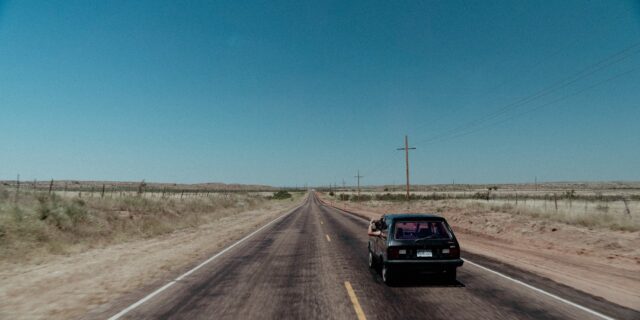
Presented in Biarritz and tying in with this year’s focus on the Balkans at Fipadoc, co-directors Filip Grujić and Aleksa Borković’s doc Yugo Goes to America is based on a 10,000 km odyssey across America in the eponymous car that every family within the former Yugoslavia has a story about. “We wanted to see if we can actually have the best time in the worst car ever,” Grujić told attendees.
The project description outlines how, through a mix of collective and personal archive, Borković and Grujić tell the story of Yugoslavia in the 1980s – a country at the crossroads of the East and West. They reflect on the Yugo’s rise and fall and its import into capitalist Reagan-era America, and the story of his parents, who met before the war.
Perhaps inevitably, the car lets the protagonists down on several occasions on its journey across America. “Our road trip was full of car breakdowns, like tons of car breakdowns, but which is sometimes good because we had time to become characters and friends,” Grujić told the professional attendees. “On our road trip we met a lot of interesting people. Some of them worked actually on the import of Yugo back in the eighties and some of them are still enthusiasts from former Yugoslavia, and from America. And for the time spent with them, our film actually raises the questions, what it’s like being the worst? That question is kind of important to us since we were born in the Balkans. Who declares that? That’s why we [went] to America and we wanted to see if we can actually have the best time in the worst car ever.”
Borković adds: “When we set out on this trip, we asked ourselves, what kind of adventure is it for us? And soon we realized it is our journey of discovery of our own identity and history, which is really connected to us. But since we haven’t lived in Yugoslavia, we actually never experienced it. At first Filip is leading you into the movie, so you focus mainly on him. We were both cynical about collective memory and nostalgia in general, but as we spent more and more time dealing with all the breakdowns and driving a car that is kind of a reflection of that period, I think we became more and more nostalgic actually. So ultimately this is a feel-good adventure, but mixed with humour and anger.”
The synopsis further illuminates their experiences – along the way, they encounter helpful strangers, including Nick Bygrave, a Yugo fanatic in Ohio who helps repair their car, and Bosnians in Iowa who lend them parts for the Yugo. They also meet émigrés from Serbia and Bosnia who, unlike Filip and his team, wish to return to the Balkans and explore their homeland, from which they had to flee. In addition to answering their initial questions, the crew discovers America in a way they had always known it through the screen, creating their own fiction. This includes a fictional ‘Yugo-Ivana’ wedding in Las Vegas and the making of a Western with the Yugo as the star.
In the end, questions as to the pair’s sense of identity are answered, and in Los Angeles they are welcomed by former Yugoslavs in exile, who throw them a farewell party. After the party, the Yugo catches fire, marking the end of their American adventure. Filip and the team return to Serbia and decide to fix their red Yugo (that didn’t make it to America), concluding that being the “worst” or the “best” car isn’t such a big difference after all.
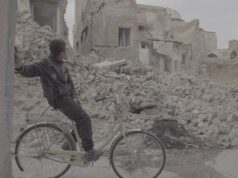
The project description also describes the use archive footage to provide context, and an original score that emphasises the traits of protagonist Borković and the insights into Filip’s thought processes via voice-over.
This approach, the description tells us, highlights the notion that someone is guiding us through the story of the Yugo, as well as the journey we are on.
Producer Čarna Vučinić commented that the project is currently at editing stage, with several more shooting days planned. The projected budget for the production is €283,700, with €126,000 still to be raised.