“The silence of my father was not a wall against me. It was somehow a mirror in which I should find a way to understand myself and to understand his message about…the fragility of life,” filmmaker Andrea Segre tells BDE of his highly personal Molecole, a cinematic ode both to his father and to Venice in lockdown.
In February 2020 Rome-based filmmaker Andrea Segre was shooting in Venice when lockdown was declared. He was, at that time, working on theatre and films projects about two of the city’s scourges, tourism and the city’s threateningly high waters.
Andrea already had a “relationship” with Venice as it was the city where his father Ulderico was born and raised (between Academia and Rialto) before the family moved to Padua, where Andrea was born.
But the filmmaker had only ever “skimmed” Venice in the past. Lockdown now offered him the opportunity to rediscover and to understand the place. How? Because suddenly there were no tourists and, remarkably, due to no boat traffic, the waters of Venice were becalmed and their levels lowered, offering new and previously hidden architectural aspects of the centuries-old buildings.
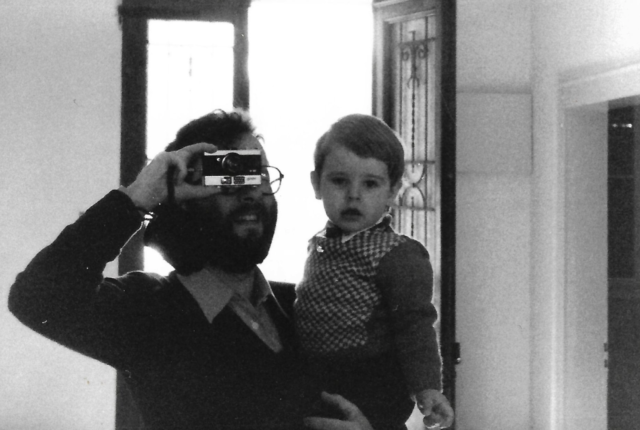
But of equal, maybe greater importance, are Andrea’s reflections on his dad, a molecular scientist and amateur filmmaker whose cinematic skills were, possibly like his work in the lab, “precise, geometric, but somehow delicate too, almost painful.”
His father was not a man of many words, and suffered a heart defect all his life which eventually caused his death. Even though he allowed his young son to listen to the irregular murmur in his chest, his silence about his illness was not without reason.
“The silence of my father was not a wall against me. It was somehow a mirror in which I should find a way to understand myself and to understand his message about…the fragility of life,” director Andrea explains. “I understand his silence because it is something very difficult to tell to a son, something difficult to share with your son. His silence was a way to protect me somehow…That was something I only understood when I became a father.”
When the pandemic hit Italy, Andrea saw the situation in scientific terms, as maybe his father would have. “Small, invisible molecules had begun to upset the world,” he stresses. It was, as we all know, a time when the world seemed to stop, but one which also offered the opportunity for reflection.
In this beautifully languorous film, in which the pace of life slows to that of a rowing boat across to the Giudecca, Andrea remembers “filming the emptiness, the silence, the incredible situation of Venice. I felt that I should stay within this destiny and not to lose the occasion to be there exactly at that moment.”
And in the process, together with a small cast of characters, he began to understand the dilemma that city was suffering. “In front of these still waters it was very clear – the incredible fragile relationship between beauty and fear, because everything is incredibly beautiful but everything is incredibly fragile in its beauty,” he explains.
“Somehow the city was crying and smiling at the same time. Crying because [it was asking] ‘what will be my destiny now, what will you do with me now?’ And at the same time it was smiling, saying ‘here I am, you can watch me.’ And this mix of crying and smiling, enjoying and being desperate, was very touching.”
For Andrea it was also “a journey in time,” in which he was transported into the past. “Imagine London or Rome without cars, if you have a Venice without boats [and tourists] it is a Venice quite similar to the Venice 400 years ago. The human structures didn’t change.”
The director further points how having a camera in Venice during lockdown was “like having a dog.” He could walk around with his camera, despite the curfew, without being stopped by the police. “I was filming sometimes but other times I wasn’t filming, simply walking,” he says.
In the film, Andrea depicts a Venice both empty and silent, and therefore magical and beautiful, the stuff of lotus-induced dreams. But also misty and melancholic. Is this a description that chimes with the filmmaker? “Melancholia is the feeling in which I find the meaning of life,” he concludes. “And it was melancholia I most felt when I was there.”
International sales for Molecole are handled by Decker Distribution.
Molecole is one of the ten films selected for the Changing Face of Europe programme at Hot Docs, organised by European Film Promotion.