The statistics are stark. More than 400,000 Indian farmers have committed suicide in the past 20 years. In his new feature documentary Marching In The Dark (sold by Lightdox and world-premiering at CPH:DOX), Kinshuk Surjan explores the circumstances leading to this tragic loss of life.
“These numbers are not hidden in the Indian media, and I am speaking of numbers only till 2016,” the director observes of the astonishing death toll. After 2017, the laws changed. Suicides are recorded by NCRB, but suicide attempts are no longer documented, and bizarre guidelines of what can be the right definition of a ‘farmer suicide’ result in heavily underestimated suicide data, the director points out.
“I actually come from a farming family. My grandfather was a farmer. And on my father’s side of the family, we are all journalists,” Surjan explains his own roots. His 2013 fictional short Pola was about a farmer deeply in debt and his son’s terror he is about to kill himself. That didn’t have the impact he hoped for but he’s returning to the subject on a far grander scale.
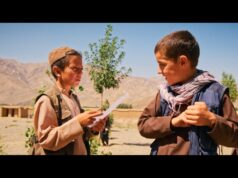
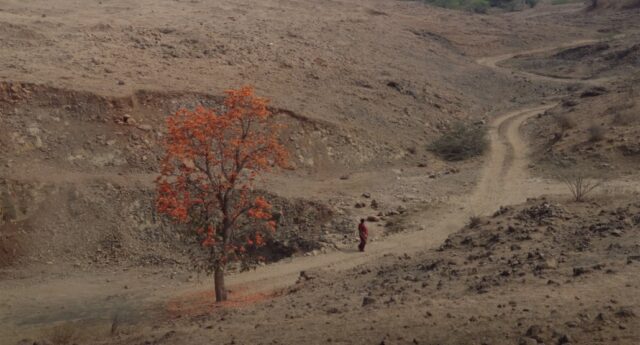
Marching In The Dark, which had support from, among others, VRT, VAF, New Dawn and The Netherlands Film Fund, was shot on location in Maharashtra, a state that had seen a very high rate of farmer suicides. The director paid close attention to form. This is a very well shot documentary with high production values, not a piece of verité shoot on the hoof. He talks about the many other films tackling similar subject matter but which ended up patronising the farmers and treating them as hapless victims. This documentary is firmly on their side.
“The ideology here was to wait and somehow, by keeping the camera still, to be with them.”
Surjan talks of his determination to represent his subjects in a “dignified” way. He pays tribute to cinematographers Leena Patoli, Carl Rottiers and Vishal Vittal. He also refers to the time he spent with the farmers and their families. He was there when they were sick, when they were planning marriages and pregnancies. By becoming almost a member of the family, he was able to win the farmers’ trust.
One influence on his shooting style was social documentary photographer Sebastião Salgado. “He has struggled a lot with his photography being called an eroticisation of poverty. There is huge debate but I disagree with that [characterisation]. What I think we can do is give the most of our time and art to the people who are giving us their lives.”
At the heart of the film is a strange paradox. The men buckle. The women stand strong. Male farmers weighed down by debt often turn to suicide but their wives and widows rarely follow suit. They tend to find a way to pay off the debt and survive.
Why are the wives so much more resilient? Do they have greater courage and business acumen? How does a woman like Sanjivani cope after the loss of her husband?
“To be honest, I’ve been six years [in this world] and I don’t have a perfect answer but there are some impulses that I can hint at. One is that the patriarchy itself stops men from sharing things or being vulnerable. You can see that in the film. A boy may just start having one tear in his eye and another will say, ‘Why are you crying? Don’t cry. You must not cry.’ That [the vulnerability] could be one impulse. A second is that it could be the humiliation that causes men to commit suicide.”
Both men and women share the same stress but the men simply can’t face the indignity of not being able to feed their families or pay for their daughters’ weddings. Meanwhile, the women often simply don’t know the scale of their husbands’ problems.
“It’s really a sociological question why women don’t commit suicide – or very few do. I started the film with that question and I still keep finding new reasons for it. It’s just that the women find ways of learning and sharing. One of the women told me: ‘if he had just told me he was feeling distressed, we could have gone to cut sugar cane, we could have left, we could have sold the farm – but he never even told me.”
Another factor which shouldn’t be forgotten is the market conditions that farmers face. The government declares a minimum support price every year but often fails to adhere to it, Surlan asserts. Additionally, the MSP declared by the government fails to account for the input costs and risks borne by farmers. Once again, farmers are protesting to demand a legal guarantee for MSP that is calculated fairly. They are therefore faced with a situation in which they can only sell their goods at a loss. “And they are in a cycle of loans. If one crop doesn’t pay, then the second crop doesn’t pay…”
Surjan’s grandfather managed to avoid the debt trap. “And yet I have seen orange farms being left because orange prices have fallen down. They [the farmers] don’t pick their oranges, and let them rot,” he reflects on the crazy consequences of market failure in Indian farming.
Marching In The Dark was produced by Belgian outfit Clin D’Oeil Films led by Hanne Phlypo and Evelien De Graef. The director isn’t embarrassed at turning to Europeans for support for such an Indian story.
“In India, I was working as an assistant director in Bollywood. I have a gratitude to Belgium for giving me an identity as a filmmaker. You can be completely lost back home trying to make a film and not having the funds or means to do it. You can wait a lifetime,” Surjan (who studied at Doc Nomads) observes. He marvels at the freedom Clin D’Oeil has given him. “It has taken four or five years. Which [other] producer would wait for me for five years with all that support? The relationships have gone far beyond the film. In this long period, you can’t simply have a transactional relationship. It becomes very deep and personal…I would never have been able to make this film only from India.”
Surjan is working with non-profit organisation Manavlok and with other outfits in trying to raise awareness about rural suicides and to support the wives of the farmers who’ve killed themselves. Meanwhile, the director is also already planning a follow-up to Marching In The Dark.
“There’s a lot [of material shot for the documentary] that you do not see. I would like to use some of it and there is a new story I would like to film with the same people and characters,” he says. In particular, he wants to focus on the story of Sanjivani’s son, an aspiring young musician who is not doing well at school.
“No kid wants to become a farmer,” the director notes of one career path which, for obvious reasons, young men are all trying to shun.