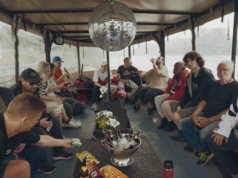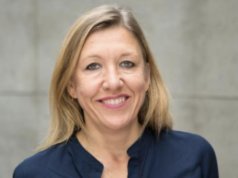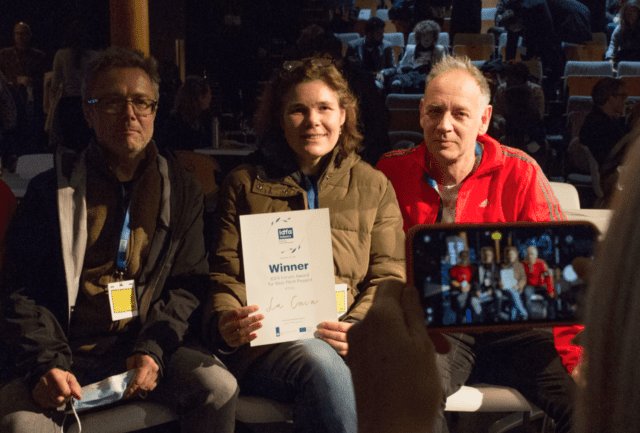
Iván Osnovikoff (left) and Bettina Perut (centre)
Chilean filmmakers Bettina Perut and Iván Osnovikoff are used to living in small apartments in Santiago. However, after they shot their 2018 film Los Reyes (which premiered that year at IDFA) and adopted one of its main protagonists – a stray dog called Chola whom they found prowling round the local skate park – life changed radically for the pair.
“We thought we had the moral and ethical obligation to move with her,” Osnovikoff explains why they have now moved into a house in a leafy, affluent suburb on the outskirts of the city. They already had another dog and felt the animals would have a better life here than in some crammed city centre dwelling.
The dogs therefore have played their part inspiring La Casa, the new film from the couple which, last month, won the much coveted Best Pitch Award at the IDFA Forum, generally seen as a key indicator of a new documentary which has a strong artistic and commercial future.
At the start of the Covid lockdown, the two directors were stuck at home together and were beginning to suffer from cabin fever. They were used to working on their movies, not being indoors in the same place for weeks on end. That’s when they first had the idea to turn inward and to make their house the subject of their new documentary.
“We had a project financed which could not be shot so we began to think about a way we could keep moving,” Osnovikoff elaborates.
On the face of it, their home was very far removed from the political turmoil which had been going on in Chile since 2019, with massive street protests and riots throughout the country. It was a “perfect place,” calm and well ordered. However, there were tensions here too. At first, they had found it uncomfortable living there. They weren’t used to the sheer size of the house or to all the new responsibilities which come with such a home.
“The film in some way talks about the fragility of human beings,” Perut suggests. “It is not a perfect world. In the eco system of this house and of our daily life, there is a lot of fragility.”
The suburban community in which they were now based was, they thought at first, “conservative and right wing.”
But then, when one of their dogs wandered off and they went out to look for her, they met a neighbour who invited them to join the neighbourhood WhatsApp group. “We found that it was not a homogeneous community,” Osnovikoff says. “We found all kinds of people.”
Not that they initially enjoyed being in such a place. At first, Perut had been keen to leave and find somewhere else to live. However, once the lockdown started, they realised they were in a privileged position. They had space and quiet.
“We realised it was better to be here than in the city,” they both agree.
“It is another reality for us,” Perut adds of their environment. They also saw the possibility of making a film about the new environment in which they had landed.
In La Casa, the directors film how they live together with their dogs, nature and animals in their new home. The outer world, whether it be the neighbours or the gardener or packages being delivered or the political and health crisis engulfing the country, is registered through sound and voice over.
The house turns into a microcosm of the kingdom beyond. And, yes, there is a political dimension, but that subject is handled in subtle and oblique fashion.
“The political events that we are still living [through] were so important for the life of our society that I think it is very difficult not to consider [them] in any film you make here…but it is a different way to frame the question. We are not focusing on the protests but we are living on the inside of a neighbourhood and a house,” says Osnovikoff.
The lyrical and experimental approach bewitched the IDFA Forum jurors. “It won the prize because it is extremely creative and bold but also recognisable for everyone,” suggests Head of IDFA Industry Adriek van Nieuwenhuijzen.
La Casa already has German support from Dirk Manthey Film (who has worked with the filmmakers on their previous films Los Reyes and Surier). Leading Chilean outfit BF Distribution is also backing the project.
The filmmakers have around 65% of the budget of the film already covered. They have been very encouraged by the warm response to La Casa from commissioning editors and sales agents during IDFA. The aim now is to have the film ready by the summer of 2022. The filmmakers have around an hour of work in progress material to show to potential collaborators.
“We are not rushing. The IDFA experience gave us confidence in our film so we are taking it calmly, but keeping working.”
Perut and Osnovikoff are now back in Chile after their visit to Amsterdam for IDFA. This was their first international trip since the pandemic began.
How did the dogs cope in their absence? They chuckle at the question. Osnovikoff’s mother has been looking after the two mutts. Both were delighted to be reunited with their owners.
“They were very happy when we came back…[but] when we came back they were fatter than when we left!”