Renate Raman and Joren Slaets’ Yaren and the Sun
Following on from the acquisition this week of Renate Raman and Joren Slaets’ Yaren and the Sun by New York Times Op Docs, VAF documentary maestro Marie Van Innis fills in Business Doc Europe on the boom in Flemish docs. And there’s a lot more to come, she underlines…
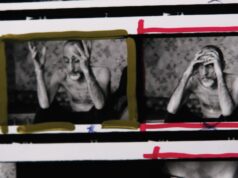
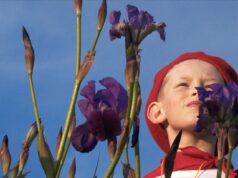
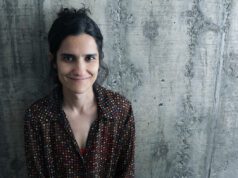
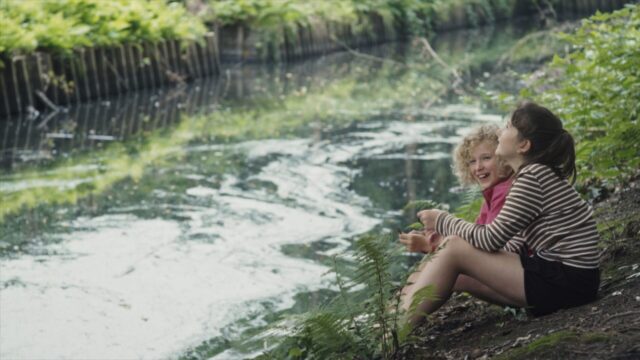
In spite of the pandemic, Flemish documentary is seemingly in the midst of a mini golden age. Midway through IDFA last week, in a deal bound to give the film a huge boost in profile, new Flemish doc Yaren and the Sun (a Storyhouse production) was picked up by the New York Times Op Docs. This is the doc co-directed by Renate Raman and Joren Slaets which looks at the experiences of kids in a summer bereavement camp. Its success at the end of the year follows on from that of another Flemish doc, Olga Lucovnicova’s My Uncle Tudor, in early 2021, which won the Golden Bear (for Best Short Subject) at this year’s Berlinale and is nominated for a European Film Award.
Another Flemish film has also been screening in IDFA, Buck Fever, and isnotable as a Flemish doc made in the English language and shot far away in Texas. This is about a young girl who grows up hunting deer and wild boar. In the film, little Emily Fletcher is determined to prove that she is as much of a crack shot as any of her relatives.
“Children from 9 to 12 can read subtitles. They know more English than we think,” notes Marie Van Innis, who oversees documentary at the Flanders Audiovisual Fund (VAF), of the appeal of Buck Fever for young Flemish cinemagoers.
Schemes like Ket & Docs, the programme for developing and producing kids’ docs which is now in its third season, are having spectacular results.
Meanwhile, Re>Connext, the showcase for new work from Flanders and Brussels, is increasingly showcasing documentary. The event was online for the second time this year, helping boost the profiles of many new documentaries, among them Capturing The Pirate King from director Lennart Stuyck, the new docuseries Mobutu from production company Panenka, and Sahim Omar Kalifa’s new documentary, Iraq’s Invisible Beauty.
Another initiative, Borderline, has yielded such highly feted docs as Annabel Verbeke’s Four Seasons In A Day (one of the best received films in Hot Docs earlier this year).
Flemish producers are also more and more involved in co-productions. For example, the Belgian company Diplodokus was a co-producer on Shamira Raphaëla’s buzzy new title Shabu, about a teenage rapper in Rotterdam, which won the Youth Competition in IDFA. (This is sold internationally by Reservoir Docs).
Other notable recent co-productions include Neasa Ní Chianáin and Declan McGrath’s Young Plato, which screened recently in Doc NYC. This is set in a Catholic primary school in one of the toughest neighbourhoods in Belfast. It has Belgian doc stalwart Hanne Phlypo from Clin d’oeil as its co-producer.
There is also Flemish involvement in Swedish director Magnus Gertten’s documentary Nelly & Nadine, about two women who fall in love in Ravensbrück concentration camp, and in Addicted To Life, directed by Pola Rapaport and Wolfgang Held and about a paralysed Belgian athlete preparing for assisted suicide.
The longstanding, reciprocal co-production arrangements with the Dutch and the Wallonians continue to benefit all parties.
Docs by newcomers and experienced hands alike have been breaking through at international festivals while also reaching local audiences.
Every year, a VAF Wildcard worth €40,000 is awarded to a young documentary maker fresh out of film school. The next winner will be announced on 11 December. (Last year’s winner was Olga Lucovnicova for My Uncle Tudor which has gone on to become a runaway success.)
VAF’s Van Innis agrees that these are boom times for documentary in Flanders but also argues that, with a little more funding, the situation could be even better.
“Yes, I think we can say that documentary is doing well. We would love to do even more but we don’t have the funds [as] we would like to take more risks sometimes. We always have to make difficult choices as to which projects to support but I think the quality is quite high,” Van Innis says, expressing both pride and frustration. “We see both more established directors and new directors coming up.”
One change Van Innis has witnessed in recent years is that more and more short docs are being made.
VAF generally has around €1.5m a year to spend on documentary. This is intended to cover almost everything: shorts, medium-length films, features, development and production. (There is, though, more money for doc series). More money has been put into the coffers for 2021/2022 to help the sector deal with the upheavals caused by Covid.
2022 is shaping up to be a very strong year for Flemish docs. Titles tipped to pique the curiosity of buyers and festival programmers include Johan Grimonprez’s long awaited, Congo-set Soundtrack to a Coup d’Etat and Pieter-Jan De Pue’s Four Brothers, which tells the story of four Ukrainian brothers whose lives are torn apart by war.
“A lot of our documentaries are not so much focused on Flanders and what is happening here. It’s more that they are really looking out [into] the world…but with a Flemish point of view,” Van Innis says of the increasingly international perspective of Flemish filmmakers.
Ask the VAF exec about what else is in store and she rattles off plenty of other new titles, among them Dorus Masure and Ischa Clissen’s Katla (about an Icelandic village and its relationship with a volcano nearby), Otilia Babara’s Love Is Not An Orange (about the plight of Moldovan mothers trying to maintain bonds with their families), Vida Dena’s My Paper Life (about a teenage Syrian girl adjusting to life in Brussels), Ruben Desiere’s Echo (about young army recruits) and Olivia Rochette and Gerard-Jan Claes’ Kind Hearts, a documentary about first love.
“Good news!” Van Innis concludes as she contemplates the hugely varied slate of new Flemish docs likely to surface internationally in the coming months.