

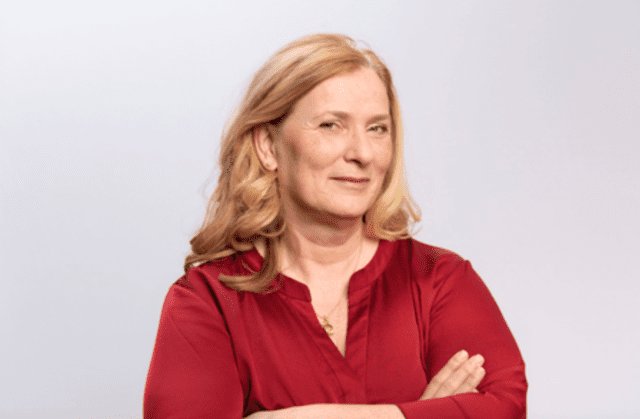
Simone van den Broek, documentary consultant at the Netherlands Film Fund, is in typically upbeat mood on the eve of this year’s IDFA. “From our perspective as a fund and, in general, as supporters of the Dutch documentary industry, I think this is a very interesting year with great Dutch films,” she enthuses.
There are two Dutch features in IDFA’s International Competition but there are also minority Dutch co-productions, Dutch docs in the market and new Dutch projects in the Forum.
“That shows for us the quality of the films is really high this year – and we hope this is the start of a strong documentary period!”
In competition, Luuk Bouwman’s archive-based The Propagandist about Jan Teunissen, the shadowy figure who led the Dutch film industry during the Nazi occupation, is bound to provoke fierce discussion on such matters as collaboration and anti-Semitism.
Meanwhile, also in competition, Home Game, directed by the Sarajevo-born but Amsterdam-based Lidija Zelovic, is equally topical; an intimate, personal film that also casts a very sharp eye on the rise of right-wing nationalism and xenophobia in the Netherlands.
“Both Luuk and Lidija are experienced but, in a way, they are a new generation,” van den Broek observes of the two IDFA competition contenders. “Both [of their] films are reflecting the Dutch society in their own way. They are very different films [but] that is something that is slightly changing…there are a lot of things happening in the Netherlands that you can really put your lens on and show,” the doc consultant says of how local filmmakers are increasingly focusing on social and political tensions within the country.
“A long time ago, Dutch documentary makers used to go out into the world but there is a movement now for Dutch filmmakers to look at their own world [instead]. We think that is a strong development.”
The Dutch minority co-productions in competition are Myrid Carten’s A Want In Her, on which Basalt Film was a partner (and which was supported by the Fund’s New Dawn scheme), and Writing Hawa, co-produced by Een van de jongens.
Documentary strategy at the Film Fund “hasn’t changed that much,” but one new trend is that filmmakers are being encouraged to work on a more international level. Two years ago, the Fund introduced its “high ambition” CineDoc scheme for bigger budget docs that may have a chance to break through beyond Dutch borders. This is targeted at filmmakers working with international partners.
“It’s a way of making bigger films for bigger audiences,” van den Broek declares.
Projects to have received backing so far include Renzo Martens’ new doc, Post Plantation; Tom Fossaert’s new project, In Your Shadow, and Miriam Guttmann’s Sanda Dia.
These films will receive up to a maximum of €450,000 from the Fund – a sizeable amount in the cash strapped world of feature docs. “Normally, in other schemes, it is max €275,000 for production money.”
Certain conditions have to be met. Budgets need to be at least €850,000 and there has to be an international partner on board (this can include a sales agent and distributor).
Some projects being pitched in the Forum, for example The Eighth Continent, co-directed by Bouwman and Tomas Kaan and about the race for resources in space could also fit CineDoc support.
“If I look at the [IDFA] selection this year, I wouldn’t define it as a selection which shows emerging talent,” van den Broek reflects on this year’s IDFA Dutch harvest. There are plenty of strong Dutch films screening including titles like All is Well, the heart-rending new feature doc from Petra Lataster-Czisch and Peter Lataster (receiving its world premiere in IDFA’s ‘Signed’ section). but most aren’t from newcomers.
Next year, van den Broek believes, on the basis of the work the Fund is currently backing, that the festival will be showing more titles from newer directors. She also feels that IDFA director Orwa Nyrabia has successfully challenged the local industry to raise its game.
“What Orwa [Nyrabia] did, and what I think is in the end very supportive for Dutch documentary, is that he focused very much on the filmmakers and on a higher quality of film selection. That, I think, is a positive influence.”
Van den Broek will be part of the IDFA industry talk next week, Dutch Docs Day [on 21st Nov], at which leading practitioners from the sector will be discussing key areas of concern, what should be funded and why.
“The theme of the day is less is more…but more of what?” the Fund doc supremo explains the agenda. “If there are less films being made, what should we be making films about and who for…the good thing about the Dutch Docs Day is that the whole industry comes together, all the stakeholders are participating.”
In 2023, €6,446,451 was invested by the Film Fund in documentaries (selective, incentive, development, production, docs & series). €390,000 euros went to minority co-productions, and €30,000 to the development of minority co-productions.
Funding currently appears stable. However, with the drift to the right in politics, cuts may be made to public broadcaster budgets – and that would have a knock-on effect on documentary.
Although there has been widespread disquiet across European markets about the struggles documentary is having in the theatrical marketplace, Dutch docs have been holding up relatively well in terms of box office results. Over the last couple years, there have been around a dozen titles that have won “Crystal” awards for achieving admissions of 10,000 or over.
“What we see is that films related to climate change and that are relevant to a Dutch audience find a larger cinema audience,” van den Broek says, citing titles like In-Soo Radstake’s Selling A Colonial War, and Gerlach from Bouwman and Aliona van der Horst, both of which have done robust business in local cinemas. “That’s a positive!”





