

Ji.hlava IDFF is a festival located smack in the middle of Europe, a fact which informs the international scope of its program each year. Of course, there is a strong Czech dimension as well, as evidenced by Czech Joy competition, but the competitive Opus Bonum, First Lights, Testimonies and Fascinations sections are jam-packed with the most diverse of international fare, from across Europe and beyond.
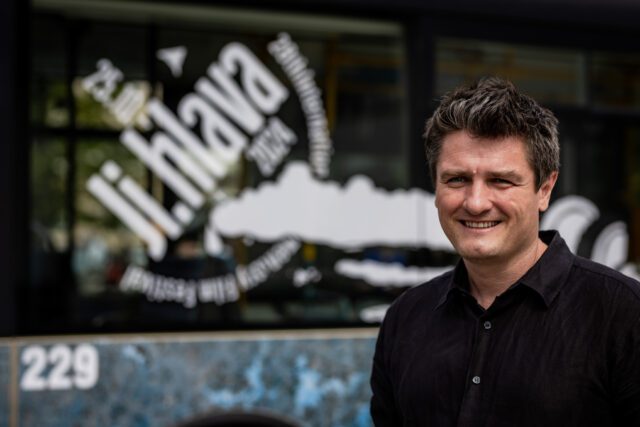
“Many festivals in Europe focus on films from their regions or language territories, as our annual East West Index shows,” says Ji.hlava IDFF director Marek Hovorka, whose annual festival analysis continually points to a perceived disparity in terms of the low numbers of films from CEE making it into the core Western doc fests. “It is important for us to connect films from all over Europe in the program, to create a place where filmmakers from the North and South, as well as from the West and East, can meet,” he tells BDE.
“It is clear that filmmakers welcome it, that they are happy to be part of a varied program which also places European film in the context of the work of other continents,” he adds. “Personally, I think that before the pandemic, Europe was more connected, and art is certainly a tool for building understanding and empathy.”
The festival this year presents 305 films in its competitive and non-competitive sections, including 76 world premieres, 28 international premieres, and 15 European premieres. Opus Bonum competiton features docs from as far afield as Mexico, India, China and the UK (as well as all corners of Europe), while some of the competitive First Lights selections hail from the likes of Tunisia, Lebanon, Hong Kong and the US.
Furthermore, the quality of the films is highly impressive, Hovorka underlines. When launching this year’s program, he remarked on the evolution of the doc form over the past near-30 years of Ji.hlava’s existence. “Three decades ago, documentaries were regarded as a marginal form, almost invisible without the backing of public broadcasters,” he said. “Today, however, no major festival can do without them. Filmmakers combine elements of fiction, experimentation, and animation while developing diverse documentary styles – from observational approaches and time-lapse to investigative forms and film essays.”
Opening film/Czech Joy
The festival opens October 24 with Czech director Barbora Chalupová’s Virtual Girlfriends which plays in both Opus Bonum and Czech Joy competitions, and which lifts the lid on the OnlyFans phenomenon, focussing on the success (or otherwise) of three performers who attempt to make a living online.
“The film does not dwell on the surface and does not rely on sensationalism, but approaches the more general theme of loneliness in the digital world,” says Hovorka. “The OnlyFans website thus becomes just one of many social networks, and the protagonists of the film are not so different from ordinary users of other social networks as it might seem at first glance.”
“Czech documentary film is very diverse, representing different generations. And in addition to interesting filmmakers, it also has good producers who co-produce with Slovakia, Poland or Ukraine,” Hovorka expresses his satisfaction with this year’s Czech Joy selection of 18 new documentaries by local filmmakers, who include the likes of Maja Penčič, Michal Böhm or Robin Kvapil, as well as films by Slovak filmmakers Viera Čákanyová, Martin Kollár and Vitalij Manský. “The Czech competition is therefore very international and brings nine world premieres, as well as films that audiences have already seen at the Berlinale, in Nyon or Thessaloniki.”
Retrospectives
Hovorka points to two retrospectives at Ji.hlava 2025: the Food and Epoch, which captures the transformations of society through food and dining, and the Collective Film which will present a cross-section of the work of international film collectives from the 1960s to the present day.
“We were looking for a topic that has positive associations and that does not divide society. That is why we agreed on food,” the festival director explains the first choice of theme. “It is amazing that through it [the subject of food], the modern history of Czechoslovakia can be told, as well as the history of film. And we do not avoid the current trends in television and streaming entertainment, which are dominated by various cooking shows. Food has thus proven to be a colourful filter for thinking about the everydayness of history.”
He further explains the emphasis on film collectives. “In this, the art world is ahead of film…In recent years, the art scene has given much more space to art collectives, such as Documenta in Kassel in 2022. That is why we decided to pay special attention to film collectives in our retrospective, but also to honour one of these collectives with our Award for Contribution to Cinematography. This is the Bolivian Grupo Ukamau, which is an example of visionary filmmaking and politics.”
The Collectives program will feature, among other works, Grupo Ukamau’s Blood of the Condor (1969), shot by the Grupo Ukamau collective, which reveals the secret sterilization of indigenous women by American health workers, and which became a symbol of resistance against colonialism and an inspiration for Bolivia’s political awakening. The British Black Audio Film Collective will present its ground-breaking film Handsworth Songs (1986), a polyphonic visual essay on migration, identity, and the media image of the 1985 riots in Birmingham. The American collective Videofreex will be remembered for its guerrilla video Mayday 1971 (1971), which authentically captures the anti-war protests in Washington and the power of collective solidarity in the midst of repression.”
Testimonies/Fascinations
Other core elements within the Ji.hlava IDFF program are the 15-film Testimonies competition section that presents works that explore authentic human experience and reflections on the past and present; and the Fascinations section for best world experimental documentary films, which offers “unexpected representations of the lived world through exploratory work with film language in an atlas of contemporary experimental cinema from every continent.”
Tsai Ming-liang returns
Ji.hlava 2025 also sees the immediate return of Taiwan-based Malaysian filmmaker Tsai Ming-liang, who was last year presented the Contribution to Cinema Award at the festival. This year, together with FAMU students he will shoot a new film for his highly regarded Walker series, and present it November 1 in Ji.hlava.
“Tsai Ming-liang is one of the most prominent Asian filmmakers, who regularly presents his films in Cannes, Venice, and Berlin. We are delighted that his visit to last year’s festival inspired him to shoot a film for his acclaimed series. It is a great honour for Ji.hlava as a festival and for the Czech Republic, which will thus join Hong Kong, Malaysia, France, and the USA, where Tsai Ming-liang shot the previous parts,” says Hovorka.
The Ji.hlava boss furthermore explains the potency of the doc form and its appeal to savvy and cine-literate festival attendees. “It is no coincidence that documentary film is much more open to filmmakers, offering greater freedom for creative expression than the world of fiction film. Documentary cinema has long been the most dynamic and inspiring area of filmmaking, and it’s worth watching how it continues to engage audiences,” Hovorka signs off.





