“At first glance, this is a film about one of Poland’s most recognisable public intellectuals. But in reality, it is much more than that,” Polish producer Marta Dużbabel of Pinot Films tells BDE of her KFF Doc to Go selection Not Yet, No Longer, directed by Grzegorz Szczepaniak and currently in production, with an expected delivery date of February 2027.
“It is a film about growing old without giving up on life. About a man who still makes plans, dreams about new journeys, starts new projects and remains curious about the world, even though he is increasingly confronted with the realities of ageing,” she continues. “For me, one of the most beautiful aspects of the story is the relationship between Jerzy Bralczyk and his wife, Lucyna Kirwil. Their love is mature, funny, tender and completely unsentimental. They still argue, tease each other, laugh together and support one another. We see many films about falling in love. We rarely see films about staying in love.”
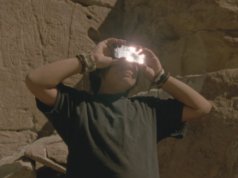
In the film, while working on a book about ageing, Jerzy embarks on a cruise with Lucyna. Full of humour, tenderness and wisdom, the journey becomes a reflection on love, growing old, shared dreams and the art of enjoying life until the very end. Warm, funny and deeply human, Not Yet, No Longer is described as a film about growing older without losing the desire to keep living, loving and dreaming.
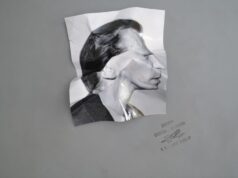
When Grzegorz Szczepaniak approached Jerzy with this project in mind, the esteemed professor immediately understood that the director was not interested in making a conventional biographical documentary, or building a “monument” to him. Rather, Szczepaniak was interested in the person behind the public image, says producer Dużbabel.
“What I value most in Grzegorz’s previous films is his ability to combine humour with emotional depth. He never laughs at his protagonists. Instead, humour emerges naturally from life itself. His films are often funny, but never mocking. They are warm, observant and deeply human,” she adds. “I think this is exactly the right approach for a film about ageing. We are not interested in making a sad film about decline. We want to tell a story about life, curiosity, relationships and the ability to keep dreaming regardless of age.”
“The strength of the story lies in its balance. It is intimate but accessible, philosophical but entertaining, local but universal,” she further underlines of the project which is supported by major Polish institutions such as the Polish Film Institute, Telewizja Polska, the National Film Archive – Audiovisual Institute and FIXAFILM Postproduction Studio.
Dużbabel elaborates on the humour that pervades both the film and Professor Bralczyk’s own personality. “There is definitely a comic element throughout the film, but it never comes at the expense of the protagonists. The humour grows out of affection, observation and human nature,” she says. “In many ways, I think this is what makes the film special. It talks about ageing, illness and mortality, yet remains full of warmth, humour and joy.”
“At the same time, we are interested in visual contrasts. Bralczyk’s reflections often collide with the reality around him – cruise entertainment, tourist attractions and the sometimes absurd rituals of modern leisure. These observations create moments of humour, irony and unexpected beauty.”
But the film will also depict real life, both in physical and cerebral terms. “[We follow] Jerzy and Lucyna during a cruise that becomes both a real journey and a metaphorical one. What begins as a holiday gradually turns into a reflection on ageing, love, dreams and mortality,” Dużbabel asserts.
“Visually, the film is based on intimacy and observation. Director of Photography Adam Lipiński is an experienced documentary cinematographer with a remarkable sensitivity towards protagonists. One of his greatest strengths is his ability to make the camera almost disappear. We want audiences to feel that they are travelling together with Jerzy and Lucyna rather than watching them from a distance. The camera stays close, attentive and patient, allowing everyday moments to unfold naturally.”
Not Yet, No Longer is not a standard impact doc, but Dużbabel maintains that it is a film of significant social value. “We live in a world increasingly dominated by stories about conflict, crisis and division. One of the reasons I am drawn to this project is that it approaches difficult subjects differently. It talks about ageing, illness and mortality, but it does so through humour, love, curiosity and human connection,” she says. “I believe there is a growing need for stories that bring people together rather than divide them.”
“For me, the most important impact would be very simple: helping people look at old age with a little less fear and a little more curiosity,” she adds.
What’s more, it has signification international appeal, Dużbabel reckons. “Although deeply rooted in Polish culture, the film touches on universal themes: ageing, companionship, love, dreams, curiosity and the passing of time. For international audiences, it is not really a film about a Polish linguist. It is a film about questions we all face sooner or later,” she signs off.