A few days ahead of Italy’s Laceno d’oro, Business Doc Europe caught up with Aldo Spiniello, the Avellino-based festival’s Head of Programming. The event, running this year from December 3-10, is one of Italy’s main winter festivals and has emerged over the years as an unmissable cinematic gathering screening fiction and non-fiction works tackling urgent socio-political themes.
Founded as a festival celebrating Neorealist cinema by Salerno-born, eclectic film critic Camillo Marino in 1959, Laceno d’oro later developed into a showcase of political films “dedicated to the observation of society and reality” with a strong focus on Eastern European cinema – a quite unique offering during the years of the Iron Curtain. The festival ran until 1988 and was then revamped in 2001, two years after Marino’s death. Initially, the new Laceno d’oro unspooled as a simple award gala. “In 2014, it was reshaped as a full-fledged festival run by the local association Circolo Immaginazione,” Spiniello tells BDE.
“Over the years, we’ve hosted the likes of Ken Loach and the Dardenne Brothers, and we’ve kept our programming focused on [films treating] social and political themes. […] In 2014, we’ve structured our festival and set up a main competition, which was initially focused on shorts only. That first edition saw the participation of Jia Zhangke.”
“Later, [fiction] features and documentaries were screened in separate strands. The idea was to train a spotlight on documentary, which was perceived [to be] the most innovative cinematic form back then. Then we merged them into one section, while still paying a great deal of attention to documentary.”
The audience visiting the Irpinia festival is mostly made up of “a large, educated group of cinephiles from the whole of Campania and the other surrounding regions.”
Zooming in on his programming work, Spiniello says: “Today, it’s harder and harder to find docs that defy conventions; ten years ago it was easier. […] I aim to pick films boasting strong core themes and an interesting cinematic language, and taking a very personal path to tell their stories. Also, they should be able to provide a theoretical reflection on what documentary is [now] and will be [in future].”
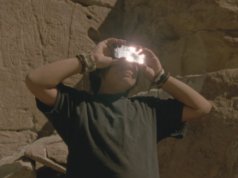
Among the highlights of this year’s edition Spiniello cited first Zinzindurrunkarratz by Oskar Alegria. “He is a director from Pamplona, who also headed the local doc fest, Punto de Vista, for a few years. It was a ‘hardcore’ fest in terms of its experimentalism. This is his third feature – his previous film was screened in the Orizzonti sidebar at Venice.”
“As always, Alegria focuses on the loss of images. He explores the memories of Navarra’s cinema, and the theme of protecting images from the past. It’s a film based on the Super8 reels shot by his father in the 1960s and 1970s. For technical reasons, they’ve all lost their sound. Thus, the film is also an attempt to recover it. And there’s [a sort of] a theoretical thread throughout, binding sound, image, cinema with a wider discourse on heritage, nationalism and identity.”
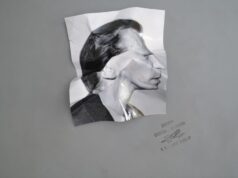
Next, Spiniello talked through Jean-Gabriel Périot’s Facing Darkness. “One of the most prominent contemporary docmakers, here Periot tackles the siege of Sarajevo during the Yugoslav war. This film is also a discourse on images and memory. He discovers some movies and some newsreels shot by Bosnian directors during the siege. He meets up with them, and makes them think through their work.”
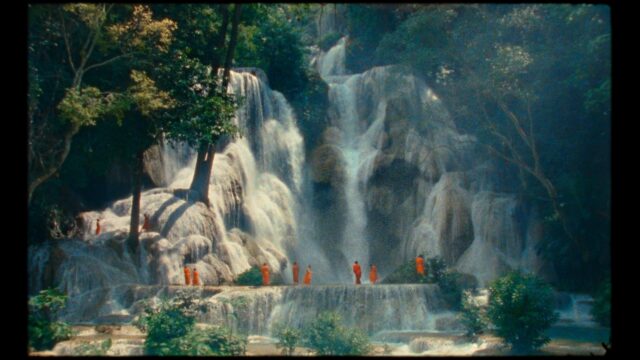
“A more experimental – yet very personal – film is Lois Patiño’s Samsara,” Spiniello argues. Premiered at the Berlinale earlier this year, the picture revolves around Hinduism and Buddhism’s titular cycle of life, death and rebirth. He billed it as a “visually extraordinary” film accompanied by “moments of pure abstraction” and reaffirming “documentary as a privileged ground for experimentation.”
A hybrid film between fiction and non-fiction is Segnali di vita by Sicilian helmer Leandro Picarella. Spiniello describes it as “a very intimate film,” which “tackles a theme that may be a bit out of fashion but is still urgent,” namely that of faith towards both other people and religious entities.
Another Italian doc taking part in this year’s main competition is Stefano Croci and Silvia Siberini’s Il padiglione sull’acqua. The feature, premiered at Bologna’s Biografilm, centres on famed architect Carlo Scarpa, and in particular on his relationship with Japanese culture. It showcases archive footage along with contributions made by people who have met and worked with Scarpa. “This is also a documentary that starts with the ‘materiality’ of architecture and later veers towards a more spiritual dimension,” Spiniello underscores.
The line-up of docs playing in the main competition is rounded off by Ali Razi’s mid-length At Night, the Red Sky. Spiniello defines it “a militant doc centred on Iran’s protests and the government’s repression of freedom, in particular towards women.”
In addition to the main prizes, Laceno d’oro will hand out a side award for Best Documentary, worth €1,000. “Over the years, we’ve been always trying to discover filmmakers exploring the boundaries between documentary and fiction. This year, we’re taking the same path and this is also reflected through our selection of local out-of-competition titles. We’ll be also paying homage to our Jury President, Alessandro Comodin – who is not a documentarian although his work always lingers between fiction and non-fiction – by screening his first film, L’estate di Giacomo, and his latest, Gigi la legge.”
Towards the end of our conversation, Spiniello shared his take on Italy’s documentary scene. “For quite some time, documentary has been the most advanced ‘research field’ in Italian cinema. […] Over the last years, however, I’ve got the impression that something has changed. As soon as the visibility of these films increased – even through dedicated platforms – documentary production has stagnated, sticking to certain pre-set standards.”
“The dynamics of streamers, market and festivals as well as the financing and pitching systems are incentivising production, but also ‘trapping’ it within the cages of stereotyped formats. That being said, filmmakers such as Giovanni Cioni, Massimo D’Anolfi and Martina Parenti keep on pursuing their own [artistic] research, and some new interesting voices are emerging, including the aforementioned Leandro Picarella,” Spiniello sums up.