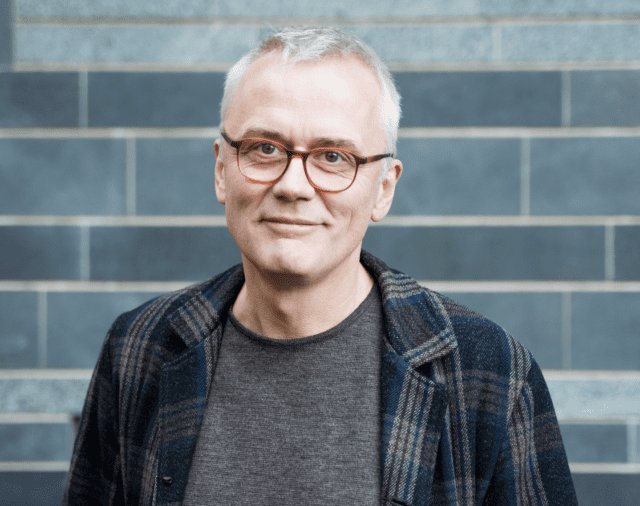
Ahead of the 63rd edition of his festival, Dok Leipzig artistic director Christoph Terhechte talks to Business Doc Europe about a streamlined programme in 2020, and how we should prepare for a streamlined doc industry in the future.
Even before the pandemic, it was Christoph Terhechte’s intention to cut the number of Dok Leipzig selections by a third. Back in 2019, 300 films were given the nod, so 200 seemed a reasonable target for the 2020 edition that runs October 26 to November 1.
But then came Covid-19, which all of its inherent complications, which resulted in a net yield of 150 films and XR works, including 43 world premieres, 11 international, 7 European and 36 German premieres.
The hybrid event will be presented in selected Leipzig venues and online to audiences in Germany as well as to accredited industry professionals. Audiences in Leipzig will also be able to attend the DOK Neuland extended reality exhibition.
From an industry perspective, the 16th DOK Co-Pro Market will present 36 projects still at development phase to the great and the good of the documentary co-production and financing community. Thirty-three countries are represented in the selection.
Terhechte expresses quite candidly that he doesn’t really know what to expect this year. “Until today nobody knows what it will be like. We have an idea. We have a vision but that ‘something’ has no comparison. We have never done this and we are all steering a big ship through waters that haven’t been mapped,” he says.
“That’s one thing. The other thing is I don’t know how it will be like during the festival. I don’t know what it will be like to go home at 10pm, and not have parties and meetings with filmmakers or hearing what the audiences say about the film.”
“So I probably can answer that question a lot better after the festival. At the moment I don’t know if it is a blessing that we have had so much time to prepare it, or a curse. And I certainly don’t want to go through this again.”
What he does concede is that “even if the whole corona thing is over next summer, which is probably best case, I think it will have changed the festival world for ever, and the world of cinema.”
He fears that cinemas will close down over the winter, and therefore festival staff will have to put on their thinking caps to devise “new ways to exhibit films for the next years.”
“So I think it is a challenge, at least in Europe where there is a possibility for cities to open [film] theatres like they have museums and opera houses and so on. From my perspective, any city of a certain size that can afford a concert hall, an opera house and several regional theatres should also have at least one cinematheque that they are financing.”
“Which is something that nobody wants to hear, as spending money at this time is not exactly what they are expecting, but I think that is super important, and these cinematheques should become the operating bases for local festivals.”
He also believes that the modus operandi we all signed up for in recent years will, and should, be confined to the past. “I don’t think we will ever travel again like we did. Especially the film crowd that is used to spending a lot of time at airports and on airplanes and just hopping from one festival to the other, two days here, two days there. I think that is over, and I don’t think it will ever come back.”
“It has to make sense,” he insists. “If you board a plane and you burn kerosene so you can go from A to B, it has to make sense. It should not just be automatic.”
With reduced travelling in the future, he adds, a key goal will be to make his festival a hub event not only to attend but to stick around at in order to make the overall professional experience more beneficial or meaningful. “If you are used to going to three or five autumn festivals then maybe in the future it will be one or two. And we will work on making Dok Leipzig one of [those] festivals.”
Terhechte was impressed by the way the doc industry, and doc festivals in particular, rose to the challenge that Covid posed over the past 8 months or so. “The way that we have communicated with other festivals is one of the good aspects of the coronavirus. There is a lot less competition and a lot more solidarity and we have come to recognise that we are all interested in the same things and working on the same matters,” he says.
With Covid-19 having such a profound effect on the festival, the doc industry and the world in general, it’s not surprising that there are at least four works in selection that are directly inspired or informed by life during the time of pandemic.
These are the reflective shorts E14 by Peiman Zekavat (UK) and Tatiana Chistova’s Bless You (Pol), and the Extended Reality selections Ilios by Marcel Karnapke and Mika Johnson (German/Czech), and the Austrian/German/Spanish The Smallest of Worlds – A Social Landscape of Collected Privacy by Bettina Katja Lange, Uwe Brunner and Joan Soler-Adillon.
From a personal perspective, Terhechte says he is very happy to have Ada Ushpiz’s Children in the programme, “not only because it is a great film, very touching and meaningful and I really hope people will love it, but also because in 2001 I was on the jury of Dok Leipzig and we gave the Golden Dove of the festival to her [debut documentary] Detained.”
“Nineteen years later she is coming back with her new film and that is something I am personally very happy about,” Terhechte concludes.