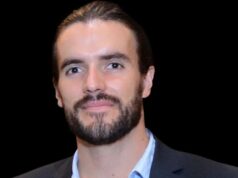
German neuropsychiatrist Dr Spittler is kind but resolute. He is also empathetic, asking direct questions and listening with great care, continually taking notes. The consultations he undertakes are personal while all the time he retains a professional distance.
But the assessment he is making is not to determine how folk can improve their future lives. Quite the opposite. He is assessing their decision-making capacity as they seek an early death, via assisted suicide.
In Pavel Cuzuioc’s new documentary Green Light, which world premieres August 13 in Locarno Critics Week, we encounter many such individuals in Spittler’s charge, whose personal stories are tragic, sad and deeply upsetting. Their reasons to end it all are myriad, whether due to illness, acute depression, or simply having had enough of life after the death of a partner. The common denominator is that the business of living is one that they wish to terminate, quite often with the consent of supportive relatives.
The majority of the desperate people who contact Spittler are women. In Germany, the film tells us, 65% of folk who choose to terminate their lives using approved means are women, and 35% are men. The average age for assisted termination in Germany is 68, while the average non-assisted suicide age is 40, the majority of whom are male (72.6% in 2022).
When asked why he engages in this practice, Spittler answers that it is the gratitude of the folk he is consulting with that keeps him going. That said, one kindly, older man finds the process “callous” and “distasteful,” despite undergoing the consultation himself. Yes, it is a paid job, Spittler reasons, but “I sacrifice my time for these people who want my help.”
Nor is Spittler immune to emotional response. When he discusses some of the cases at home with his wife (herself a qualified doctor) he admits to feeling “lost in this world,” such is his despondency that people choose to die rather than live. His job, he admits, can be a “torment.” He even opines to a patient that “our ancestors all carried within themselves the mission to live, and if we act against it, we are in fact in the wrong.” Nevertheless, his assessments as to the decision-making capabilities of those seeking termination are professionally undertaken, all above board.
As a medical doctor, however, he is also permitted to be present as the patient self-administers the lethal drugs that will bring their life to an end, which becomes a matter of deep concern both for Spittler and the authorities. After having assessed a man with mental health issues as suitable to take their own life, and then attended at his death, the courts determined that the patient had been in remission from schizophrenia, and therefore not of sound mind to be allowed to take this final course of action. Dr Spittler is therefore charged with manslaughter. At the film’s end we see the outcome of the subsequent trial.
Director Pavel Cuzuioc was drawn to the subject of assisted dying out of curiosity, he tells Business Doc Europe. He was listening to the radio during a long car journey when he first heard about Spittler’s role in the process.
“I was thinking, how can a person make such a hard decision? Yes or no. I was putting myself into his place and I could never do that,” says the director. “My curiosity was to get to that person and to research, and understand this immense responsibility that he has, and how easy or how hard for him is to decide. He’s not deciding to send someone to their death, but he’s deciding the permission for them to seek an assisted death.”
Spittler agreed to collaborate on the documentary but was concerned that the presence of Cuzuioc and his camera would be too obtrusive during the consultations. As it happened, the bond of trust between Dr Spittler and his patients was strong enough to survive the process of filming.
“They trusted the doctor so much that they said, ‘if you, doctor, trust this filmmaker and this person, why not? I think it’s important to talk about this,’” says Cuzuioc of the patients’ response. “Many people said it’s important to talk about this. So I was always there. I was always present.”
The director would stay still and, after an hour or so, the subjects would forget he was there, he maintains. “I always work like this, more as an observer. it was important to get to the reality as it is without influencing that reality.”
Cuzuioc could at times sense the ambivalence that Dr Spittler felt in coming to a judgement, despite his always recognising the due legal processes. “The law says that we are allowed to decide our end. So he was respecting the law, respecting the wish of each person, although deep down he was, of course, believing that human beings have an instinct of preserving their own lives,” the director stresses.
“We have this idea of being German, you know,” Cuzuioc further observes. “It’s like ‘keeping the word, doing things correctly, the law is like this and we follow the law’…but I wanted to show that although he is very straight, there is still ambivalence within him, which means that over the last 30 years, he has been coping with the ideology of ethics, with medicines, with everything. He’s not someone that only sees things in black and white.”
What is contentious and, for Cuzuioc, in need of correction, is how it is possible that two very distinct duties – the assessment of mental suitability to decide on dying, and subsequent assistance during the process of death – can be undertaken by one person.
“Yes, you’re very right. This is something very ambiguous for me, too. But there is some explanation for it,” Cuzuioc reasons. “He’s a neuropsychiatrist who is also a doctor, so he has two jobs. That’s why he’s unique.”
“The bond between him and those people is so strong and based on so much trust that they wanted him to assist,” he continues. “They didn’t want someone from outside to come in and to assist like a stranger. It’s a passive assistance, not active, but it is still a bit of a controversy, and in keeping objectivity I think the law should stipulate those things better in Germany.”
In the film we learn that 87% of Germans support assisted dying. “Many people were present while a relative or someone they know, like a friend, was already assisted. And they saw that they were going so peacefully that they said, ‘when my moment comes, I want to receive that [assistance] too,’” says Cuzuioc.
“My purpose at the beginning was to explore a domain that was for me unknown. Now I know more, and I’m convinced that this right of getting assisted is something every person should have. It’s not the state – or the law – that should forbid you that,” he signs off.