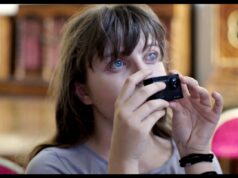
It’s a mind boggling number. China, as Gary Lennon’s new film Piano Dreams reveals, has 40 million piano students. They practice for 10 hours a day or more – and they nearly all dream of emulating the success of China’s global superstar, Lang Lang.
Lennon, who made the film through his company Gambit Pictures, first stumbled across China’s young piano prodigies in unlikely circumstances. Early in his professional career, he lived in Shanghai, working as a writer and a publisher.
“I lived next door to the Shanghai music conservatory,” the Irish filmmaker recalls. In this period, in the early 2000s, there weren’t many Irish people based in the city. Those who were there stuck together. Whenever there was a diplomatic or cultural event involving the Irish, they would always be invited. At one musical soirée, he had a chance encounter with the head of the Irish Film School, and told her that every time he opened his window, he heard sublime piano music.
“They [the students} practise all day, every day and they sound absolutely fantastic,” Lennon observed. “How good are they?”
“Oh,” the Irish music expert blithely replied, “they’re the best I’ve heard.” She knew young Russian, German and French would-be maestros – but none matched the Chinese.
“That planted the seed [of the documentary],” Lennon remembers.
Having secured support from Creative Europe and Screen Ireland, Lennon made “a couple of research trips” back to China. He met the head of the Shanghai conservatory and to one of the top professors at the institution. Through them, he met the young students from whom he chose his subjects.
The director makes some pointed observations about the way westerners stereotype and patronise the Chinese. Many regard the musicians as if they are robots learning by rote who lack the cultural depth, passion and flair of their European counterparts. Lennon hopes his documentary scotches that idea for good.
What can’t be denied, though, is the competitive nature of the Chinese classical music world. Only a tiny fraction of the piano players have any chance of making the grade as professionals. Nonetheless, Chinese parents (or at least those who can afford it) will invest small fortunes in tuition for their children. They’re desperate for their kids to succeed.
“Many people will be surprised by the overt emotionalism that our characters have,” Lennon suggests.
The tutors can be very hard-driving. In an early scene captured by Lennon, one coach tells his pupil that he’d like to hit him and is only refraining from doing so because the boy’s grandfather is present. Lennon argues that the scene needs to be seen in context. This isn’t just another example of the Soviet-style coach trying to bully and beat a young talent into excellence. The teacher in question is actually devoted to his young student and will go to extreme lengths to help him.
“He [the teacher] is like a member of the family…he goes to the house for dinner all the time and travels with them,” Lennon points out. If you didn’t know better, you would think the tutor was a sports coach, not a piano teacher. He is very energetic and physical in his approach to his job. He thinks his young apprentice is a genius and that is why he pushes him so hard.
The film was produced by Raymond McCormack for Gambit Pictures who successfully pitched the project at Leipzig to Vesna Cudic, then head of sales at MetFilm Sales, before later presenting it at the MeetMarket at Sheffield.
Covid delayed the production but financiers and distributors were clearly intrigued by the story. Deals have already been concluded with NDR Arte (France and Germany), NRK (Norway), SVT (Sweden), NTR (The Netherlands), Vendetta Films (Australia/New Zealand) and YLE (Finland).
Lennon hopes that the young pianists featured in the doc will be able to travel outside China to support the film. “We were really big fans of them as people as well as characters.” With the country still under lockdown, going to foreign festivals isn’t easy but the documentary makers will do what they can to get them invitations to wherever the film is shown.
The piano students tend to come from China’s middle and upper middle classes. They’re passionate about the music. They may dream of success but even if they don’t achieve it, they will continue to take the same immense pleasure out of their piano playing.
Why do so many Chinese have keyboard dreams?
“There’s a couple of things that have aligned…you’ve got people from a certain background with food on the table and a roof over their heads. They’re looking for a cultural experience. And two other things have happened. Lang Lang is a cultural hero of China – Michael Jordan, Bill Gates and Muhammad Ali wrapped in one…he has inspired so many people. And it [piano playing] is being actively supported by the Chinese government. They’re using classical music as soft power, building an awful lot of conservatories. And China has had an incredibly turbulent 100 years…piano allows a little bit of peace and beauty into their lives.”