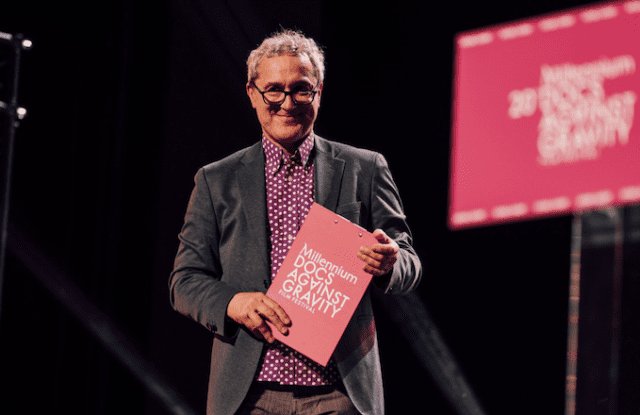
As Millennium Docs Against Gravity (MDAG) looks back on another record-breaking edition, festival head Artur Liebhart argues that documentary cinema’s challenges remain unchanged — but so do its opportunities. Running May 8–17 across Warsaw and seven other Polish cities before continuing online until June 2, this year’s edition unfolded against a familiar backdrop of industry concern: shrinking financing, cautious platforms and an increasingly competitive documentary landscape. Yet if anxiety was in the air, so too was a determination to keep building international bridges…
For Liebhart, founder and topper of the festival, the dominant concerns circulating among filmmakers, producers and decision-makers were hardly new. “The dominant concerns have not changed for years,” he tells BDE. “It is a time of increased intensity, if not a fear of lacking finance for production and platforms of distribution for documentary films.”
As traditional documentary funders— particularly broadcasters — continue to reduce investment, streamers are also becoming more selective. “Streamers are becoming more hesitant, narrowing their interest to certain themes and styles and increasingly prioritising celebrity-led and true-crime projects.” Liebhart notes.
Yet he rejects the idea that the field has become creatively closed.
Referencing this year’s Oscar winner for Best Documentary Feature, he points to Mr Nobody Against Putin as evidence that unconventional work can still break through. “It is the perfect example that nothing stands still and that everything is possible when the creative team and those backing the project are committed and believe in the film.”
For festivals, he suggests, the challenge is increasingly strategic whereby they must reach audiences in ways that ultimately strengthen documentary’s position within the wider cultural and financing ecosystem.
“Festivals can make a difference in this respect if they think about how to reach wider audiences. A strong public perception of documentary cinema — its role, standing and cultural relevance — can ultimately influence financiers and the media working in the field.”
That philosophy increasingly shapes MDAG Industry, which over recent editions has evolved into a compact but internationally connected marketplace and talent platform.
According to Liebhart, the event’s scale is part of its advantage. “The aim of MDAG Industry is to help bold and ambitious filmmakers connect with decision-makers from around the world. The regional focus is an obvious and rational choice.”
Rather than compete directly with larger documentary markets, MDAG has focused on depth. “MDAG Industry is boutique in scale but highly impactful, creating more value for both sides of the table through one-to-one meetings.”
The festival’s approach relies heavily on curation — selecting projects, experts, world sales companies and professionals with an eye towards creating tangible outcomes, he adds. “We can carefully select the projects, experts, sales agents and film professionals involved — people who can contribute more and ultimately gain more than they might at larger industry events.”
Liebhart says the ambition is not simply to generate immediate deals but to establish durable international relationships through co-production initiatives. “We will further develop co-production initiatives that may yield results later, but help build solid ties for the future.”
That ambition extends beyond financing and into artistic exchange. Alongside project showcases and meetings, MDAG Industry continues to position masterclasses as a core editorial pillar. This year’s programme brought together established figures and emerging voices through approaches designed to reveal process rather than simply celebrate finished work.
Among the highlights, Liebhart cites editor-director collaboration as a focal point. “For the first time, Erik Gandini presented the story of his 25-year collaboration with editor Johan Söderberg. During the masterclass, the duo also revealed their new film project.”
Another standout was the return of renowned essay filmmaker Alan Berliner. “After a long absence, Alan Berliner shared his approach to personal documentary essays. It was a highly enriching experience.”
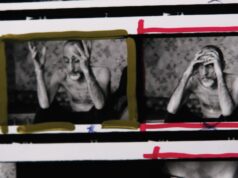
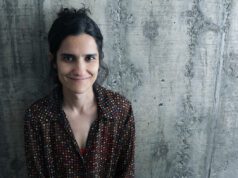
The programme also continued to explore emerging production models. Liebhart points to discussions around remote filmmaking through the masterclass dedicated to A Fox Under A Pink Moon, with Mehrdad Oskouei and Soraya Akhalaghi, as an example of how documentary practice itself is evolving.
Across the project showcases, one of the strongest impressions this year was the co-existence of formal experimentation and strategic discipline. Liebhart says the selected teams arrived highly prepared.
“The projects were very carefully mentored by our excellent team — Tracie Holder, Martin te Pas and Kim Christiansen — and demonstrated the value of being bold both in their themes and in the ways they approached them.”
He identifies stylistic diversity as one of the defining characteristics of this year’s selection, while noting that many teams had already entered financing and were now looking for more targeted support. “Most of the selected projects were already in the financing stage, and producers and filmmakers were looking for additional input on strategy, distribution and financing.”
Among the titles generating particular attention were pitching award winners The Lawyer, directed by Maciek Bochniak, and Diary of Experiences, helmed by Dorota Ros. “These two projects attracted significant interest,” Liebhart says, describing them as examples of “an innovative and bold approach to both the protagonists and the filmmaking process.”
The festival also arrives at a moment when Polish documentary cinema continues gaining international momentum. For Liebhart, the explanation lies in generational renewal combined with stronger institutional support. “A new generation of Polish documentary filmmakers is taking the lead and, with strong backing from the Polish Film Institute and regional funds while opening up to co-productions, the sky’s the limit.”
But structural gaps remain. “There is still a gap when it comes to the number of projects receiving strong financial backing from local broadcasters.”
Following the withdrawal of HBO Eastern Europe from its previous leadership role in the region, broadcasters including TVP and Canal+ are increasingly expected to fill that space. Liebhart notes that recent successes such as Closure by Michał Marczak and The Candidates of Death by Maciej Cuske still benefited from strong local broadcaster support.
Audience engagement remains another source of optimism. While the festival continues online until June 2, theatrical attendance had already surpassed 108,000 admissions by the close of the physical edition. “If online attendance reaches 2025 levels, total attendance should come to around 180,000.”
Many screenings sold out, particularly those accompanied by extended discussions with filmmakers and protagonists. As Liebhart puts it: “MDAG likes to take people out of screening rooms.”
Looking ahead, his ambition is for MDAG’s presence to extend well beyond the annual festival window. “MDAG Industry will aim to remain active year-round, much like our distribution activities,” he says. Against Gravity plans to release five festival titles theatrically at scale, and is exploring year-round mentoring and masterclass activity.
In a market increasingly defined by caution, MDAG’s bet appears to be that intimacy, editorial curation and long-term relationships still have room to grow.