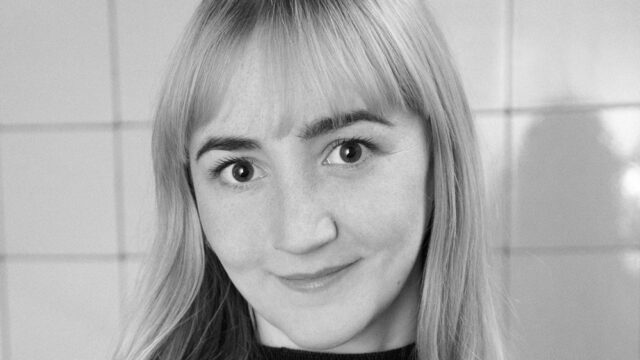
Fiction? Documentary? For prolific Danish producer Rikke Tambo Andersen, CEO of Tambo Film, both forms are equally appealing. Andersen is at the Nordisk Panorama this week with two of her new doc projects in the Forum.
One is the climate change documentary Fire, Water, Earth, Wind which has four leading directors attached: Janne Lindgren in Norway, Ewa Cederstam in Sweden, Rogue Rasmussen in the Faroe Islands and Phie Ambo in Denmark.
The Danish section (“water”) has been shooting on a tiny island threatened with flooding because of climate change. Bullfrogs are beginning to thrive in the sodden new environment – but the humans are struggling and are faced with losing their homes.
“Wind” is the element for the Faroe Islands section – and the focus there will be on the increasing number of storms that the population faces. Norway is “earth”, with a look at the dangerous landslides now happening. Sweden is ‘fire,” exploring how forests are bursting into flame.
“Of course, climate change is also creating new possibilities. We are trying not to make this dystopian film about [how] all the climate change is horrible and it is doomsday…we want to have an analytical, positive way at looking at all these things that are happening, what we can do and what are the positives about it,” Andersen states.
Having a different director in each country means that the production doesn’t have to travel – and it will therefore be possible to keep the carbon footprint down.
The second new project that Tambo is bring to Malmö is Ala’a Mohsen’s Born To Fight, a documentary about young Arabs in Tunisia. “The Danish business is very small. It’s easy to meet each other and talk,” the producer explains how she met Mohsen, a Copenhagen-based director with Iraqi roots. “We knew of each other and actually he came to me with the project.”
They are also working on another of the director’s personal projects, The Inheritance From Iraq. This recently received development support from the Danish Film Institute.
These docs sit alongside recent fiction films like the Kafkaesque drama The Penultimate (2021) by Jonas Kærup Hjort that screened at festivals around the world.
“It’s two very different ways of thinking, both creatively but also financially,” Andersen says of the contrast between dramas and docs. “It keeps me on my toes creatively.”
When she is working on a fictional project, there is always a lot of time spent working on the scripts and filling in the paperwork. “Sometimes things might go a little slow,” she acknowledges. Docs tend to move far more quickly but come with their own sets of obstacles.
Andersen’s company is affiliated with Copenhagen-based Beofilm. Tambo is independent but her partner, Peter Hyldahl, is MD of Biofilm, and is also co-owner of a string of other indie production outfits, among them Paloma Productions, Frau Film and Beo Starling. They all share offices and collaborate – but also keep their own distinctive footprints. By combining forces, they’re able to keep down the cost of overheads.
“We’re small companies but together, we can collaborate and be bigger if we need to – which is really nice,” is how Andersen sums up the arrangement.
The Tambo boss isn’t just a participant in the Nordisk Panorama. She is also on the board of the festival.
“The Nordisk Panorama has been part of my life,” Andersen says of her very lengthy association with the event. “When I was a young producer, this was also the place where I was showcasing the short films that I did. It was a place where to go to find collaborators and financing. Later on, it was the place where I showed my documentary films. And the Forum is a really important place to finance your documentaries. If we didn’t have that, it would be a problem.”
She points out that when you are at “a crucial stage” with a new doc, for instance looking for a broadcaster to come on board, Malmö is where you are most likely to find the best partner.
“And if you have three broadcasters from the Nordic region, you can of course apply for the Nordic Film and TV Fund which gives you 10% of your budget,” she explains another attraction of the event. “It’s the perfect place to meet co-producers and also talk to the other Nordic film institutes.”
An extra bonus this year is that there will be a delegation of French producers in town – and a potential opportunity for Tambo Film to strike new Gallic alliances on some of its projects.
Last year, Denmark was among the countries attempting to impose a 6% levy on streamers like Netflix and Amazon. The intention was to persuade these giant companies to support local production.
“The argument was that we make such good content in Denmark that if you want good content, then you are just going to have pay. I think that was maybe not being realistic or clever,” Andersen says of how the strategy backfired. Streamers reacted by holding back on commissioning and acquisitions – and the Government failed to receive support for the 6% levy.
“That’s really a problem at the moment,” the producer says. “If I had been building a business of making series for Netflix or Viaplay, it would have been a problem.”
As she acknowledges, documentaries in Denmark currently “have a hard time in theatres.” Nonetheless, she is hoping that her two projects in the Panorama will have a strong life “on the big screen.”
Meanwhile, Tambo is also involved in an intriguing new hybrid fiction-documentary project involving both Artificial Intelligence and the legendary German director Werner Herzog. About A Hero is using a script created by an AI-generated version of the great German director himself. “We are doing the script but we are also doing a documentary around it, speaking to a lot of exciting people in this new AI industry.” Herzog has given the project his blessing. “He knows the film and he approves of it…he doesn’t believe that AI will succeed, but he wishes us good luck!”