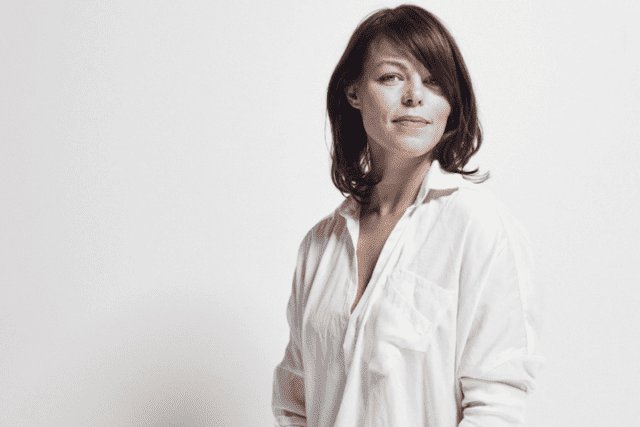
Iris Olsson is one of two documentary commissioners at the Finnish Film Foundation. That means she is gatekeeper, assessing which projects will receive support from the Foundation.
At Nordisk Panorama, she sees her main role as “being available to the filmmakers,” supporting those who are pitching, while also representing the Foundation, explaining how its funding systems work and how it approaches co-production.
“It [the Nordisk Panorama] is a very high-class industry event where I myself get to learn how Nordic countries think at the moment about what is happening,” Olsson says.
Several Finnish projects are being pitched in Malmö. One of the participating projects is Fog of War Over the Baltic Seaby Jaak Kilmi and Kiur Aarma, made through MRP Matila Röhr Productions Oy, which looks behind the stories of the crews and ships sunk during the World Wars in the Gulf of Finland.
In a completely different register is The Arctic Circle of Lust by Markku Heikkinen. Made through Zone2 Pictures Oy, this doc looks at “the hidden sexuality of Northern Finnish family men.”
Other films deal with climate change (John Webster’s Burnt Earth) or the position of women in western and Iranian culture over the last century (Omid – Hope by Iiris Härmä).
“They’re very different from each other in terms of style, topic and the artistry behind them,” Olsson says.
What these titles all have in common (the commissioner suggests) is that they look at their subjects “through this clear, honest Finnish lens…and all of them have international potential, as I see it.”
Olsson took up her role as commissioner in 2020 having worked successfully as a filmmaker (her credits include Summer’s Child) and having run the DocPoint Documentary festival in Helsinki.
“For me, personally, I was doing several productions involving travelling for several years. I was really going around and about the whole globe. I did feel I needed to settle down,” she explains why being the commissioner role was an attractive prospect. “The main thing is that I’ve always been very active in the field, in organisations and guilds and in working for the recognition of documentary films.”
Olsson and her fellow commissioner Eero Tammi are on fixed terms of three to five years.
“I would really love in the future to see the key talents take on this position for a while,” Olsson says. She believes that filmmakers can work effectively within national funding organisations because they understand the problems facing their fellow directors and producers.
On one level, being a commissioner is a thankless task. Olsson and Tammi reject many more projects than they approve. There are four application rounds each year. They are working with limited resources and have to shift their way through huge number of applications.
“It’s more about the approach to filmmaking – and to documentary filmmaking – than about the subject,” Olsson notes of how projects are chosen for support. “In our strategy, we support diversity. With the means we have, we are trying to help upcoming artists to start their career; we are trying to get the international hits; we are trying to tackle the big, current subjects.”
She and Tammi work “very individually” but strongly respect each other’s views. “We try really not to tamper on each other’s thoughts or choices. I really like that.”
Projects rejected by one commissioner can also be looked at by the other.
The Foundation doesn’t “commission” as such. Instead, it chooses from the docs submitted. In its June production support round, Saara Cantell’s feature documentary Annelin aika, about Finnish film star Anneli Sauli (1932–2022) received €120,000 (roughly half its overall budget); Terjo Aaltonen’s true crime documentary series Bona Fide received €52,000 of its €544,000 budget; Cantores Minores – Näin unta että lauloin, a new feature doc about a boys’ choir directed by Minna von Reiche and Tuuli Kuittinen, received €90,000 of its €245,000 budget and Kappale kauneinta Suomea, the new doc from Jukka Kärkkäinen (The Punk Syndrome), received €150,000 of a €475,000 budget.
“I would say for a feature doc, they go between €90,000 to €150,000 at the moment but we don’t have any set limits,” Olsson says. “Usually, it tends to be around 50%, 60%, of the whole budget.”
Success is measured by “festivals, awards, reviews…let’s say the noise it [a film] makes when it premieres.”
During the pandemic, for obvious reasons, documentary production slowed down almost to a complete halt. “The films that started their main production after the pandemic are yet to premiere,” Olsson observes. By next spring, there is likely to be a wave of new feature docs. It remains to be seen how they will do in cinemas.
“Since the streamers came, we have lost viewers in theatres, especially foe documentaries,” the commissioner acknowledges. As a rule of thumb, domestic documentaries perform better than foreign ones.
One Finnish co-production screening at Nordisk Panorama attracting attention is Juha Suonpää’s Lynx Man, about a Finnish recluse obsessed by the wild and elusive lynx. This is a project Olsson got behind at an early stage and which has won plaudits already at events like CPH:DOX.
The commissioner is also heartened by the young talent beginning to break through. She cites Tinja Ruusuvuori, who has made some very well received shorts (among them Burned Rubber On Asphalt) and is now looking to make her debut feature, The Matrix-archy (working title). Another fast-rising new director is Iiti Yli-Harj, known for her quirky and funny animated docs like All My Mum’s Phone Calls.
“The obstacle [in Finland] like everywhere else is to make documentary a sustainable profession and to keep documentary companies up and running,” Olsson identifies challenges that are faced not only Finland but anywhere else in Europe where documentaries are made.