Even before Covid, there was loneliness. Finnish Antti Lempiäinen offers three perspectives on suffering, a recently divorced man of 80, a single mum looking for romance and a young techno-loving female gamer who roams the streets of her town in her car to find some measure of solace. The director explains his film to Business Doc Europe.
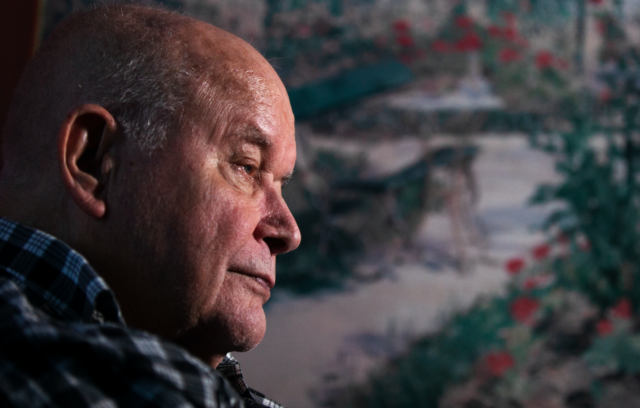
Octogenarian Lasse wants to dance, despite having nobody to dance with after he could no longer bear his wife’s infidelities and filed for divorce, thereafter expressing his pain in verse.
For single mum Emmamaria, the unrelenting noise and volume of housework drives her to distraction. She finds joy on Christmas Day with a male friend but ultimately finds most comfort in the family unit of her and her two daughters, emphasizing for director Lempiäinen, “the circularity of life.”
Clubber/gamer Emilia reads heartfelt passages from a personal diary before taking to her car. She empathises, in part, with a schoolshooter and what drove them to commit such horrendous deeds: “I couldn’t hurt anyone, but how about those who are totally broken, abandoned by the community and left alone when in need of help. It’s a time bomb that will go off.”
Solitaire Dance director Lempiäinen understood loneliness when looking after small children as his partner was away on protracted work periods. It was, he says, even before Covid, “the national number one national disease in Finland…causing, the same amount of health issues as smoking 11 cigarettes today.”
“I started to investigate it as a film because it’s something that you don’t talk about in Finland, that parents could be lonely with their kids because somehow it’s like nobody else’s business in the nuclear family world of Western society in terms of what happens in your family,” he underlines. “If you ask for help you are really sick or weak or crazy or whatever. It’s very stigmatizing… As long as there are people, there will be loneliness.”
Lempiäinen further remembers reading news reports of elderly people who had died in their homes and had lain there undiscovered for months and years. “And nobody missed them. So that’s like the Western world’s loneliness seen in a nutshell.”
The film presents more “circularity of life” as, late in the film, Lasse’s newly widowed brother comes back from Australia, allowing both to muse on their new-found bachelor status.
I ask if the adage of long winter Nordic nights is true in assuming higher levels of depression within the northern climes? Lempiäinen argues that this is a myth. “I would turn it upside down, because the light in the summer, that is more difficult to handle because you can’t hide anywhere,” he says of an alleged Finnish tendency towards introspection, or being “inner-centric people.”
“We really, really need our own space. And in the summertime, when it’s light everywhere, people are everywhere,” he adds.
The director also points to societal structures that diminish the necessity to mingle. “It [society] is built in a way that people don’t meet each other anymore. In the Western world, we have big cities where people are in their own shells and you don’t have to see anybody and the bills are getting paid by your bank,” he says. “And there is more, because if you are a teenager or a young girl like Amelia, she is really suffering from emotional loneliness, but she’s living pretty nicely. She has this big TV and her own flat and everything. It’s really cool, but still, she is desperately lonely.”
Post-COVID, the film of course has huge resonance and “some kind of impact value in that now people can engage and understand that this may have really been a problem before, but now it touches almost every one of us… I hear it all the time that people, because the film is about the experience of loneliness, find it really hard to watch because it’s like observational cinema from the seventies, with the spice of very expressive sound design and music.”
That said, the film drives home the timeless and axiomatic principle that we should all be looking out for our vulnerable neighbours, “the invisible ones with their individual experiences…Are there people like Lasse, Emmamaria or Emily near me? And if there are, what can I do for them?” Lempiäinen demands.