It could all have been so different for Joshua Seftel. He never intended to become a filmmaker. The original idea was that he would study medicine, become a doctor, perhaps join Médecins Sans Frontières and travel the world. That’s what his parents expected.
However, when he was in his early 20s, everything changed. In 1990, he directed Lost and Found, a doc about abandoned kids in Romania.
“I saw that the film led to the American adoption of thousands of Romanian children,” Seftel remembers. “I was planning to go to medical school after that but I just stopped and said ‘wait a sec. This medium is pretty powerful. Maybe I should consider doing a few more films before I go to Med School.’”
That was over three decades ago. Seftel is still making documentaries – and he is still hoping they will make a difference in people’s lives.
Stranger At The Gate, Seftel’s latest film [available on The New Yorker platform] is a 30-minute documentary about a person else who faces a sliding doors moment in his life.
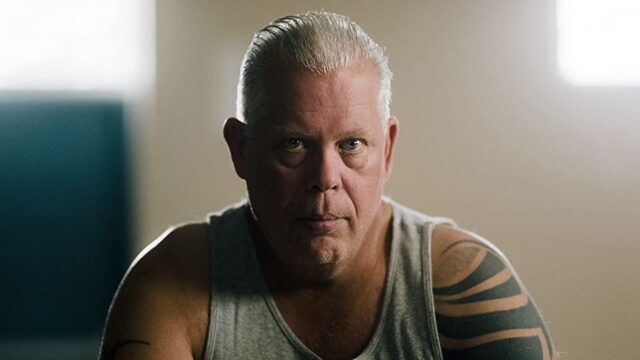
Former US Marine Mac McKinney is a very angry man. In the wake of 9/11, he served in Iraq and Afghanistan and he has developed a festering hatred of Muslims. He loathes the idea that they’re living in his community, in Muncie, Indiana, and that his step-daughter encounters them every day at school. McKinney draws up a plan. He’ll go to the local Islamic Centre and blow up everybody he can.
So far, so grim. What actually happens is that when McKinney turns up on his murderous mission, the worshippers there greeted him as if he was part of their family. He felt the love. Instead of killing them, he joined them.
Seftel grew up in upstate New York in a small town. As a child, he was frequently the object of anti-Semitic abuse. “It was kids calling me names, ‘kike, ‘Jewish Josh,’ throwing pennies at me.”
Years later, post-9/11, when he saw the hatred being levelled at Muslims in America, Seftel was reminded of his own youthful experiences. “I felt maybe I could do something with my filmmaking to counter this hatred that Muslims were facing. So I started making short documentaries,” the director recalls. That’s what prompted him to make his short doc series, Secret Life Of Muslims.
The film about McKinney is the 25th in the set. The docs have appeared in many different places. Some have been shown by the New York Times. Others have been on Vox. “They’ve been all over…each one is its own thing.”
Seftel and his team came across McKinney during their research. “He’s a fascinating character…a little bit scary. He had a story to tell.”
The film also features members of the Bahrami family – Muslims who’d moved to the US to escape war in Afghanistan in the 1980s. They were the ones who greeted McKinney as a long lost friend at the moment he was about to kill them.
“I’ll confess that I was feeling depressed about the state of the world at that time…it’s hard not to [be depressed] when you see the division and the hatred, the hate crimes and the violence,” Seftel reflects on his own state of mind before embarking on Stranger At The Gate.
Here, though, was a perfect story of redemption. Meeting the Bahramis rekindled the director’s faith in humanity. The Bahramis literally disarmed Mac with their kindness. “It’s just the idea of welcoming a stranger. That is something we don’t do any more. Or seeing someone who is different from you and being open to them and embracing them…we live in a world where we’ve stopped talking to people who disagree with us.”
Seftel tells the story through a series of interviews with the key protagonists. One of the main witnesses is Emily, McKinney’s very perceptive teenage step-daughter. “She has the first word and the last word. In my mind, she is at the heart of the story at the most critical moment when she confronts her father about his disdain for this little [Muslim] boy and his mother.”
McKinney was happy to appear in the film. “This is a story he wants to share with the world. He sees it as part of his redemption and making of amends.”
The Bahramis were harder to get on board. It turned out that Bibi Bahrami had been seriously ill and had recently come out of a coma. Nonetheless, she and her husband Dr Saber Bahrami both quickly “signed on” when he finally reached them.
This isn’t the typical talking head doc. Seftel films his interviews in lively and dynamic fashion. “Part of it is that these are really compelling people. The other part is that I try to think of interviews as verité. The camera is rolling. We’re trying to find these moments. We have multiple cameras on them. I am wearing a microphone as the interviewer because I feel like any moment could be usable.”
The director elaborates that he is looking for tiny moments that might “end up on the cutting room floor” in other films – gestures, looks, pauses, even sudden silences. The words are just one of the elements. “When we do these interviews, we watch every frame. It’s not just about what they’re saying. It’s about what they’re doing, their facial expression and what their eyes are saying.”
The film won a Special Jury mention at Tribeca. Seftel also screened it to the community in Muncie. The doc has been racking up awards at festivals since then. The New Yorker acquired it and put it on their platform earlier in the autumn.
“They [the New Yorker] have had a lot of success, Oscar nominations. We’re really proud to be part of it,” the director says of the celebrated magazine which has become an increasing power in the documentary field in recent years. “One of our goals was to make sure that the film was available to anyone and everyone…it is available worldwide at no cost,” Seftel adds another reason why he felt the New Yorker was the perfect partner for Stranger At The Gate.
Seftel has made dramatic features as well as full length docs. He has had a successful and enduring career but he still enjoys making shorts. “It’s a little like writing short stories. The novelist gets all the acclaim, the short story writer less so. In some respects, that is true in film too,” he reflects.
“For the last several years, I’ve tried to make at least one or two short documentaries a year. That’s partly because they cost less. If I find a topic I like, the chances are I can find a way to get it made quickly,” he says of the lure of short docs. “It’s harder to monetise a short but that’s not why I became a filmmaker. I became a filmmaker because I wanted to tell stories I thought were important and that I thought would make the world better in some small way…”