The Janes: image courtesy of HBO
“Pregnant? Don’t Want to be? Call Jane,” was the message found dotted in discreet places all around the city. The women in the Janes collective were unsung heroes – members of a secret network operating in Chicago in the late 1960s and early 1970s to provide abortions. This was a period before Roe vs Wade legalised abortions in the US in 1973. Abortion was dangerous and illegal, controlled by organised crime. The Janes Collective may also have been operating illegally, but it provided desperate women with a safe alternative.
Their story is told in The Janes, a hard-hitting new HBO-backed documentary from Tia Lessin and Emma Pildes. Inevitably, the film seems all the more topical now given the US Supreme Court’s recent overturning of Roe vs Wade.
Lessin and Pildes were in Amsterdam last month for the IDFA market screening of the film which had its world premiere in Sundance, and is now a leading awards contender.
The film marks Pildes’ first feature as a director. Her producing credits include such high profile titles as Jane Fonda In Five Acts and Spielberg. Lessin is known for her work as a producer for Michael Moore and for directing films like Citizen Koch and Trouble The Water.
“I thought I was just going to produce it because I was producing for Susan Lacy at the time, the director I usually produce for, and so I reached out to Tia [Lessin] because she’s a friend and I admire her work and her activism,” Pildes tells Business Doc Europe. “I thought she would be a great person to direct this.”
Pildes and Lessin secured development funding from HBO and started doing some of the interviews. They then decided that they should make the film together.
As the directors pointed out, the film has become an important campaigning tool in the new battle over abortion rights. “The movement is hamstrung in that there is 50 years of people who don’t know what America looks like when women don’t have a right to choose,” Pildes stresses. “That makes it a really hard thing to get people out onto the streets or to organise or whatever because they don’t know the death, isolation, fear and the condescension in the same way as the women of the Janes do.”
By giving the women from the Janes collective a platform in the documentary, the directors are jogging memories.
“We’ve had impact screenings as much as we could…,campus screenings, faith-based organisations, whomever wants to screen it in their communities, especially in the battleground states – we wanted to enable that to happen, to get those women’s voice out there,” Pildes explains the release strategy.
She has a strong family connection to the material. “My dad is the radical lawyer in the film. His first wife Judith was a ‘Jane.’” Pildes’ half-brother Daniel Arcana is one of the producers on the project.
“Daniel started developing the film when Trump got into office, lightly developing it,” she recalls. This was a point in times when, as Pildes puts it, “everything started to feel really acutely scary in a lot of ways.”
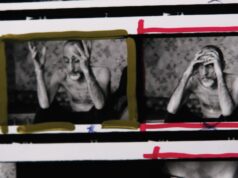
The Janes makes extensive use of archive material from the 60s and 70s. This has been cleaned up and looks as sharp as if it was shot yesterday. Home movies, amateur video, TV film from local broadcasters and experimental movies are all thrown into the mix. Intriguingly, The Janes also includes a few moments shot by Vivian Maier, the celebrated nanny and street photographer who was the subject of the 2013 feature documentary, Finding Vivian Maier.
“She [Maier] was Chicago-based and had not only shot photographs but 8mm [footage],” co-director Lessin notes. “What’s distinctive about it is that unlike a lot of photographers or photojournalists at the time, she actually films the entire body of a woman as opposed to bits and pieces of it. There was a lot of voyeuristic filming at the time.”
One disconcerting interviewee in the documentary is Mike, a heavily built man who looks as if he might have been a mob enforcer or merchant marine. In fact, he helped the Janes perform their operations.
“We were able to connect with him because Jody, who is one of the Janes in the film, and who passed away, her daughters were very supportive and helpful. They had kept in contact with him over the years,” Pildes explains how Mike was recruited for the documentary. “He was a street kid, he was a bricklayer, he was Mob-connected when he was young. He has told us he stuffed ballot boxes in the election for [Mayor] Daley. He’s a Chicago guy through and through. But he had a tenderness with these women and a morality around this job that was clear to the women.”
Mike had never talked in public about his experiences with the Janes. He made it clear he was “in it for the money” but also that he was “transformed by these women.”
“We could have made a whole film about him. He is such a fantastic and complicated person. We had to be quite restrained and judicious because it could have taken over the film,” Lessin says of the street tough who ended up performing abortions for a group of radical feminists. “At times, it was quite surprising to hear the next thing that would come out of his mouth.”
Lessin adds that she “likes being surprised” by her subjects. Mike duly obliged.
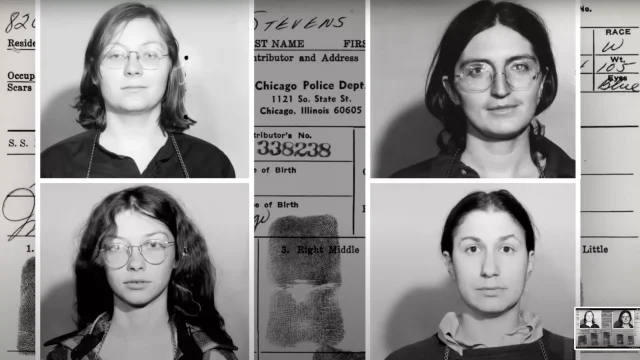
Most of the women in the collective were white and middle-class. They made unlikely outlaws, which is what they were in the eyes of the Chicago cops.
One point the film makes is that the 60s counter-culture and civil rights movement was characterised by machismo. The idealists shouting into megaphones at anti-war marches were invariably men.
“These women were relegated to getting coffee, to quiet roles in all of that,” Pildes notes of how the Janes members were treated. “Not a lot of people know about this and I think that has to do with [how] women’s history is not told in the same way heroic men’s history is told.”
However, the women in Chicago turned out to be far more resilient and inventive than most of their male counterparts. “They were a highly organised criminal operation,” says Pildes.
“I like to say they could have been robbing banks,” agrees Lessin. “They had all those skills and resources. They were sneaky and inventive…”
“But for good, not evil,” Pildes adds.
The Janes aired on HBO in the US this summer just a few weeks before the Supreme Court overturned the Roe vs Wade decision. “As much as we expected this decision, it was quite stunning…I was quite weepy about it,” Lessin recalls.
The film, she believes, has “normalised conversations about abortion,” Having seen The Janes, many women who had illegal abortions 50 years ago have come forward to talk about their experiences. Families have shared stories about relatives who died. “Almost every screening, someone offers as testimony that could belong in
the film because it’s so vivid and horrifying,” Lessin says, adding that “we were hoping the film would speak to a past history but it turns out it speaks to a very present grim reality.”
The directors hope their documentary won’t just “shock” contemporary audiences but (as Lessin says) will also “offer some hope and inspiration about what each of us can do to make difference, in the spirit of the Janes.”
The main goal now, both directors emphasise, is for the American public to vote for political candidates who support abortion rights.