Manu Riche’s new documentary will deliver a lyrical cri du coeur about fossil fuels and their corrosive effect on the planet. “The film doesn’t set out to describe the factual state of our world, nor present a numerical analysis. Instead, it explores how we got here, what caused us to reach this tipping point, the psychology and philosophy that underlie this debacle,” he says.
The €800,000 (35% in place) project is produced by Hans Everaert of Belgian production house Menuetto, whose La Civilpicked up the inaugural Audacity Prize at Cannes Un Certain Regard 2021. Supported by VAF, Carbon will be a co-production with the French-speaking Belgian Community (Thank You & Good Night Productions), France (Spectra) and Italy (Fidelio). Everaert hopes to complete financing by the middle of 2022 before shooting that summer through to winter ahead of a release during the first half of 2023, “hopefully at a big international film festival.” At RE>CONNEXT he is looking for the “the sales agent for the project, someone with experience and a network in both documentary and fiction,” he underlines.
In his pitch director Manu Riche explained both his express reason to make the film, the dilemma at its core (“a topic as hot as burning coal”) and the modus operandi he will deploy in articulating that to audiences.
“For over 200 years, fossil fuels have brought prosperity and social progress. Today, they could destroy us and turn our world into ruins,” he said. “Academics and environmentalists have put the subject high on the agenda, but do they really get to the hearts and minds of the general audience? Therefore, what better tool to explain the seriousness of the situation than by inviting the audience on a personal journey.”
“My personal history is one of coal and oil. My grandfather, Marcel, was a coal mining engineer. He started this career just after the First World War. That was the first war fueled by coal and petrol. It continued with my father who traded oil after the WW2, a period of unlimited growth and welfare. And it continues with me, a filmmaker, now that the dream starts to turn into a nightmare.”
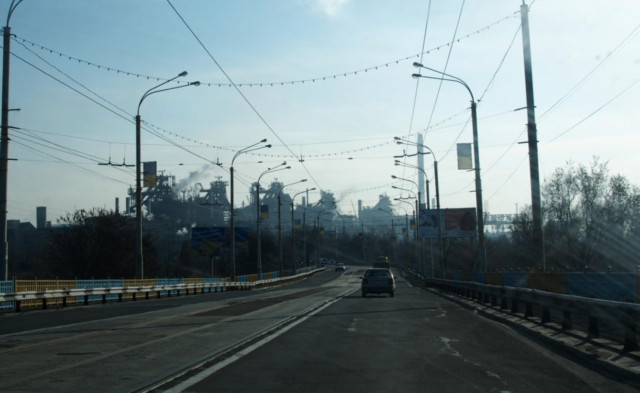
The film will set off from Belgium to Iraq, via Ukraine and Italy. Rome is where Pier Paolo Pasolini was beaten to death before he could complete his visionary novel ‘Petrolio’, which Riche describes as “a mythical poem of what we’re living right now, when the ideology of progress stops,” and whose sentiments inform the documentary.
“Somehow Pasolini was writing about the fossil fuel civilisation and of its collapse just before his assassination in that forgotten suburb of Ostia in 1975. Today a place inhabited by the forgotten ones, the Soudanese, the Afghans, the Iraqis…the refugees of our planet,” Riche writes.
The film will then further seek to address the iniquitous role of fossil fuels through the life of fellow lenser, Iraqi Hayder Helo, a refugee whose boat arrived on a Lesbos beach in 2014. “I am the Belgian son and grandson of men whose lives and fortunes were defined by the coal and oil industry. Hayder is a filmmaker and refugee of the petroleum wars in Iraq,” he says.
“Is Carbon a story foreshadowing the end?” Riche asks. “then how does one picture the end of a civilization and still create a positive impact on the audience? The answer lies in the use of cinematic language. It’s a film for everybody because it concerns everybody. A poetic tale full of associations that might help us to accept the devastation we leave behind.”
“Today we live at a tipping point. The human species, in its relentless pursuit of growth, founded on the use of fossil fuels, has thoroughly disrupted life on this planet,” he further writes. “I want to find a form that transcends the informative, as well as the cold but necessary scientific discourse, but which also transcends The Apocalypse itself. I want to capture The End in a poetic form, which approaches reality as sharply and succinctly as possible, but which does not force the viewer, which leaves the viewer free. The End cannot be grasped…”