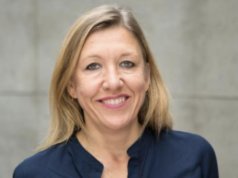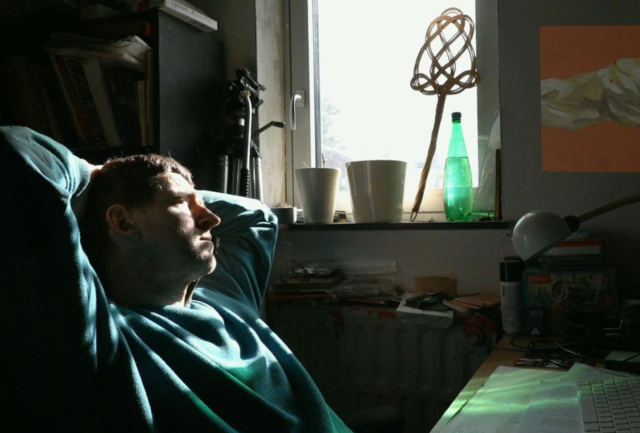
Now in his early 50s, Dries Meddens is finally making his documentary feature debut. Seed, his film, which is pitched at RE>CONNEXT this week, is a deeply personal project with a gestation stretching back almost 20 years, to when his father was still alive. In the film, he asks why his father, who suffered from bipolar disorder, was so badly treated, both by psychiatrists and by society in general.
Meddens started filming two decades ago but then his father “got ill over and over again – and I couldn’t continue,” he says. His father died in 2004. “Over the years, it always kept on popping up in my mind that this film, one day I should make it.”
Little by little, the director believes, the relationship between psychiatry and society has changed since then. The psychiatrists have become less domineering and more sympathetic. They’ve thought more carefully about prescribing drugs. This meant that Meddens felt he could make his film far more positive in tone than it would have been had he completed it at the time of his father’s death.
After his father’s death, Meddens began to research his family history very deeply. “One of the most important things I learned is how family culture, and some incidents which happened in a branch of the family, are transferred to later generations.”
The filmmaker had feared his father’s illness might be hereditary. However, the more he explored his subject, the more he suspected that the mental problems which led to his father being institutionalised weren’t caused just by genetics. His condition deteriorated because of what he experienced in his daily life.
Meddens’ grandfather, who had a similar temperament to his bipolar son, was a wealthy man living in Rotterdam. During the First World War, he sold all his assets and moved to a tiny village in the countryside. The grandfather was founder of an international plant breeding company.
“There is a huge parallel between plant breeding and psychiatry. They connect in the pharmaceutical industry which is also the same chemical industry that makes fertilisers and all the chemicals to protect our plants,” the director notes.
The grandfather was also a keen amateur artist. He left behind a treasure trove of paintings, drawings, diaries and letters. There are even some 8mm movies. He managed to re-invent his life and find a measure of peace.
However, Meddens’ father, who was born in 1928, wasn’t so lucky. He was the youngest of 11 children. In the closed, conservative society of 1940s and 1950s Holland, he was considered an outsider. “He grew up in a society that was hostile to this sensibility,” Meddens notes.
His behaviour wasn’t accepted. “I think I have been traumatised by the way my father was treated. He was just left on his own until it went completely wrong and then he was institutionalised,” Meddens reflects. “When he needed psychiatry, the answer was pills and no therapy, no human contact.”
As a young man, Meddens had his own foibles. He was kicked out of art school because he wouldn’t follow the instructions of his teachers. “When I started art school, my mother discovered she had cancer. One and a half years later, she died,” he remembers. He decided then to use all the facilities of the art school to “make a portrait series of people in grief.” This wasn’t at all what his teachers expected or wanted him to do. At the end of the year, the director sent him down, telling him: “I have to choose between you and my teachers – and you can understand that, of course, I’ve chosen my teachers.”
For the next 10 to 15 years, Meddens made “a good living” as a woodworker, designing and making furniture for private and business clients. “I don’t feel I am very good with my hands but I like it,” he says of his time as a carpenter before he moved into the documentary world.
Now, Meddens has children of his own. He and his wife are both artists and storytellers. “The fact that we are happy to live in a different way than the common society, I am quite sure that helps them to stand up for what they feel inside and it forms their character in a different way. They know they don’t have to fit into society…I now realise that is maybe the most important reason for me to be an artist.”
The documentary is being produced by Mark Daems at Associate Directors. “This project started very small. It’s my first feature film. I’m 51 but I’m a beginner, at the start of a new career. It took me quite a while to meet Mark. I had to accept a lot of closed doors before his door was open.”
The director had been drawn to Daems and Associate Directors by their work on another film, Ellen Vermeulen’s 9999, a documentary about mentally ill criminals in Belgium.
Now, Seed is ready to grow. Dutch partner Serious Film is aboard as is broadcaster VRT, and most of the money is in place. “We have 96% [of the budget],” the director says. He is looking for a little more money to help with the sound mix which he considers a crucial part of the project. Whatever happens now, the project which he first started nurturing two decades ago is now finally coming to fruition. “Next year, at Connext, I am hoping we will have a beautiful pitch with the film finished!”