

Director Louisiana Mees-Fongang had previously explored coming-of-age in her fictional short Waithood, which was about Greek teenagers struggling to make their way in an economically depressed society; that marked her graduation project from Ghent’s Royal Academy of Fine Arts.
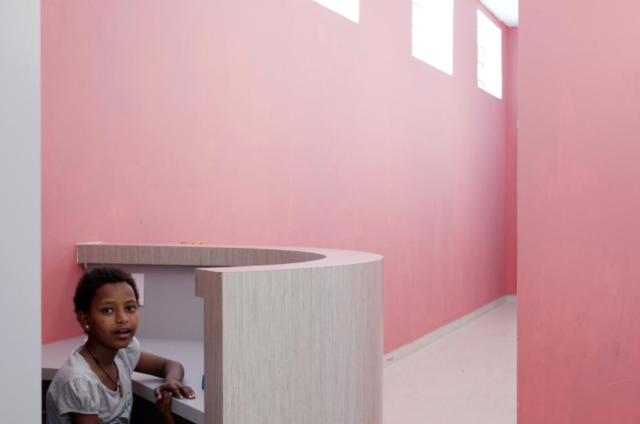
Now she tells a very different coming-of-age story in her feature documentary How Do You Spell Home? This intimate documentary portrait will follow four young refugees – Kheertana, Mesbah, Helen and Idris – who live together in a community home in Mechelen, Belgium after arriving from Afghanistan, Sri Lanka and Eritrea. They have to prepare for leaving the home when they turn 18, work independently and find their way in a new country.
How Do You Spell Home? focuses on similar sentiments [as Waithood] with newcomers and refugees in their new home country. However this film forms a more profound study on the theme of being and belonging. And it does so by dissecting different themes such as cultural exchange and cultural differences, migration, identity politics, mentorship and friendship.
She knew this was a side of the refugee life that hadn’t been captured on film before. “Nobody has seen a coming-of-age story that digs into the complex reality of minor newcomers and refugees,” Mees-Fongang says. “It’s unique to see these youngsters articulate in such a vulnerable way their search for identity and belonging in their new homeland.”
Barbara Dyck and Maarten Bernaerts will produce for Diplodokus, with Rayuela Production as co-producer, with support from VAF Filmfonds, VRT and Belga Films Fund. Now in development to ramp up more shooting by the end of October, the film will be pitched at Flanders Image’s Re>Connext online event, with plans for an autumn 2023 launch.
Mees-Fongang started working on the idea in 2019, pre-pandemic, and collaborated with podcasting expert Wederik De Backer, who co-writes the film. “Together we gained the trust of the characters,” she recalls. It helped that the employees at the center trusted them from the start. “The mentors transmitted a big part of that trust upon their pupils,” she says.
Building upon that, she continues, “Wederik and I have already spent a huge amount of time in the centre, sitting around, talking, playing games. The camera and sound devices were always present, but we were not necessarily recording. We always waited until a solid, safe, place was created with our presence included.”
Still, one challenge she found during the pre-production phase was the evolving attitude of one of her main protagonists. “When I returned to the centre after the first lockdown, Idris, one of the four main characters, acted very differently. Suddenly he was very introverted towards everyone and strongly resisted being filmed. But I stayed put and had confidence that with time he would open up again. And eventually he did.”
To capture some of the youthful spirit of her characters, Mees-Fongang says she wants the visual style of the documentary to be “quite musical and vibrant… It races from static observational shots to playfully moving along the characters while they are dancing, walking and playing cricket.”
She says with this feature she is learning “to work with patience and precision… Taking enough time to precisely build a film, reflect, dig deeper, is so essential in order to make profound and qualitative work.”
She adds with a laugh, “they say, films can be magical, but unfortunately they don’t magically appear on the screen!” She will also take that work ethic into her first fiction feature, which she is now developing.





