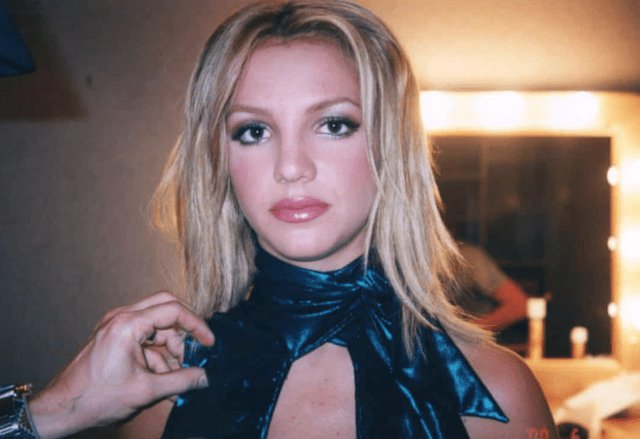
Framing Britney Spears. Photograph: Sky
The fact that Britney Spears appears to have been public property for so many years, a person haunted by the cliché she has come to represent, makes Samantha Stark’s balanced, intriguing and ultimately unsettling study such a powerful documentary. It may well have already grabbed headlines and sparked urgent responses, but at the its often painful core is the story of a young woman whose dalliance with fame and fortune has brought her little by way of happiness.
The New York Times film recently had its UK release via the Sky Documentaries channel following its airing earlier this month in the US on FX and Hulu, but it had already hit newspaper headlines – music, money and controversy are ever popular – especially after singer Justin Timberlake, who dated Spears early in their careers, took to social media to apologise for past comments.
His link to Spears, though, is just one small part of a career in showbusiness (and in the film it features just for a few minutes) that began at an early age and saw her grab fame, fortune and headlines – good and bad – before struggles with mental health in the late 2000s that saw her father eventually given legal control over her decisions, a ‘legal conservatorship’ that continues to exist.
The film’s title is somewhat enigmatic – is she ‘framed’ or are the filmmakers putting a frame to the Britney image? – but its conventional structure works perfectly as it details her career development and later spiral into a convoluted legal situation. The film is bookended by the passionate #FreeBritney campaign of her fans as they gather outside court in the hope that their idol will be “freed”.
In relatively straightforward manner, the film details her early years first as a child performer and then singer with the Mickey Mouse Club on television before her move to New York accompanied by friend/personal assistant Felicia Culotta, one of the few people close to Spears who is interviewed in the documentary. She is a warm counter-balance to the story, clear that she is taking part “so we could remind people why they fell in love with her in the first place.” Spears found massive fame with her first album …Baby One More Time, with her image striking a chord with young fans.
The darker side to fame comes as the paparazzi follow her every move around Los Angeles, with every new picture or video footage of her – angry, sad, loving, friendly – helping fuel an ever-increasing desire for media intrusion into every part of her life. Things take an even darker turn when she is caught in a custody battle for her two children, and soon her father reappears back in her life to take control of her affairs, eventually arranging the conservatorship.
Given that this is a New York Times production, the film works very hard to try and keep things relatively balanced. Certainly there is an underlying theme that Spears has been caught in a cycle of control by others, but at the same time – as the final credits make clear – her parents and most others close to her declined to be interviewed, and Spears herself has not really spoken in public since a 2008 MTV documentary series. The filmmakers note that she didn’t respond to requests to be interviewed…but do not know if their messages reached her. Her #FreeBritney fans say her Instagram posts were often coded messages about wanting freedom, and while that is open to interpretation there is certainly no doubt that this film details the sad story of a woman oppressed by the media, by society and eventually by a legal device.
US, 2021, 74mins
Dir: Samantha Spark
Production: Left/Right, New York Times
International Sales: Red Arrow Studios
Producers: Liz Hodes, Samantha Spark
Senior Story Editor: Liz Day
Cinematography: Emily Topper
Editors: Geoff O’Brien, Pierre Takal
Music: John E Low