There can be few documentaries that make their point as succinctly, or indeed as abrasively, as Sarah Vos’ White Balls on Walls, world-premiering November 11 at IDFA. It is a film very much of the time in which we are living, that tackles head on the subject of ethnic and gender diversity, or rather the lack of it, both within the board room and within the culture we consume.
Vos grew up loving the revered Stedelijk Museum in Amsterdam. Naturally artistic, by no means did the young Sarah have to be dragged to the place. She would happily go there of her own volition. “I loved the Stedelijk from day one,” she freely admits, with all its space and light, and its Mondriaans, its Chagalls and its Picassos.
And therein lies the problem.
The gallery has been, since its inception, populated by artworks which are, to put it bluntly, as unrepresentational as one could imagine. If the curators who filled the wall space are to be believed, then radical, inventive, iconoclastic 20thCentury art was produced only by white men. Where were the female artists? Where were the artists of colour? Where were the artists from the colonies, such as Suriname and Curaçao who had equal aesthetic and ethical claim over the gallery space?
What’s more, women may sit in the boardroom of the esteemed establishment but there isn’t a face of colour to be seen, at least not until Charl Landvreugd was appointed in late 2020 as Head of Research & Curatorial Practice.
When museum director Rein Wolfs himself joined in 2019, he came in with a new broom mentality, to rid the place of (as he notes in the film) outmoded, albeit subconscious, “institutional racism.” In fact, when filmmaker Vos approached him to make a documentary about the place, he described the new vision as “his task.”
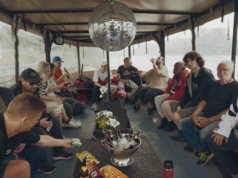
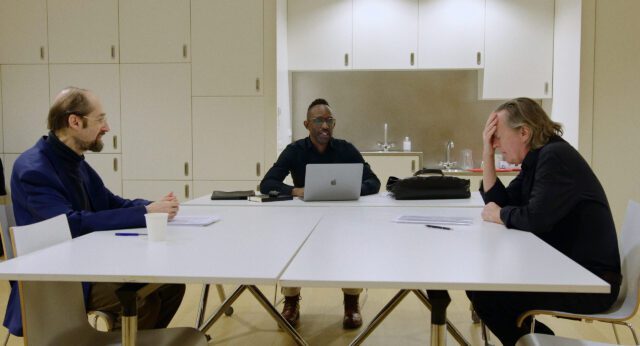
So, over the course of two and a half years, Vos follows Wolfs and his staff as they go about their business, most of them eager to effect essential structural change within their “snow white” establishment. But, as the documentary indicates, change doesn’t come as easily as the new museum director and his team would like…
Director Vos tells how she came from a family with liberal and ethical values, at least as observed within the times she was growing up. But her mother didn’t have it so good. Vos’ mum was very artistic, and an angry and vocal critic of the values espoused by her colonialist Belgian family when she was a child. So much so that she was packed off to a convent and given medication (which she managed to avoid taking) to dull her “free and questioning” mind.
One day as she was drawing in the convent graveyard, a kindly nun saw the girl’s artistic potential and recommended her to the St. Joseph Academy in Breda (the nun knew the director). And so she became an artist, and the subject of colonialism was a mainstay in her future work. But she was a woman, and the subject of colonialism was off limits for most galleries, and so she was rarely exhibited. But a war on injustice and malpractice had been declared, and daughter Sarah was determined to sign up as well for the fight.
All said, Vos is grateful to the Stedelijk museum in allowing her access to the staff and many meetings, whether at board level or one-on-one. She has delivered what she terms an “honest” documentary, based on the mutual trust between the filmmaker and her subjects, but nevertheless one that is unflinching in turning the gaze on the subject of injustice.
“If you see this film, you have to do something with it. It evokes in you [a sense] you have to do something. And that is a pretty good result,” she says.
How the grandees of Dutch cultural life will take to the film on November 11 during its glitzy world-premiere at Carré is an interesting question. “The whole cultural sector will be there,” Vos acknowledges. “That’s the power of the Stedelijk and Rein Wolfs to offer that possibility to open up this vulnerable topic.” She anticipates a positive response from other cultural institutions in need of (and, in many cases, undergoing) root and branch change. “You can [no longer] walk away and say, ‘Well, we’re a white institute and let’s leave it that way.’ You cannot do that,” Vos ends.
This article was published for See NL, a collaboration between Eye Film Museum and the Netherlands Film Fund.