The 30th Sheffield Doc Fest kicks off June 14 ahead of six days of intensive festival and industry activity. The multi-faceted event, which runs 14-19 June, includes a documentary film programme that offers up 37 world premieres, 20 international premieres, 10 European premieres, 47 UK premieres and 8 retrospective films, hailing from 52 countries of production.
Evidently, the UK’s most important docfest isn’t located in the vast media megapolis that is London. Rather, it is to be found in a small city in the north of England better known for coal mining, its links with the steel industry and for producing some of the best pop music of the last 40 years, from Def Leppard to Pulp to The Arctic Monkeys.
New MD Annabel Grundy, who joined DocFest from the BFI where she was project managing the UK Global Screen Fund, is an newly avowed Sheffielder who has lived in her adoptive city since 2016.
“There are lots of things about Sheffield that really chime with docs in terms of independent spirit, doing it yourself, succeeding against the odds,” she tells Business Doc Europe. “Also passion projects, documentaries, really requiring a lot of grit and commitment to get them made, which is different to the more London-centric media centre.”
“It is kind of charming…but you have to be scrappy to get stuff made in the north. Right. And you have to be scrappy to get stuff made as an independent,” she adds.
Creative Director Raul Niño Zambrano concurs. “There is this charming thing about this small city in the north of England which everybody is talking about everywhere. When I’m in Latin America, in Asia, everybody says, ‘oh, it was selected for Sheffield.’ It’s not even Sheffield Doc Fest, it is Sheffield…That spirit has translated for international audiences and filmmakers [into] this energy…‘Wow, that’s a festival that really takes care.’”
The 6-day doc event is multi-layered. Aside from the film programme, Sheffield hosts the Alternate Realities exhibition that showcases innovative non-fiction and immersive documentary across myriad forms, and the Public Talks during which some of the world’s leading voices in [non-fiction] film, immersive media and activism discuss their expansive careers and creative work.
For industry folk, Sheffield also offers a “summer getaway,” Grundy points out. “You get this chance for community and access and collaboration. That often doesn’t happen when you’re in London because you’re too busy with meetings. You’re too set already. You are battling different people’s PAs. And one of the things that Docfest has always been is really, really democratic and really, really open. So people come, they get away from the day-to-day, they get inspired, sometimes the sun shines, they see great films, they go to parties and they get beautiful independent films made.”
And of course there is the Industry programme, at the heart of which is MeetMarket which this year presents 48 documentary projects in development or at production stage, and set to be pitched within one-to-one meetings to the great and the good of international and UK doc industry.
“We want to be that place, you know, this home of documentary in the UK,” comments Zambrano. “I think that’s always what we want to be. Let’s put documentary at the center and let’s see how can we be the platform to show that.”
“I think the MeetMarket is still one of the world’s leading documentary finance forums,” adds MD Grundy, as she reflects on the development of the festival and its industry offer over the past 30 years. “I think on average it’s at least 2 million pounds worth of deals are done each year in the market. If you look at the appetite for people coming back to the market this year, we were really, really over-subscribed. I think we had about 500 submissions and selected just under 50 projects. So the proof is in the numbers.”
“Then we also have so much that we do for new talent,” Grundy adds about what else her Industry programme can offer. “We have bursary schemes, we have the Amplify Market, we have the Alternate Realities market. We have the Filmmaker Challenge, which is all about boosting people early in their career. And then our guest of honour is Iranian filmmaker Rakhshan Banietemad, a veteran of cinema, grandmother of documentary – massive legacy. So there’s a through-line from the start to finish for us that’s putting documentary at the heart and finding the next makers and the next artists and celebrating the people who broke ground.”
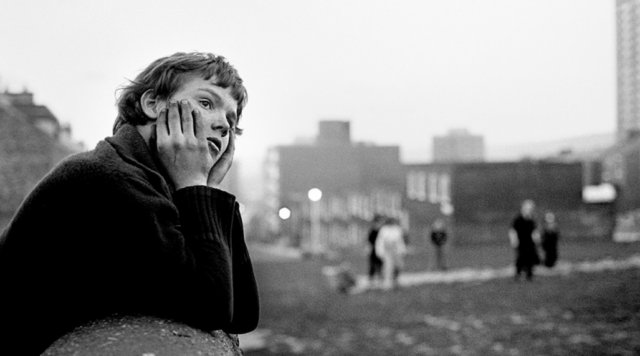
The opening film of the 30th Sheffield DocFest is Paul Sng’s Tish, a riveting portrait of the trailblazing photographer Tish Murtha, a woman finally recognized, a decade after her untimely death, as one of the most significant artists of her generation. “It’s for us a beautiful surprise that we can start with a British film, but for me specifically [to show one of] these stories that may look like they are very local, but are actually very universal. I think Paul did a wonderful job with this. He is a wonderful artist,” says Creative Director Zambrano.
“And it’s got relevant themes as well for the UK – really, really important conversations that are going on around class and who gets to be a creator and who gets to be remembered,” adds Grundy. “For me, I’m really happy that the subject is a woman, a female photographer overlooked in the photography world. As Raul says, the images are really beautiful, but you watch it and it just raises really relevant questions that you would think we might have moved on from [since] the 1970s, but actually the same struggles are there, if not harder, for some people to have a voice or even to pick up a camera.”
Towards the end of the interview Zambrano and Grundy reflected on the frequently expressed notion that we are living through a Golden Age of Documentary. Is this really so? “It’s more that documentary has got the attention it has always deserved,” underlines Zambrano, noting how it isn’t only the streamers and their behemoth non-fiction series that are hogging the limelight. The creative doc is gaining much prominence as well. “You see it now even more in Cannes or in Berlin. There are more and more documentaries. Venice has a big, big strand of documentaries at the moment, but it’s not that they were not present before. They are [just] getting more attention.”
Grundy comes to the question from another angle. “I love cinema, so I think we are just in a constant Golden Age of cinema. People love to say that we are not, and that cinema will die, but audiences keep coming back. And I think DocFest was one of the first festivals to make room for that collective and communal experience, and for understanding that documentary is, was and always has been cinema.”