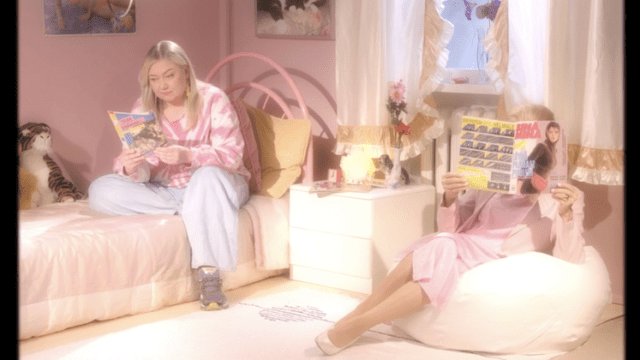
Set to world-premiere in the International Competition of the Thessaloniki International Documentary Film Festival, Soap Fever explores how the American daytime series The Bold and the Beautiful became an unlikely cultural lifeline in Finland during the severe economic downturn of the early 1990s.
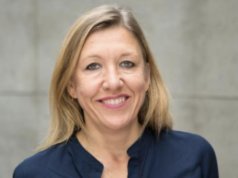
Helmed by Finnish filmmaker Inka Achté and produced by Liisa Karpo and Marianne Mäkelä for napafilms, the 78-minute documentary combines archival footage, fan testimonies and personal reflection to examine how escapist television fostered a sense of collective belonging at a time of widespread uncertainty.
For Achté, the origins of the project are deeply personal. She recalls entering her teenage years just as Finland was being shaken by the collapse of the Soviet Union and the ensuing recession. “I became a teenager in 1990, when the new decade started, and that time has stayed with me,” she says. The geopolitical upheaval had concrete repercussions at home: “There was a ripple effect on my father’s situation, and I always remember it as a very difficult and miserable time.”
Against this bleak backdrop, the sudden arrival of glossy American soap stars in Finland left a striking impression. Achté remembers the extraordinary contrast between the gloomy social climate and the enthusiastic reception given to the cast of The Bold and the Beautiful. “It was this total collision of a miserable societal atmosphere and these glamorous American stars who suddenly appeared in the middle of it,” she explains. The memory lingered for decades, eventually prompting her to explore the phenomenon in documentary form.
Interestingly, the craze was unique to that particular series. While Finnish audiences had previously embraced US dramas such as Dallas and Dynasty during the 1980s, Achté notes that none of them generated the same fervour. She believes timing played a decisive role. As unemployment surged and traditional community structures weakened during the recession, the daily soap offered viewers a form of routine and connection. “Many people lost their jobs, and even workplace communities collapsed,” she says. “Watching the show created a kind of structure in people’s lives.”
What began as a seemingly light-hearted idea gradually evolved into a more layered film. Achté initially imagined a straightforward television documentary built around talking heads and archive clips. However, as the project developed, both she and her financiers encouraged a deeper exploration of the social context. “I thought I’d make a simple, fun film about a pop-culture phenomenon,” she recalls. “But the financiers pushed me to go deeper, and I’m grateful for that.”
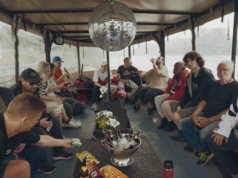
The director began her research by identifying participants whose personal stories reflected the broader cultural moment. Many were found through a casting call posted in Finnish fan communities dedicated to The Bold and the Beautiful on Facebook. Others emerged through personal networks and word-of-mouth. In most cases, the participants focused on their memories of the phenomenon rather than deeply personal experiences, which made the process relatively straightforward. One contributor, however, shared a more intimate story involving bullying, which required greater sensitivity during filming.
Archival material plays a central role in the film. Achté spent years digging through footage, beginning with the archives of Finland’s public broadcaster Yle. “I remembered newspapers writing about the stars coming to Finland and television interviews with them,” she says. When she began searching the broadcaster’s collection and other sources such as the National Archives and YouTube, she discovered an abundance of material documenting the extraordinary reception the actors received. “There were hour-long talk shows discussing the series and the actors’ visits. The Finnish nation went completely crazy.”
The phenomenon also reflected Finland’s relative isolation at the time. Cheap air travel was still rare, and the country had not yet joined the European Union. As a result, the arrival of American television stars felt like a major international event. “For such an isolated nation, it was huge that they came here and acknowledged our existence with their presence,” Achté notes.
Although the production team obtained the necessary licences to include clips from the series, the filmmakers ultimately decided not to interview the actors themselves. Partly, this was due to budget constraints that made travelling to the United States impractical. But Achté also came to feel that excluding them kept the focus on Finnish viewers and their relationship to the show. “It’s not really about them,” she says. “In a way, it’s better not to see them ageing and becoming ordinary people.”
The film’s editing process relied heavily on the long-standing collaboration between Achté and Swedish editor Magnus Svensson. The pair had previously worked together during the pandemic and had grown accustomed to working remotely. Most of the editing for Soap Fever was conducted independently in Stockholm over roughly three to three-and-a-half months, with the two meeting in person only briefly near the end of the process. “I trust him a lot,” Achté says. “He works quite independently and then shows me what he’s done.”
Beyond its exploration of a pop-culture moment, Soap Fever also carries a more personal dimension. Achté ultimately decided to incorporate elements of her own family history into the film, though determining how much to reveal proved challenging. She wanted audiences to understand why the subject resonated so strongly with her, particularly in relation to the emotional fall-out of the economic crisis. “There was an immense atmosphere of loss,” she reflects, describing the impact the recession had on her family. “The hardest thing was figuring out what part of my own story was relevant to include.”
For Achté, the doc also raises broader questions about how audiences experience escapism. While the soap opera offered an escape from everyday hardships, she argues that it also created a shared social experience that feels increasingly rare today. “We were all watching the same story at the same time,” she says. “No matter how silly the plot might have been, it created a sense of community and routine.”
By contrast, contemporary media consumption often happens in isolation, with viewers scattered across different platforms and personal devices. The communal aspect of television, she suggests, helped transform The Bold and the Beautiful into something larger than simple entertainment.
“The fantasy and the reality somehow collided,” Achté observes. “That’s what created the craze.”With its Thessaloniki world premiere marking the start of its festival journey, Soap Fever seeks to revisit a peculiar yet revealing cultural moment — one that demonstrates how, in times of crisis, even a glossy daytime soap can become a source of solidarity and hope.