Tin Castle may have been presented as a work in progress in Nyon this week but audiences won’t have long to wait for the completed feature. The French-Irish co-production (previously titled A Road Less Travelled) will have its world premiere in Critics’ Week in Cannes next month.
The documentary marks the second feature from fast rising Franco-Irish director Alexander Murphy. It follows hot on the heels of his debut, Goodbye Sisters, which premiered in Tallinn Black Nights Film Festival last year. French Cosme Bongrain is the producer through Goodseed Productions, the company he founded in 2016 after finishing film school at La Fémis. The Irish co-producer is Samson Films.
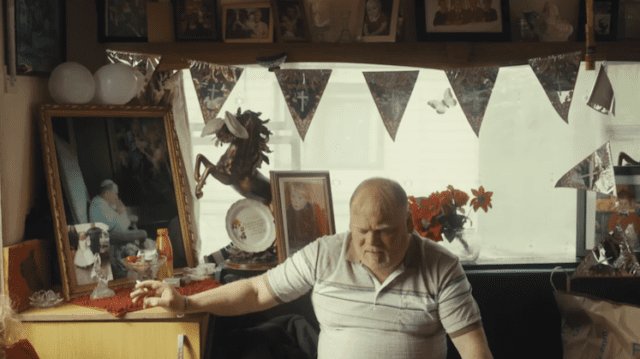
In the doc, Murphy follows the O’Reillys, an Irish traveller family living in a fixed caravan.
The title has a double meaning. On the one hand, Tin Castle refers to this caravan itself. On the other, it echoes an old slur. Historically, members of the Travelling community were referred to in racist and demeaning fashion as ‘tinkers.’
“The main point of the movie is to celebrate this culture of the travelling community both as identity that is valuable and as part of Irish culture,” the producer states.
Events are seen in the film through the eyes of the children.
The filmmakers are working fast to get the film finished in time for Cannes. They arrived in Nyon without the budget fully closed. “We need to bridge the gap. There is still financing to complete,” the producer acknowledges. At VdR last week, viewers got to see a 10-minute excerpt from the middle of the documentary.
As Tin Castle reveals, members of the Travelling community in Ireland remain marginalised and vulnerable. “They have difficulties to be integrated into society because of their way of life,” says Bongrain.
Murphy is the cinematographer of the film as well as its director. He’s a photographer too, well known for his ART(ist) series for the Rubis Mécénat foundation, profiling artists from a wide range of different cultural backgrounds in countries including South Africa and Jamaica.
“Most of the time when we do projects, he [Murphy] starts with a photographic series as he starts to connect with the community,” Bongrain explains the director’s approach. One way he gained the confidence of the Traveller families was by shooting films of their weddings, christenings and communions. “He went to, maybe, 20 different camps over the years until he found this specific family that are very special…”
Bongrain is referring to the O’Reillys – Pa, Lisa and their 10 children, all of them sharing the same battered old caravan with no wheels and no running water. Murphy has written evocatively of their “life of horses, puppies, welfare payments, disillusionment, survival, of parties in the rain and extravagant communions, of stifled laughter and unspoken pain.”
The producer says that when Murphy met the O’Reilly’s, he found them different to most of the other families he had encountered. “There was something softer, more protective and hidden [about them].”
The parents are sheltering their children both from aspects of the Traveller life and from mainstream society. The kids are being educated, though, and will have chances that some of their relatives lacked.
“He [Murphy] met the family for the first time in 2020 but it took time to get the full access, the trust – and also for him to find the right way to shoot the family,” the producer says.
Over several months, Murphy painstakingly showed the family what “it would mean to make a feature film with them at the centre.”
“Alex did an amazing job. It was more than a job. He built an amazing connection with the family so they regarded him more like a relative than a filmmaker coming from the outside.”
As he was Franco-Irish, the family considered him at first as a stranger, “but this helped a lot. If Alex had been 100% Irish, I guess we would have had much more trouble to make this movie.”
The family was very wary about their lives being caricatured or stereotyped. The filmmakers therefore screened some early footage to reassure them.
Tin Castle chronicles a way of life that is fast vanishing. Early on, Murphy wasn’t sure he’d find a clear narrative line. “But at the same time, he found a warmth with them that he didn’t find with any other family.”
Most of the material eventually used in the film was shot between late 2024 and early 2026. There were obvious physical constraints. Director Murphy is “very tall” and the caravan was “very small.” It was a struggle to shoot in such a tight environment.
“We were completely broke during this long time of making the movie. Last summer, while shooting in a horse fair gathering of all the families, we went into this fortune teller’s box. The family didn’t want to go there because they are superstitious,” the producer remembers.
He and Murphy decided to have a consultation anyway in case the fortune teller “might see the future of the film.” Gratifyingly, she told them both that “next year, in the summer, you will be in another space.” Now they’ve been selected for Cannes, they’re beginning to think she really did have the second sight.
When it comes to co-productions, Bongrain believes that Tin Castle is “quite a rare configuration” in that it is a 50/50 partnership between Goodseed and Irish outfit Samson. “We are both delegate producers…it’s a French initiative but it is an Irish topic.”
Three years ago, Bongrain passed a request to the Screen Ireland pavilion in Cannes asking for help finding a co-production partner. Samson was one of several companies who replied. “They are the right partner for many reasons and one is that they have already done a narrative feature with the Travelling community,” he refers to 2019’s festival hit, Float Like A Butterfly, which was made with non-professional actors.
“I had always heard that it is super complicated to make a co-production with the Anglo-Saxon system. Ireland is a bit different because it is attached to Europe, in Eurimages etc,” Bongrain reflects on the collaboration.
Funding “processes” between France and Ireland aren’t entirely in synch. There were wrinkles to be ironed out to do with “chronology” and cash flow. “But it’s all a question of trust,” the producer suggests. “As soon as the trust is there, we find a common language.”
This is one of the first documentaries to be made between France and Ireland as an official co-production since the two countries signed a coproduction agreement in late 2022.
One added pressure for Murphy and Bongrain is that they were finishing Murphy’s first feature Goodbye Sisters at the same time they were shooting Tin Castle.
Murphy, though, clearly likes to keep busy. He is already developing a new project, Born Free, that is being shot in the townships in Johannesburg.
Dulac Distribution is already aboard to release Tin Castle in France. Other backers of the film include CNC and Screen Ireland.