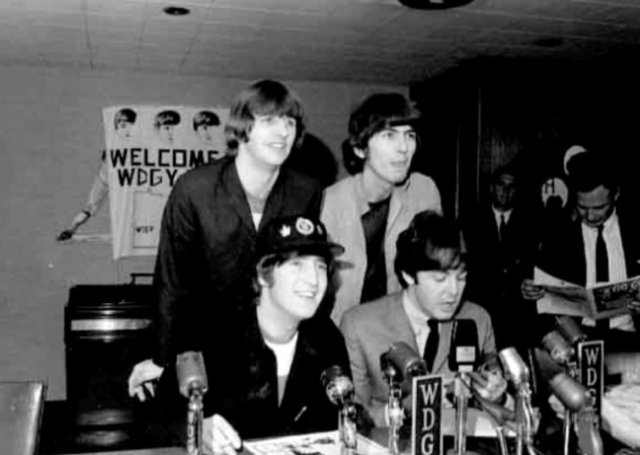
It all started with The Beatles. Andrei Ujică wanted to chronicle the arrival of the Fab Four in New York in 1965 to play their iconic Shea Stadium gig in 1965. He had access to great archive, culled from the digital vaults of broadcaster ABC, detailing John, Paul, George and Ringo’s hilarious performances during chaotic press conferences, as well as the mayhem on the streets, avenues and boulevards of NYC whenever they turned up.
But the sixties were a time of social and cultural upheaval, and Ujică wanted to widen the scope of his film.
That same weekend, LA was in flames as a result of race riots in the city’s Watts area. But Ujică stays in New York, finding contemporaneous footage of the Black communities in downtown Harlem. The streets there are teeming with life (although not everybody wants to be filmed), local discontent at racial injustice is articulated both in English and in French (for broadcast back in Europe) and the nightlife is glorious, especially during a twist-off dance tournament in a frenzied nightclub.
At the same time the enormous World Fair was in full swing in a Queens suburb decked out with cable cars and pavilions dedicated to cities from around the world – at this point the archive within the film goes full technicolour. Who could have imagined that the Vatican would allow Michelangelo’s Pietá to be shipped to, and displayed at, such a commercially-oriented event?
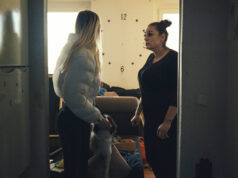
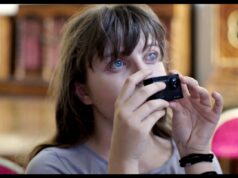
As the images unfold, we hear commentary from two young people, Geoffrey and Judith, whose animated depictions are, at times, inserted into the footage, and who are destined to meet at the Beatles concert. Geoffrey’s auto-fictional commentary on his amazement at encountering the four mop-heads courtesy of his dad, a radio DJ, is penned by writer Geoffrey O’Brien. Judith’s commentary is gleaned from the diaries of Beatles fan and writer Judith Kristen, with lyrical additions on the subject of butterflies taken from a short story that Ujică wrote when he was nineteen.
“I wanted to make a reference, like in Ulysses by James Joyce, to two characters who are prophetic within a city attending an event. And so I choose to make this with a young boy and a young girl, Geoffrey and Judith,” says the director, who also adds contemporaneous slang, such as “I’m so jazzed” to describe the characters’ sense of excitement.
Yes, it all started with The Beatles, but for Ujică it also ended with The Beatles. They are a phenomenon that has never been surpassed, he asserts, a band that “changed the social paradigm and the emotional profile of this generation and generations to come.”
“The sixties were, aesthetically, the most creative and accomplished decade of the second half of the 20th century. We had an explosion, an emergence, a flourishing in cinema, architecture, fashion and painting, and a pop music revolution during the ten years that The Beatles were together,” Ujică further stresses. “The chemistry between this group of four men, this genius and geniality, was never seen before or since in the entire 20th century. They are comparable only with Schubert in the 19th century who was equally prolific with his lieder [songs].”
The footage in the film is mesmeric, whether the spectacle of the irreverent Beatles answering mundane question as posed by crusty middle-aged (and decidedly unhip) male reporters or kids on a New York street extolling the band’s virtues. That said, one kid, who obviously didn’t read the memo, opines that The Beatles just aren’t as good as The Hullabaloos (whatever happened to them?).
In many ways the beating heart of TWST is the Harlem odyssey, not only for its visual and sonic vivacity but also its profundity. “No-one wants to be disdained,” says one Black New York resident (subtitled, as he is speaking French) who has suffered racial abuse, “and often by someone who is their inferior intellectually, socially and economically.”
The director balks at the suggestion that it took twelve years to make this film, given that he was delayed three times; by finance issues, the pandemic and “accidents, tragedies.” He reckons it took more like five years from inception to completion. “For an archival project of this amplitude that is the normal work time. You cannot do it in less.”
The finished film defines for Ujică what is cinema and what is human life, he tells BDE. “Life is, at the same time, a news report from the street and a fictional short story. We are all fragments of some news on the television. These are parts of the short story of our life, and the entire film is dealing with this. In the film, small lives are set against the huge backdrop of what’s happening in the world,” he says.
TWST, the film’s acronym title, of course suggests one of the Beatles’ most famous songs (Twist and Shout), and is reflected in the breathtaking Harlem dance sequence, but the song from which the acronym derives (Things We Said Today) hints at a deeper melancholy within the film. “The message of the film is like the lyrics of the song,” Ujică reflects. “This past is never retrievable, but it’s also never gone.”
TWST Things We Said Today by Andrei Ujică world premieres September 4 Out of Competition at Venice FF.