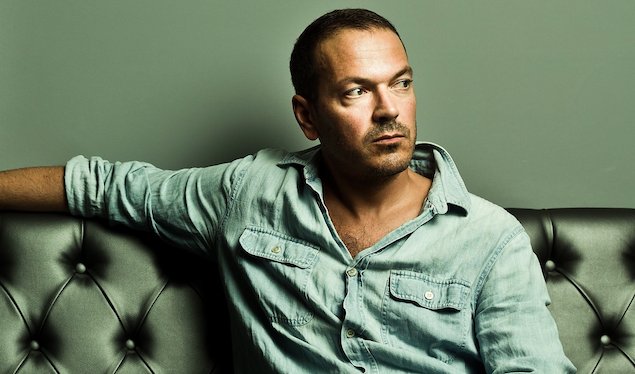
Look through the range of subjects covered in the films of Swiss director Jean-Stéphane Bron (who gave a Masterclass April 27 at VdR) and it’s hard, at least at first glance, to see how all the work fits together. Bron has made made documentaries about the street in Lausanne in which he lives (Ma rue de l’Ale), films about the rottenness of capitalism (Cleveland Versus Wall Street), portraits of billionaire populist politicians (The Blocher Experience) and studies of art institutions (The Paris Opera).
“The question that remains at the end of the film gives me the idea for the next movie,” Bron explains how his documentaries are far more closely linked to one another than they may appear.
The director has had success from the very start of his career. His first long feature film, Le Génie helvétique (2003), was a runaway hit at the Swiss box office. He describes it as “a film made in a corridor, behind the closed door of the Commission.” It follows a parliamentary committee in Bern which was drafting a new law on genetic engineering, “the most boring topic you can find,” he jokes.
The public wasn’t allowed to listen to the committee’s deliberations.
“We were able to capture all of the intrigues and to really follow five characters for two years,” Bron explains why the documentary made such compelling viewing in spite of its seemingly dry subject matter. It was like a drama in which the protagonists were “showing up back stage and telling you what was going on on stage.” Audiences were fascinated. The fact that they couldn’t see behind the closed door of the committee room meant they had had to imagine what was going on. “The narrative was very classical. It had unity of time, unity of space and strong characters who want something.”
Bron was exploring the battle between politics and economics. The liberals who warned about the dangers of genetic engineering at first appeared to win the debate but strong economic pressure was applied and the political victory was overturned.
Witnessing this turnaround gave the director the idea of making a film that was directly about economics – a subject about which he had no specialist knowledge. This led to Cleveland Versus Wall Street (2008) which tells the story of how Cleveland lawyers filed a lawsuit against 21 banks (including Swiss banks) who were responsible for the foreclosures which left thousands of people homeless.
“It was really about the wide forces of the economy and capitalism,” the director explains. “It was really the heart of the global financial crisis [in 2008] which started really in a few towns in the US.”
What should have been a local problem, relatively easy to contain, spread and became a full blown international crisis. As the upheaval continued, the public began to lose faith in elected officials. “It started this time of doubt about politics, doubting about politicians, doubting about reality – the doubt was everywhere.”
The doubt led to the growth of right-wing populist movements all over the world – and this in turn led Bron to his next film, The Blocher Experience (2013), in which he profiled Christoph Blocher, the hugely wealthy industrialist who remains a major force in Swiss politics. “He’s like a mini-Trump but a lot of people saw him as a man of the past who was nostalgic for the Swiss of the 50s and 60s. It’s absolutely not that. It [the Swiss People’s Party] was a very modern party with modern methods of communications. Actually, it has inspired a lot of other parties in Europe.”
Bron deliberately didn’t ask him questions. “I saw that the problem with a populist politician is that the language is coloured. The language is so corrupted that asking questions is not a really good way from my point of view. It is really more of a psychoanalysis of him…I discovered he was born in the same house as Carl Jung, the inventor of the idea of the collective subconscious. He [Blocher] is the symptom of something very Swiss.”
Bron describes this documentary as “very pessimistic, very dark…you have this rotten idea of democracy.”
As a riposte to the pessimism of The Blocher Experience, Bron next turned his gaze toward an institution which ran along more positive lines, namely The Paris Opera, the subject of his 2017 documentary. He didn’t know anything much about opera but saw the organisation as example of “a society which can work together…I was really depressed after this [Blocher] film and wanted to start something more joyful. It’s the idea of a little ideal society, a little ideal democracy.”
The Paris Opera isn’t perfect. There are disputes among the artists and productions don’t always run smoothly. Nonetheless, it’s an example of humans co-operating for a great good.
“The Paris Opera is really an immersive film in a very classic way. There are no interviews. I don’t interact with the protagonists. It’s observations – a very classic way of doing documentaries.”
Bron is very disciplined in what he shoots. He identifies his protagonists and what they want to achieve early on. He is not a director who films huge amounts of footage and then looks to find a structure for the film in the editing room. “Every character has a specific goal and so I follow all the obstacles.”
Even in the documentary made in his own street, the characters all have goals. “The butcher wants to pass the shop to his son. The guy who cleans the road, he wants to go and see his daughter.”
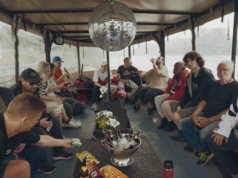
Bron relishes limitations. Some of his films are made in very confined spaces. For example, much of The Way I Look at You – Five Stories of Driving School (1999) is set inside the cars in which would-be drivers are learning the rules of the road. However, his 2020 documentary about AI, Five Stories From The Brain, has no such limitations. “There is no laboratory in the world which embodies all issues of researches into the brain and AI…we put the limits in having [only] five stories.”
All of Bron’s documentaries are made through Bande à Part Films, the company he founded with fellow directors Ursula Meier, Lionel Baier and and Frédéric Mermoud 15 years ago. They’re firm friends. “And we have a common ideal, a very high ideal, of what cinema should be. We are completely dedicated to what we do.” They are frank and direct about each other’s work. “Sometimes, it hurts a little bit!” They all know, though, that filmmaking can “feel very lonely” and they are always there to support each other.
Bron has regular support from Les Films Pelléas in France. He also works with sales agents like Les Films Du Losange, MK2 and Pathé – and his work is very strongly represented internationally. His films have been in major festivals from Cannes to Locarno.
The director’s latest project is about a massive seven site luxury cinema construction project in Paris. Pathé is supporting the film.
In spite of his success, Bron still talks about “all the ghosts” that surround his work, the “missed opportunities” and the elements in all this documentaries he would have loved to have done differently. He strives not to repeat himself and always looks for new ways of telling his stories. He does the sound on almost all his docs.
“I am really focused on the voices, to have beautiful voices; I am really focused on the way people express themselves, the rhythms. And for me, the centre [of documentary] is filming faces, people in action…it’s like a painter has the same subject, people’s faces, bodies. I don’t really see how you can film something else!”