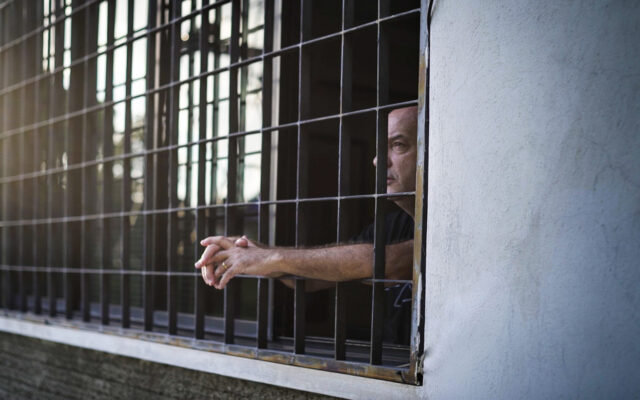
It sounds like something out of a Michael Mann crime movie such as Heat. Iván Simonovis, formerly one of Venezuela’s top police officers, is under strict house arrest. He cuts off the security tag on his ankle, clambers down a very high wall, is spirited away by well-wishers, goes into hiding and eventually escapes Venezuela on a speed boat. The engines cut out on the open sea but somehow Simonovis still makes it to freedom.
These are scenes captured on camera in My Father’s Prison, directed by Iván Andrés Simonovis Pertíñez, the cop’s son. The documentary (sold by Deckert and premiering in the International Competition at Visions Du Réel) tells the story of how Simonovis, head of the Caracas police, was arrested by forces close to then President Chavez on trumped up charges after a massacre during a street demonstration. He wasn’t responsible, yet was still sentenced to 30 years in jail.
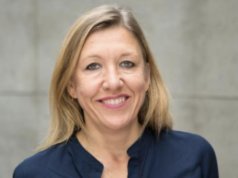
Simonovis and his family, including his son the filmmaker, are now living in exile. The son is in Berlin where he produces podcasts and makes his documentaries. Simonovis and his wife Bony Pertíñez are refugees in the US.
“It used to be more nostalgic but now I feel disappointment,” Simonovis Pertíñez says of his ambivalent attitude toward Venezuela, a country from which an estimated 6 million citizens have fled during the years in which Chavez and his successor President Maduro have been in power. “It’s not really feasible to think about going back. It would be too risky since I share my father’s name.”
The film includes footage from many different sources. There is material from the period when Simonovis was one of the most high-profile police officers in Venezuela, leading hostage negotiations and drugs busts. Complementing it are the old home movies showing him as a devoted father and family man.
“When I was growing up, Caracas, my home town, was extremely dangerous and so I really retreated into cinema, into films.” Pertíñez explains what drew him to documentary making. “It kind of saved me in a way, watching films…I used it [cinema] also to start documenting my father, all of this knowledge of the films I watched. I thought when he was sent back [from prison] to house arrest, I have to record something because he is probably going to die, he is probably going to be killed, or he is going back to prison.”
At that stage, no-one thought there was any chance of him escaping.
As the director notes, most of Venezuela’s cops come from the “lower classes.” They begin life with little opportunity. Simonovis had grown up with the dream of flying planes. Joining the police force gave him the chance to do that. Being from a “tough background” gave him resilience. He has also used humour to help him cope with the persecution he has faced.
“It’s a Venezuelan sensibility, that humour. We are able to laugh in the face of extreme despair,” his son says of how not just his father but the country as a whole has coped with the huge economic and social reversals of recent years.
The documentary contains accounts of the visits the family paid to the imprisoned father every Sunday afternoon. “In the beginning, it was a shock to see my father, who I always saw putting people in jail, being in jail himself,” the director recalls of those visits. The guards deliberately set out to humiliate visitors. They would make intrusive body checks on Simonovis’ wife or throw the food parcels they had brought onto the floor. Whenever the wife (who campaigned tirelessly on her husband’s behalf) made public comments about his detention, Simonovis would be thrown into solitary confinement for weeks on end.
Economically, the father’s imprisonment was very tough for the family. His trial lasted years. Sympathetic lawyers gave him preferential rates but the family savings were quickly depleted.
Pertíñez took unpaid leave from his job in Berlin with a video company to return to Caracas to film the documentary. On the credits, his producers remain anonymous for safety reasons, However, leading sales agent Deckert came on board the project in 2021 after it was chosen for the Dok.Incubator rough cut workshop.
The Simonovis case is very well known in Venezuela. He was one of the country’s most famous cops. Media exposure for the family was therefore nothing new.
When Simonovis was under house arrest, he and his son would watch many films together, among them Jafar Panahi’s This Is Not A Film (2011) about his experiences under house arrest in Iran.
One reason for Simonovis’ celebrity in Venezuela is that before his arrest, he was involved in a famous hostage situation in which a police sniper shot dead the hostage taker. The stand-off was shown live on TV. It was a shocking and tragic moment.
“I am sure that video helped the film not get into Sundance! Making a film about a policeman in 2023…it’s really a hard topic right now, and it’s controversial,” the director suggests. He argues that if the same situation occurred in Germany, the outcome would probably have been the same. Nonetheless, to some Western eyes, it seemed like an example of extreme police brutality from a third world police force.
“I think that video changed my father’s life. It made him a star from day to night because it went viral…everyone was watching it.”
Simonovis’ words to the police marksman, “one shot,” became famous.
The director believes that Venezuela now suffers from historical amnesia. The people have endured so much – and been let down so often by their politicians. – that they don’t want to look back on the turbulence of recent years. Nor do they ask too many questions about the continuing corruption in public life. “I see it on social media. These people I know from school, they just hang out with these criminals from the military. People just don’t care about morals.”
“Venezuela is an extremely violent country, it’s scary,” the director continues. “It’s also beautiful. It is so weird. Sometimes I think about it. It is like this tropical jungle with lots of concrete, lots of beautiful people…but then horrible things happen.”
Having told his father’s mind-boggling story, Pertíñez is now hoping to make a documentary about his grandmother. This, he promises, will be “even more crazy…”