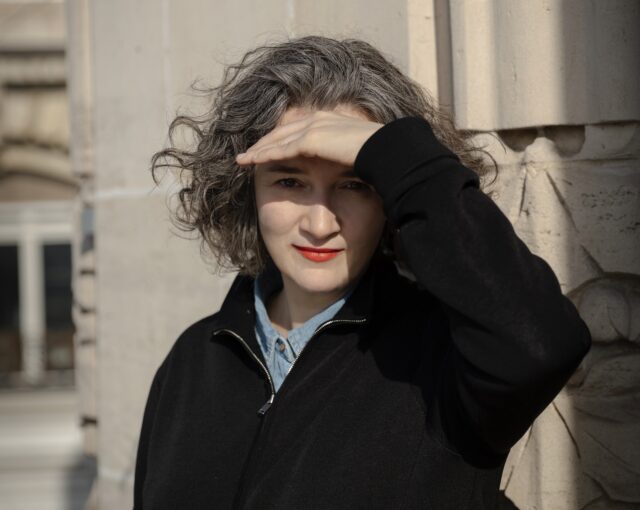
“What drives us is cinema,” VdR Artistic Director Emilie Bujès tells Business Doc Europe before doors open on the 55th Visions du Réel in Nyon, Switzerland. She could easily add eclecticism as a key driver, or the fest’s dedication to youth and emerging talent, as evidenced within an International Competition with ten of its 15 films made by first-time feature directors. She could further add adherence to cinematic aesthetics, given how few festivals can deliver art docs quite how Visions du Réel can.
“It’s a matter of looking for films that we think firstly are extremely contemporary, telling something what film is about in 2024, and trying to present that within a spectrum that is as wide as possible,” Bujès notes. This is evident in the flagship Competition sections (International, Burning Lights and National), but across the programme as a whole.
“For instance, the Opening Scenes section this year, which is dedicated to debut short films, is incredibly eclectic. You really get a sense of everything you can do, and think of, and imagine, and try and explore within a non-fiction film today,” she adds. “So, it’s really a matter of looking for voices, looking for gazes, look for attempts. I’d rather have a film that is imperfect, but that is attempting stuff, and is trying to look for the matching form and approach that is most relevant in regard to what is being portrayed, or said, or explained.”
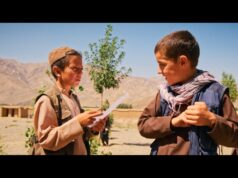
Not that weighty subjects are sidelined – far from it. Films from Ukrainian filmmakers are very much in evidence (with two in International Competition – In Limbo by Alina Maksimenko and Fragments of Ice by Maria Stoianova). And the legacy of other horrendous conflicts is examined in other Competition films, such as Syria (with Anas Zawahri’s My Memory Is Full of Ghosts), Afghanistan (Kamay by Shahrokh Bikaran and Ilyas Yourish) or the Balkan Wars (Nicole Vögele’s The Landscape and the Fury).
“In terms of [serious] content, we have that in the films. It’s just they’re packaged or framed in an artistic form that’s going to maybe allow another point of entry,” says Bujès. “Much more cinephile and much more leaning towards the different forms and shapes that cinema can take in 2024.”
Of course, a lighter corollary can be found in the other International Competition films such as Adrián Orr’s To Our Friends, which mingles fiction and documentary to convey the highly singular moment of transition from teen to adulthood; or Apple, Cider, Vinegar in which Belgian director Sofie Benoot uses a kidney stone as the starting point for a journey – part nature documentary, part philosophical tale – into the mineral world.
Nor is Visions du Réel averse to examining the perceived line between doc and fiction. “There is always that question – which for me is wrong – about feeling as if you have been lied to,” says Bujès of a perennial sticking point among docwatchers. “I think that in the paradigm where we are, the contract is with the author and not with what is exact. I mean, what is reality anyway? You are having a contract with the author, and the author is the one sharing his or her vision. You’re not being lied to because it’s him or her telling you something from their [perspective].”
Switzerland
Swiss docmakers are well represented in the programme with many selections across all sections (with three films in International Competition – Far West by Pierre-François Sauter; The Landscape and the Fury by Nicole Vögele, and The Song of Others by Vadim Jendreyko). The National Competition features 10 world and one international premiere.
“Documentary is very strong in Switzerland. I think it’s really one of the genres in which this country is very good, and also has had great success,” says Bujès, acknowledging how the small territory is also home to key international festivals such as Visions du Réel, Locarno and FIFDH.
“We are very lucky in Switzerland to have good funding and a lot of support from public institutions. I think that it’s definitely one thing that is allowing us festivals to work and to be very active and be committed and have teams that allows us to work in an efficient and fertile way,” Bujès adds. “And there are a lot of possibilities for producers, and I [think] that the festivals are contributing also to this. In French, we would call this is a circle of virtue – everyone contributing to everyone’s success, so to say. We are of course privileged that Switzerland is a country where things are going well in general. So we have time and capacity to focus all the more on culture.”
Festival Guests in 2024
The festival will place the spotlight on three Guests of Honour in 2024; Chinese filmmaker Jia Zhang-Ke, French Alice Diop and US filmmaker John Wilson, maker of the series How To With John Wilson) Given the preponderance of youth across the programme in 2024, the focus on these established talents helps completes the festival spectrum, Bujès argues.
Jia Zhang-Ke will be handed the festival’s Honorary Prize on Monday 15 April by the great Claire Denis before the screening of his film Ash Is Purest White (2018). VdR will screen, in total, twelve of his films – fiction, documentary and hybrid – and a masterclass will be held on Tuesday 16 April (at 2pm). “Resisting censorship and tirelessly defending the cultural significance of his country’s cinematic output, Jia Zhang-Ke weaves long-form, epic-style stories to explore personal and multifaceted journeys that challenge the notion of dissolution of the individual within the national narrative,” the festival underlines.
“I have been trying to invite Zhang-Ke for many years,” Bujès admits. “What I find particularly fascinating is the way he’s able to, no matter the genre, create a language that you can recognize and that can [offer] coherence throughout his whole (very impressive) work.”
French filmmaker Alice Diop will hold a masterclass on Saturday 13 April, and her films will be screened throughout the Festival. “We are extremely honoured to welcome a figure who embodies a new generation of French cinema and who, through her cinematographically ambitious works, manages to spark an essential reflection on contemporary French society,” says Bujès.
John Wilson is “the perfect addition” to the guest list, Bujès further notes. “Welcoming such a filmmaker is both a great honour and an incredible opportunity to showcase a singular and original body of work: joyful, personal, droll, collaborative and highly contemporary, all with [a] cinephile eye.”
“I think that it’s great to be able to make comedy in general, whether in fiction or documentary. I think that in documentary it’s even more difficult and rare than in fiction. But when it’s done well, for me it’s basically irresistible,” Bujès signs off.