Giedrė Žickytė’s The Jump, about a Lithuanian sailor’s audacious bid for freedom during the Cold War and the resulting diplomatic furore, world-premieres October 9 at the 36th Warsaw Film Festival. The director talks to Business Doc Europe about boats, intrigue…and Henry Kissinger.
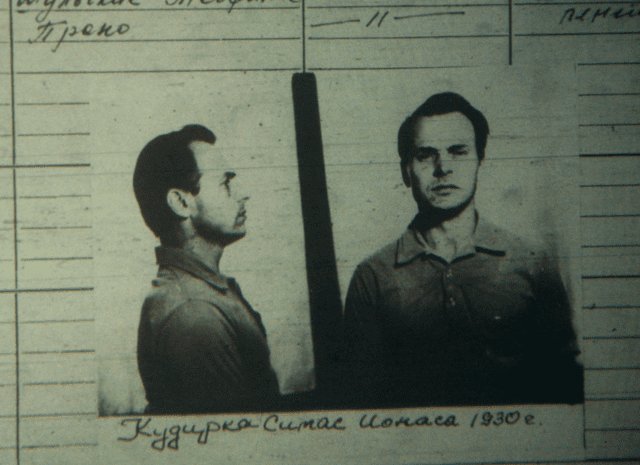
It was one of the biggest news stories of the Cold War era. When, in 1970, a Lithuanian (then Soviet) seaman literally jumped ship onto a US coastguard cutter moored off Martha’s Vineyard, no-one was on hand to advise on US policy regarding defectors. In the midst of such diplomatic uncertainty, Soviet authorities were allowed to board the USCGC Vigilant to forcibly return the man, Simas Kidurka, to his own ship. Nobody assumed he would ever be heard of again.
But news of the incident leaked out. One of the mariners on board the US ship was Robert Brieze, himself a Latvian refugee, who tried to intervene on Kidurka’s behalf, before being told by a naval officer that there was nothing he could do.
There were local protests within the US Lithuanian community, and then national protests which, we are told in the film, “spread like ideological measles.” Legendary newsman Walter Cronkite covered the story in depth and the UN Commissioner for Human Rights claimed that the US had violated the UN convention of human rights for the return of refugees.
President Nixon expressed both public regret over the incident during a news conference and private fury at having heard about it at the same time as the American public.
Meanwhile Kudirka was sent to a labour camp in the Urals where temperatures regularly plummeted to -50 degrees, and where, for three years, he would continually feel “the breath of Siberia.”
But the Lithuanian community in America never forgot him, and by chance Grazina Paegle, then in her early 20’s, discovered through family connections back in the Soviet Union that Kudirka’s mother was born in the US, before getting pregnant and returning to Europe as a young woman. Was it at all possible that Kudirka could be a US citizen? And could there be a happy outcome to this horror story?
In short, the answer was yes, and Kidurka’s subsequent life in the US was widely documented. But Lithuanian director Giedrė Žickytė knew nothing at all of the story when she was growing up. “Soviets were not writing about this story because they didn’t want to inspire others to do the same,” she says.
It was when she was attending a Q and A in LA after the screening of one of her films that an audience member mentioned the curious history of Kidurka and his “leap for freedom.” At which point Žickytė went into overdrive.
“I felt inspired. I started an investigation…and when I started digging into the subject, oh my God, I could already have made a series,” she says, pointing out the wealth of detail she was forced to leave out of her film, such as the story of the Scottish man who tries to hijack a plane to protest at Kidurka’s incarceration. “Strong scenes are like beats of dramaturgy when next to each other, they can make the whole sequence weaker,” she observes.
Instead, she delivers the riveting story in economical, balanced and highly entertaining fashion, using the hero of the tale, Kidurka himself fifty years on, as the vehicle for its telling.
Kidurka is a fabulous oddity, expressive, physical and lachrymose in equal measure, whether back onboard the USCGC Vigilant re-enacting his bid for escape and subsequent capture or visiting the cell in the Urals where he spent three years. We also see him in lots of archive, from initial expressions of gratitude on release through a slowly developing sense of disillusionment with his adopted homeland, before his eventual repatriation to Lithuania.
“The first day I met with him, I was not even sure how to use him in the movie,” confesses Žickytė. “My first idea of the film was that we would only realise he was alive at the end.”
“He really didn’t want to talk about the story. He was tired of the story. He was caring about his sick wife. He couldn’t leave the home, and even to go to the shop was already a big journey because he didn’t want to leave his wife alone.”
“But like everywhere in documentary, our biggest partner is time…and after the time that we spent together when I got to know him more and more, he started to trust me more and more, and we both realised why we are making this film, and he also saw the passion of our crew,” Žickytė continues. “It [the film] happened, and I am very thankful for my character that he agreed, even in his near 90’s, to go for this journey. But most important, I think it was important for him. It worked as a therapy for him.”
The director also enlisted the support of other key witnesses to the Kidurka story, such as the regretful Ralph Eustis, who was captain of the US ship, and Paul Pakos, an officer who locked eyes with the Lithuanian across the water before the jump, but who reluctantly had to hand him over after receiving orders from higher up. The US/Lithuanian campaigners Daiva Kezys and Grazina Paegle give viable and articulate accounts of the roles they played in his eventual liberation.
Aside from the great archive footage (we also see scenes from an Emmy Award-winning TV movie about Kidurka’s life, starring Alan Arkin), for Žickytė the film would never have been complete without gaining access to the Vigilant, where all the initial action played out. “When I learned that the ship is still sailing, that it is still working, the same ship in which the incident happened, I went nuts. I need this ship,” she says.
And she also needed Henry Kissinger – and she got him. Kissinger was part of the post-Nixon administration, headed up Gerald Ford, that finally secured the Lithuanian’s release in 1974. When National Security Advisor Kissinger was asked to make the eulogy at Ford’s funeral in 2006, Kidurka’s story was central to his oration.
To get her man, Žickytė was on continual standby in New York for the call from Kissinger’s office, even as the film was being edited. When it came, and she concedes that was a near “miracle” given the number of requests he receives for comment, she was granted an hour with him. She says that he was “charismatic,” and in the film he tells her, “I am an immigrant myself. I am always sympathetic to immigrants.”
Now that the film is finished, does Žickytė feel an urge to make the series that her abundance of excess material would easily fill? No, is the simple answer. Documentary making is not about sharing everything that you have, she underlines. “A film is a film. Like a sentence. If it is not told, that means it was not meant to be told.”
“At the moment I feel that I have made the film, and I have placed the dot [the period]. And now I want to be free.”
Director: Giedre Žickyte
Countries: Lithuania, Latvia, France, United States
Producers: Giedre Žickyte, Uldis Cekulis
Co–producers: Catherine Siméon, Daniel J. Chalfen
Executive producers: Jim Butterworth, Vesna Cudic, Andrius Korvel, Maxime Owyszer
Production: Moonmakers, VFS Films, Faites un Voeu, Naked Edge Films (US)
Backing: Lithuanian Film Centre (LT), Creative Europe programme, CNC (FR), National Film Centre of Latvia (LV), Région Bourgogne-Franche-Comté (FR)
Sales: Met Film Sales