

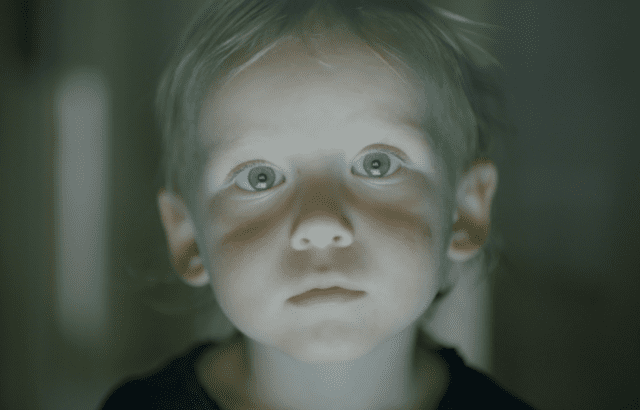
Mexican-American director Natalia Almada’s documentary Users (sold by Film Constellation) was a world premiere in Sundance in January [and won her the Directing Award). It now receives its international premiere in the main competition at Visions du Réel. The film is a poetic meditation both on motherhood and on the way that technology is disrupting humans’ relationship with the natural world.
“You know, for me I think, and probably for every filmmaker I know, it is disappointing and difficult to have to navigate releasing a film in this kind of virtual setting,” Almada reflects on a Sundance experience that was a triumph for her – but one she could only enjoy remotely.
“The silver lining might be that we’ll come out of this [the pandemic] with a new appreciation for what the cinema offers us. That said, Sundance and all the festivals are to be commended for their efforts to figure out ways to keep watching films and to have a sense of community of some kind. It has got to be for hard for them on every level, administratively, technically, everything, to figure out how to make the films available and create interesting platforms for discussion,” she adds.
There’s a line in her film in which a mother wonders whether her baby son will “remember the taste of spring water.”
Ask the director about her own experience of technology when she was a kid and she gives an intriguing answer.
“I grew up in a very messy and mixed background because my parents were divorced.” A large part of her childhood was spent with her mother, who was American, in Chicago, “a very urban city life.” However, her Mexican father was a cattle rancher. “We had a remote ranch where I spent a lot of my childhood and it marked me the most. It didn’t have anything. It was on an island so we were separate from everything. No infrastructure, no electricity.”
During her early childhood, her father built a house and then a well. There were solar panels for warmth and the ranch eventually had its own generator. Anything they needed, they had to bring in from the outside.
It is clear that in this period of her life, at least, she felt very connected to the natural world.
“All of that marked me and my relationship to technology a lot,” Almada reflects. “Speaking of communication at the time, we didn’t have cell phones. My father was a pilot and so we used radio communication to have some contact to others.”
Almada works closely on her films with her husband, Dave Cerf, who composed the score for Users, and Dave’s brother Bennett, the film’s cinematographer. The Cerfs’ father is Vinton Cerf, the brilliant professor and computer scientist often called “the father of the internet.” (He helped invent TCP/IP). Unsurprisingly, Dave and Bennett grew up with a very different attitude toward technology to what she experienced on the Mexican ranch.
Users is full of awe-inspiring imagery of labs, pipes, wires, freeways and buildings as well as huge forest fires. The film is intended to be “a very aesthetic, immersive experience.” After its Sundance premiere, several reviewers compared it to Godfrey Reggio’s films such as Koyaanisqatsi which also explored the relationship between technology and the natural world.
“I believe in aesthetics and beauty; the power of the image and sound,” Almada declares. She acknowledges the influence of Brazilian photographer Sebastião Salgado, famous for his pictures of the world’s poorest workers. In her documentaries, Almada also draws on writing “that has looked at the relationship between violence and beauty. You could look at what we have done to the environment as a kind of violence.”
In Users, Almada makes ingenious use of drone photography. It helped that cinematographer Bennett Cerf has his own drone company and is an expert drone pilot.
When financiers asked the director what Users was about, Almada acknowledged its ambivalent view on technology. “People often think it [ambivalence] means you don’t know what you are saying but I thought of it more as we are trying to hold opposing ideas, views and feelings.”
Most of Users was already shot before the start of the pandemic. Almada and her small crew still had some filming to complete, though. “And what was really, really challenging was that this is a co-production with Mexico. We have a grant from the Mexican government to finish the film in Mexico.” This required improvisation and ingenuity, with parts of the post-production, such as colour correction, being done simultaneously in both the US and Mexico.
With its spectacular visuals, Users was always intended to be seen on a big screen. However, Covid demanded compromises. ”I do think we lose a lot,” the director says of showing the film online. “On the other hand, people right now are experiencing technology in such an intimate and profound way,” she reflects on the lockdown period. “My hope is that the film slips into that experience is everybody is having and into deeper dialogues about that intimate relationship we have to technology and how it changes us in fundamental ways.”
This is a very personal project for its director. Her own children feature prominently. “I am an older mum. I had my kids in my early 40s. I was focusing on my career and not on building a family in my 30s and late 20s. So, as I approached motherhood, I thought a lot about how I was going to keep being a filmmaker. It isn’t so much a job as it is who I am and how I approach the world. The thought of losing that was terrifying,” Almada explains. “I thought about it and thought that, for me, all kind of creative impetus in my life comes from change for one kind or another. Having children is a huge change.”
Rather than focusing on how “difficult it is to carve out time” for her filmmaking while looking after her kids, Almada decided instead to examine how parenthood was affecting her view of the world. “I think the film really comes out of that. It’s not only how do I see the world through the kids’ eyes but how does having children fundamentally change the way I see the world,” Almada says. “Also, there’s a feminist angle for me which was [to make] this epic, visual film…those kind of films are usually made by men and the domestic space is not usually a part of that. How do you challenge that?”
Users is travelling widely on the festival circuit. After Visions Du Réel, it will also be at CPH: DOX, Hot Docs and various other events, most of which will include physical screenings. As for distribution plans after that, Almada suggests “we’re still just figuring it all out.”





