Welcome to the puppet show. Tomasz Wolski’s new feature documentary (world-premiering in International Competition at Visions Du Réel) remembers seismic events in Communist-controlled Poland in December 1970.
There were food shortages in cities all over the country. A few days before Christmas, the authorities suddenly imposed very sharp price rises on everything from meat and fish to milk. This unleashed a wave of strikes, forcing the Ministry of Interior Affairs in Warsaw to put together a crisis team to deal with the unfolding situation.
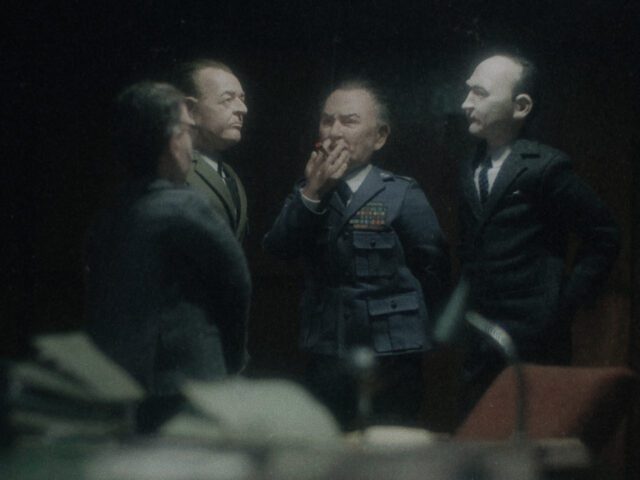
Wolski has got hold of transcripts of the secret conversations between the apparatchiks from the Ministry in their dark and shadowy offices. The documentary makes ingenious use of archive but the politicians themselves have been brought back to life by the director as life-like dolls.
“The whole story of this film started when I was digging in the archives for An Ordinary Country,” the director says of his previous documentary, released last year, which drew on the records of Poland’s snooping, eavesdropping, blackmailing secret police during the Communist era. “When I found these phone calls, I was amazed. There was about 15 or 16 hours of conversation.”
Early on, Wolski had intended to incorporate the conversation transcripts in An Ordinary Country. He soon realised, though, that the material wouldn’t fit there. This was a different story which needed a film of its own.
Born in 1977, the director didn’t live through the events his documentary depicts. However, he saw the stand-off between the Government and the striking workers as a universal story, one repeated with equally tragic consequences in many other countries in the Eastern Bloc. (The 1970 protests ended in tragic fashion. The army intervened. Protesting workers were killed.)
“It happened everywhere. It happened in Poland [again] after 1970, in the 80s. It happened now in Belarus. It happened in the States,” Wolski reflects. When he was finishing the editing of the documentary, he watched veteran Russian director Andrei Konchalovsky’s BAFTA-nominated recent feature Dear Comrades!, about the violent suppression of a strike in Novocherkassk in the Soviet Union in 1962.
“Everything looks the same! The strikes. People do not have the money for bread. They have to work more and more,” Wolski draws the comparison between what happened in the Soviet Union in the early 60s and what happened in Polish cities eight years later. Government officials, who ate and drank well themselves, didn’t negotiate properly with the strikers but resorted instead to sending in the troops.
“It’s amazing that they [the Polish] didn’t learn anything. They made the same mistakes in Poland as they did in Russia.”
Not that Wolski’s documentary portrays the puppet bureaucrats simply as monsters. In their conversations, they express concern about people trapped in a burning building. “OK, you can judge them, when you think about politics and history, as bad persons, but still they had to have some human feelings.”
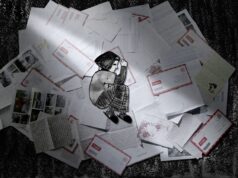
Why use the puppets? “From the beginning, I had the idea I had somehow to help the audience listen to the stories,” the Polish director suggests. He didn’t want to resort to familiar devices of using still images and photos alongside voice-overs. Instead, he tried to make it seem to the viewers as if they were climbing inside the photos and, for a few moments, inhabiting the rooms with the bureaucrats and politicians who, on a metaphorical level, were indeed like puppets, controlled by their Soviet puppet masters.
“That was the starting point to opening other doors,” he explains.
Wolski brought on board the brilliant Kraków-based animator Robert Sowa to oversee the puppet animation.
Contemporary Polish society is still sharply split. The conservative, right-wing Law and Justice party is bitterly opposed by many in the country – and yet still has the most elected members in the Polish Parliament. Wolski has been intrigued by the response to his film from both sides of the great political divide.
“From the left, they say it [the film] is like a parallel to what is happening right now with people on the streets [and] the police right now, what they are doing, treating people so badly,” the director notes. However, viewers from the right also appreciate the documentary, congratulating Wolski on his depiction of the communist leaders as “really bad…shooting the people.”
The director can’t help but appreciate the irony. Viewers with radically opposing political viewers both agree that they like his film, albeit for very different reasons.
Having dealt with 1970, Wolski is skipping a little further forward in time. He is currently working on a film about Martial Law in Poland in the early 1980s. Footage of this period is much more plentiful, so there may not be the need for puppets.
In the meantime the director hopes he will be able to go on the road with 1970. Thanks to the pandemic, he wasn’t able to accompany his previous doc to any of the many festivals at which it screened last year. “I want to watch this film (1970) in the cinema because An Ordinary Country for a whole year was travelling around the world – but travelling alone, without me! I haven’t seen it in a cinema,” he says, adding that he is really happy that 1970 will be shown on the big screen (in his presence) during Visions du Réel.