

Greek director Angelos Tsaousis’ obsession with documentary began during his childhood when he used to watch National Geographic films on battered old VHS tapes. “I was fascinated by this form of storytelling,” he tells BDE. “I was fascinated by the fact of travelling, meeting new cultures in those remote areas and exploring our world.”
Tsaousis’ film The New Plastic Road (selected for Hot Docs and the Changing Face of Europe programme, and sold by Syndicado) is in the spirit of those old National Geographic docs.
The project has had a very lengthy gestation. It was way back in 2011 that Tsaousis and his collaborator Myrto Papadopoulos, who co-directed, first began looking around for a subject as their “entry ticket into the documentary world.” They had read a magazine article with the title ‘The New Silk Road.’ This detailed China’s attempts to revive the ancient trade route, also known as “the opium highway,” that linked Asia with Europe.
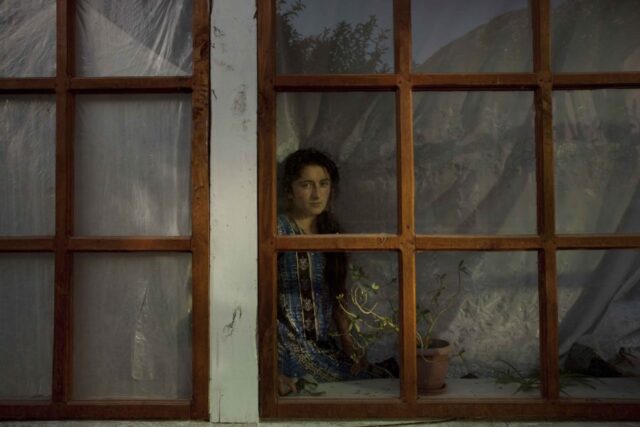
The filmmakers’ research into how the road was transforming the region took them to remote communities in the Pamir Mountains. Tajikistan. Here, through a Unicef contact, they were introduced to Davlat, a Tajik entrepreneur living close to the Afghan border.
“His father was one of the first truck drivers in the region,” Tsaousis says of their subject. Davlat had expanded his father’s business and his trucking and transport business had thrived, partly thanks to the road itself. However, the world around him was changing rapidly. He welcomed the filmmakers and agreed to participate in their documentary “without a second thought.”
That was around a decade ago. “It was a long journey and still is,” Tsaousis says of the filmmaking process. The doc was made through Filmografik, the independent production company Tsaousis set up in 2007.
“Why did two Greek filmmakers go miles away into the Pamir mountains?” The director asks a question which he often had to answer at the various pitching platforms at which The New Plastic Road was presented. He links it back to those old VHS tapes which made such an impression on him as a kid.
“There were pretty harsh times in terms of financing,” he remembers. At one stage, in 2013, after two years of hard work, the filmmakers had a letter of commitment from ERT, the national broadcast channel in Greece…but then the broadcaster was closed down by the government during austerity cut backs.
“At that point, I was so disappointed I said to myself that that was it,” the director says. He was ready to quit. However, a few days later, the filmmakers received support from other backers. Heartened, they decided to carry on.
“It is not the easiest place to make a production,” Tsaousis says with evident understatement of the remotest parts of Tajikistan. There were “nice moments, harsh moments and dangerous moments” along the way. The village where Davlat lived was a gruelling 15-hour drive from the capital. “In winter, it (the journey) was even harder.” There were military stops along the way and they worried that their footage might be confiscated.
Co-director Myrto Papadopoulos is an acclaimed photographer as well as a documentary filmmaker. Her work has appeared everywhere from Le Monde to the New York Times. Like Tsaousis, she agrees that this was a tough shoot physically.
“The travel was quite harsh…we are talking about a very rural part of the world,” she says. “On the other hand, it was quite exciting, and it still is.”
Close to the border with China, they might be shooting in a place with no electricity – and therefore no way of charging phones and equipment. They were sometimes at high altitude. The itinerary was exhausting. “But I think we were quite open to these difficulties.”
As a photographer, she couldn’t help but be struck by the “beautiful, misty light” when they were near Pamir mountains. The surroundings may have been spectacular but the economic reality was very harsh. “That was a contrast I really wanted to show.”
Covid-permitting, the filmmakers would like to return to Tajikistan to arrange community screenings. Yes, Tsaousis says, he still feels the same love for documentary that first inspired him all those years ago when he was watching the National Geographic videos.
“I strongly feel I have the same passion about the industry and about documentary storytelling,” he declares.
Papadopoulos echoes these sentiments. “When you are a documentarian, it is who you are. It is my water, it is my breath,” she says. “It’s not just the result. The process is as important as the result…It’s hard, not easy. It takes a really long time – but I think that is part of the process.”
The New Plastic Road is one of the ten films selected for the Changing Face of Europe programme at Hot Docs, organised by European Film Promotion.





