

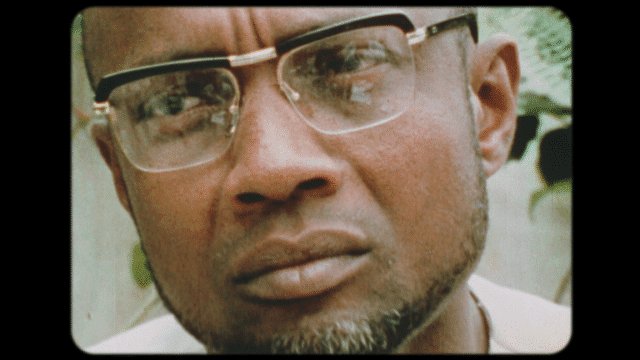
It’s a surprise that Amilcar Cabral (1924-1973) isn’t better known. An anti-colonial freedom fighter and revolutionary leader, a poet and an agronomist, he was a charismatic and highly intelligent figure who shares some of the hallmarks of Che Guevara.
Madrid-born filmmaker Miguel Eek discovered Amilcar 12 years ago while living in Cape Verde, where Amilcar had grown up. Eek read his biography and was immediately fascinated. Amilcar was involved in liberating two countries with very different colonial histories, Portuguese Guinea (later Guinea-Bissau) and Cape Verde itself.
To satisfy his curiosity, Eek began to interview former associates of the political leader, who was assassinated aged only 48. This research was the beginning part of the process leading to his new feature documentary, Amilcar. The film is sold by Martina Droandi’s new Vienna-based Odd Slice Films, and receives its world premiere in Envision Competition on Sunday.
In the documentary, Eek is investigating what pushed his subject to sacrifice his life in the fight to unite Guinea-Bissau and Cape Verde against their colonial rulers.
Eek says that researching Amilcar’s life helped him to rediscover his own political idealism.
“The big twist was to find the letters he wrote to his two wives. In these letters, I discovered the man behind the international leader,” the director says of the book of Amilcar’s correspondence that was recently published under the guidance of Amilcar’s daughter, Iva Cabral.
The director realised that Amilcar “had a very poetic gaze to what he saw, what he did.” In his film, he tries to capture his subject’s lyrical view on the world.
“We record with the same 16mm cameras that filmmakers were using at that time, even Super-8. I try to imagine a personal visual diary of Amilcar. This film is a combination of his voice and these images.” Alongside the politics, Eek pays exhaustive attention to the landscapes of Guinea-Bissau and Cape Verde.
“We’re used to getting the public sides of the main characters of history through documentary. To me, once I was touched by his writing, I was curious to know the man behind the letters. This was a man who could be involved in high profile diplomatic discussions at the United Nations and, at the same time, he was writing a letter to his wife about the beauty of the camels in the desert, or writing a letter to his son or daughter about the importance of children for the future.”
In short, the director concludes, Amilcar was a dreamer as much as he was a politician. His view of the world was determinedly utopian. “This combination [of poetry and politics] really touched me.”
There have been other films touching on Amilcar’s story. For example, he is referred to in Chris Marker’s Sans Soleil(1983) and his story was told in the 2001 documentary Amilcar Cabral, directed by Ana Lúcia Ramos Lisboa. Eek, though, wasn’t directly influenced by these films. “I have to say I am a filmmaker with not a super background in film history.”
From the outset, the director was determined that his documentary would give viewers the sense that they were looking at the world through Amilcar’s eyes. The filming is deliberately rough and handheld. ‘I tried to go beyond beautiful shots for something more physical, like when you are shooting with a Super-8 camera; something more amateur, as if you are just reacting with your eyes.”
This is a subjective version of Amilcar’s story, not a comprehensive historical overview. Eek acknowledges that in telling the story from the point of view of his protagonist, he was “missing many things” including some of his subject’s mistakes.
There is a lot of archival footage included in the film too. “I was in all the countries, in Sweden, France, Spain, Portugal, Guinea-Bissau, Cape Verde, exploring all the archives I could,” the director remembers.
The director estimates that 60% of the documentary is his own footage and the rest of the material is archival.
“Amilcar understood the importance of film. Once he was in Cuba, he realised the importance of cinema,” Eek explains how the political leader sent Flora Gomes and Sana na N’Hada to Cuba to study filmmaking and ensured they could chronicle the liberation struggles. Eek uses some of their material. He also draws on the archives of the Portuguese army which had its own colonial film units, some of it beautifully shot.
The film was made through Mosaic, Eek’s own company. The director pays tribute to legendary French producer Jacques Bidou, known for his work with the likes of Rithy Panh, Merzak Allouache, Patricio Guzman, Tsai Ming-Liang, and Pablo Agüero, who was Eek’s tutor at EURODOC, and who championed the project from the start.
“He was somebody who really believed very strongly in this film. He really pushed me to the limits to make this film,” the director confirms.
It was also through EURODOC that the director found some of his producer partners, for example, Marie Dumoulin from Les Docs du Nord, Mario Adamson for Sisyfos Film and Luís Correia from LX Filmes.
Eek also acknowledges the contribution of Cape Verdean producer Natasha Craveiro Ceuninck of Korikaxoru Films in giving the film “an African context… Natasha has been very much involved in the editorial approach.”
Development funding came from, among others, ICAA, Creative Europe, ICA, RTP, CNC, Procirep, Pictanovo, ICIB, and Institut d’Estudis Balearics. Eek produced himself alongside Del Álamo, Luis Correia and Marie Dumoulin.
As for the decision to work with Odd Slice Films, Eek suggests company boss Martina Droandi is one of the few sales agents ready to support “radical” projects like this.
“Martina has the courage and the trust to try to find places for these kinds of films,” he states. “The fact that she already knew Amilcar Cabral before, and that she’s very interested in history and anthropology were very important,” the director reflects.Portuguese distributor The Stone and The Plot is already aboard and the film is expected to screen at several festivals after iDFA.





