

Filmmaker Julie Schroell admits she was taken aback when her documentary River Tales was put forward recently as Luxembourg’s entry for the Best International Feature Oscar. She didn’t know that the film could be eligible for the award (which is generally won by fictional dramas). She explains more to Business Doc Europe.
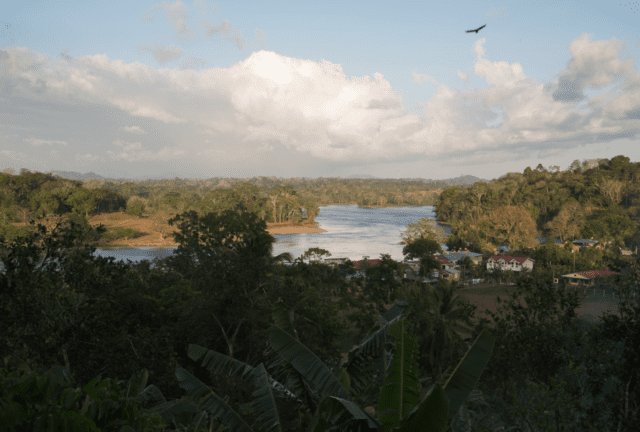
River Tales was made in Nicaragua. It follows a young theatre group who create a play about the history of the San Juan river. For over 500 years, colonialists have been obsessed with the river, which lies between the Atlantic and the Pacific. The Chinese have plans for a huge canal that could link the two oceans. In theory, this should be to the benefit of everyone. However, impoverished local inhabitants remain wary and suspicious. They have been exploited too many times already by colonialist outsiders.
“Doing documentaries in Luxembourg is a bit difficult,” Schroell (now based in Zurich) says with understatement of her struggle to finance the film. There are complex financing stipulations regarding language, location and nationality of crews that filmmakers need to meet in order to secure financing. “It is quite hard to do – to shoot in countries abroad with international crews because then you don’t get the points and you don’t get the money you need.”
The film industry in Luxembourg is geared primarily towards fiction and animation. Incentives lure many foreign producers to work in the tiny country but the system isn’t set up for the benefit of documentary directors like Schroell. However, she did receive some backing from the Luxembourg Film Fund. The doc was produced through Jesus Gonzalez-Elvira’s Calach Films.
As Schroell notes, Nicaragua used to be regarded as a socialist utopia. In the 70s and 80s, the era of the Sandinista revolution, the country stood up against the US and the contras. “What was happening there was something really special. You had a whole country, all the classes, mixed, with rich and poor fighting together for one cause.”
Thirty-five years later, the picture isn’t so rosy. “When you are there and you see what it has become, it [the Nicaraguan revolution] is an example of how history can completely turn its face upside down,” the filmmaker reflects. She spent much of her time in Nicaragua with a younger generation who weren’t as involved in politics as their parents and seemed detached from what was going on under long serving President Daniel Ortega. Then, she witnessed their anger at Ortega. “You realised there was something boiling inside of the people and there was revolt brewing…there was a big dissatisfaction.”
Schroell was in the country in 2014-2015 when the anti-canal demonstrations were beginning. “[It] was supposed to be the biggest infrastructure project of all time. It was massive, splitting Central America in two.”
The canal was bound to have huge social and environmental repercussions. She knew it could make a fascinating subject for a film. However, she also soon realised that this was just the latest in a long line of canal schemes which governments had promised would transform the local economy. That was why she was so keen to follow the theatre company which was using drama to explore the vexed history of the projects.
The director spent a year in the country. “It was a complicated project. Sometimes I thought about Fitzcarraldo,” she says, referring to Werner Herzog’s famous folie de grandeur, set deep in the Amazon, in which rubber baron Klaus Kinski organises for a ship to be dragged over a mountain. No, she didn’t do the same but she faced daunting logistical challenges of her own.
“We had this amazing location,” Schroell says of the San Juan river. Venture along it and you will find ruined castles and evidence of forgotten communities – but it was not an easy place to make a documentary.
She was filming close to the border with Costa Rica in an area which was both militarised and remote. The humidity was oppressive and the crew fell sick after drinking unclean water. “It was like an odyssey,” the director concludes as she looks back on the production process. Heading to Latin America was, she suggests, a way of discovering stories that deserved and needed to be told.
Schroell has made fiction as well as documentary in the past. “I like to work with different media,” she states. “Every project needs to find its form and I am quite open to exploring different forms.”
The director has several projects in development. She “took advantage of COVID to read and write stuff.” After the struggles she faced with River Tales, she initially said “never again” about going back to film in Latin America. However, her stance is shifting. There is still rich material to explore, especially when it comes to the legacy of colonialism. At the same time, she is determined to work on “subjects that are more close [to me]…my story, my family, my country!”





