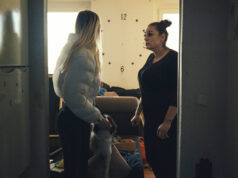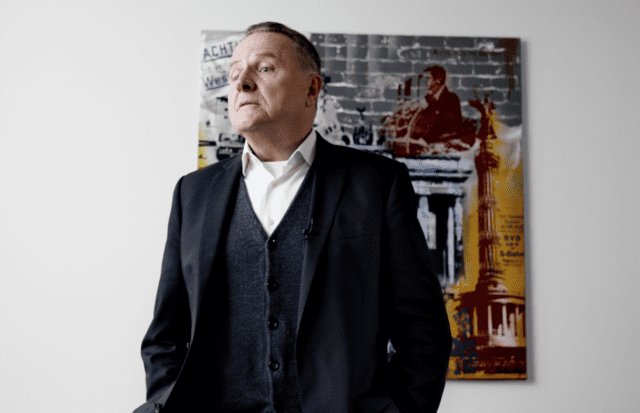
A German Party, Simon Brückner’s provocative new documentary which premiered this week as a Berlinale Special, takes viewers inside the populist German right-wing party AfD (Alternative For Germany) which became the largest opposition group within the German Parliament after the 2017 election.
The film’s producer Hubertus Siegert, CEO of spicefilm GmbH, explains just how the project was conceived – and why it is likely to have the effect of a foot being plunged into a hornet’s nest when it is released in Germany by Majestic in April.
No members of the AfD were expected for the Berlin Festival screenings (“they are not the people that attend festivals,” says Siegert) but they’re bound to notice the documentary when it surfaces in cinemas.
“It will be a big political thing in the end because people will get polarised about it,” Siegert predicts. He fully expects some critics on the left to question why on earth the filmmakers are giving a platform to such an extreme party.
The intention was to make the documentary equivalent of an ethnographic study. Brückner was approaching his subjects without prejudice. (“You will have a more rational discussion with them if you don’t call them all the time your enemy,” Siegert suggests.)
The director wanted to study the party members up close and learn more about them. “We cannot only take their programmes, their protests, the energy they project around themselves,” the producer says of the way AfD is generally portrayed in the German media. By contrast, Brückner’s film would come at the subject from a similar point of view to the ‘Direct Cinema’ films made by the likes of DA Pennebaker and Fred Wiseman. The director was determined to be open-minded.
“We found a lot of support. Surprisingly, the financiers we contacted, they really supported it, also the broadcasters,” Siegert remembers of financiers such as Rundfunk Berlin-Brandenburg and ZDF.
Shooting started in 2019 and carried on during the Covid period. “As we all know, these right wing people are quite defensive about whether Covid is really a pandemic…they refrain from getting vaccinated,” Siegert notes drily. When the pandemic began, AfD members did their best to carry on as if nothing had happened. They chafed and protested against Covid restrictions.
Most of the shooting was done around the Berlin area. The filmmakers also ventured to Germany’s western states, among them Hess, but Brückner had a very small crew and he “could not cover all Germany.” The more he shot, though, the more connections he made. “In the end, he (Brückner) could really show the whole experience of the AfD in all its, let’s say, different angles and movements.”
The filmmakers ended up shooting for 150 days. They were left with over 500 hours of material. A team of editors was set to work winnowing down the material down into the version (just under two hours) that has been screening in Berlin.
Brückner’s “entrée” into the world of the AfD came via a friend of a friend. He explained to his subjects precisely what he intended to do – a research-based film which would show the politicians as they were. They knew from the outset that he was ”not one of their voters.” However, they clung to the idea that their party was misunderstood and that they were all victims of enormous bias from the liberal establishment. Brückner’s film, they decided, might show them to the outside world in a more positive light.
It took time to establish trust. There were moments when relations between the filmmakers and their subjects broke down and they would be forced to leave a meeting or to turn off their camera. Generally, though, peace was maintained.
The film unfolds in a series of chapters. It deals with some seismic moments in the life of the AfD, for example the leader Jörg Meuthen leaving his own party because even he is uncomfortable with its more extremist posturing.
However, the aim wasn’t to provide an epic narrative sweep or to chronicle all the political infighting. Instead, Brückner was providing bite-sized insights. For instance, we might sit in on a meeting in which the AfD members will start lobbying for a German flag to be placed in every classroom. The director didn’t want the audiences to identify closely with particular characters. Instead, the aim was to immerse them in the entire world of the political party in all its strangeness and eccentricity.
The filmmakers felt from the outset that the documentary would work better as an immersive, group experience in cinemas than as a series for the TV screen.
The documentary captures the party members’ deep-seated fear of modern liberalism. “They have this deep need for tradition, for what they believe is a German identity,” Siegert muses.
“I am very curious about how the foreigners will see Germany,” the producer expresses his fascination with how the documentary will be regarded outside the country. Within Germany itself, though, one prediction can safely be made: the sparks will fly when A German Party is seen by German audiences, and debates about its portrayal of the AfD begin in earnest.