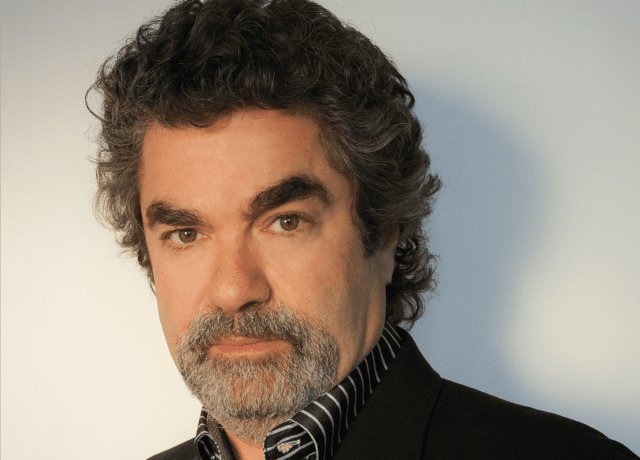
Pic: ©Henny Garfunkel
Joe Berlinger is on his lunch break. The veteran director is hard at work on a new series of Crime Scene for Netflix, following on from his recent Crime Scene: The Vanishing at the Cecil Hotel.
As he told the New York Times recently, Berlinger has mixed feelings about the way he is often described as one of the most important pioneers of true crime documentary. He likes the “pioneer” part but the “true crime” label makes him wince. He sees himself as “a social justice filmmaker,” not as someone pandering to the morbid appetites of film and TV fans who lap up ghoulish material about serial killers and unsolved murders.
Business Doc Europe is speaking to Berlinger on a very specific subject, namely the continuing influence of Truman Capote’s celebrated ”non-fiction” novel ‘In Cold Blood’, published in 1966, on filmmakers like himself who’ve dealt with true crime in their work.
The book is an account of the 1959 slaying of the Clutter family on their farm in Kansas by two drifters, Perry Smith and Dick Hickock.
“As a 15-year-old, I remember reading the book as a high school assignment. It was the first time in the summer after high school that I actually re-read something of my own volition,” Berlinger says of when he first encountered Capote’s book. “I just found the book so captivating and impressive. I didn’t know that I was going to become a filmmaker or a storyteller at the time I read it but the book made a deep, deep, deep impression on me.”
Capote wrote ‘In Cold Blood’ in a period when documentary was changing. This was the era in which the likes of Frederick Wiseman, DA Pennebaker and the Maysles brothers emerged. They were able to capture synched sound in their films. Cinema verité documentary had a freewheeling immediacy and human quality which earlier documentaries, relying on narration and voice-over, had lacked.
In the late 1980s and early 1990s, there was yet more experimentation with the form. A new generation, to which Berlinger belonged, chafed against the “boring, PBS, talking head” style work which had, by then, become so prominent.
Errol Morris famously, and controversially, used re-enactments when he made The Thin Blue Line (1988), which helped exonerate a wrongfully convicted man on death row. Michael Moore put himself bang in front of the camera in Roger & Me (1989).
Meanwhile, Berlinger and his filmmaking partner Bruce Sinofsky on films like Brother’s Keeper (1992) and Paradise Lost (1996) brought dramatic structure to their docs.
Realising the “inherent subjectivity” of all documentary, they borrowed ”from the scripted filmmaker’s toolbox.” They were still striving to be truthful and to maintain journalistic integrity at all costs but they were introducing elements like original music scores, compelling title sequences and moments of narrative suspense.
“That whole philosophy came from my love of Truman Capote’s ‘In Cold Blood’. I viewed what I was doing in film as very analogous to what Capote was doing in novels,” Berlinger says. He talks of the brilliance Capote showed in combining the skills of the journalist and the novelist. Taking his cue from Capote, he refused to describe his films as documentaries, instead referring to them as “non-fiction feature films.”
In their turn, Brother’s Keeper and Paradise Lost were highly influential on a new generation and in the emergence of true crime filmmaking which, today, is enormously popular. Berlinger still openly acknowledges his own debt to Capote. In 2017, he went on to make Cold Blooded, a TV docu-series which looked both at the Clutter murders and at the way Capote covered them.
Capote’s book may be a masterpiece but it raises some uncomfortable ethical questions. Cold Blooded revealed just how unhappy the Clutters’ relatives were with the novelist’s depiction of the murdered family. “The idea of the show was to give the victims’ family a voice. Of course, that raises a huge debate in today’s true crime (world),” Berlinger reflects on why he made Cold Blooded. “I am extremely sensitive to victim exploitation. That is an issue that comes with the territory. The Clutters felt victimised by Capote. I hope that people who are victims in my show that I portray don’t feel victimised…but certainly that is a criticism of the genre and it is a criticism my work sometimes receives.”
As a teenager, Berlinger revered Capote. Much of that admiration remains undimmed but he now feels that Capote “was guilty of misrepresenting the situation and being overly sympathetic to the killers. I think it kind of tortured him…after the book came out, his addiction problems exacerbated and he never kept at peace.”
That is why Berlinger insists on telling his own true crime stories through “a larger social justice lens” and making sure that his work “always keeps the victim in mind.”
Capote was a brilliant prose stylist. He wrote about the Clutters’ killers with a humanism and sensitivity that convicted murderers had rarely received before.
“I don’t think Capote was condoning Perry and Hickock [the killers in ‘In Cold Blood’] at all. He was humanising them. We have a tendency in our society to see crime and criminals in very two-dimensional terms, not understanding that you have to see the human dimension in order to understand how these terrible things can happen and possibly to prevent them in the future,” Berlinger reflects. “The masterful writing allows you to be drawn in from a human standpoint and reflect universal themes that concern human beings. Greed, lust, revenge, all these universal themes, are why we are attracted to stories about crime and criminality. His particular writing style allowed you to think about the situation in an emotionally truthful way.”
That may sound like a ringing endorsement of ‘In Cold Blood’ but Berlinger, now 59, admits he regards the book differently to when he was 15. “The fact that he [Capote] was factually inaccurate about certain key elements at the expense of the family does diminish the journalism contained in the book. But it doesn’t diminish his mastery of technique. That technique is what has allowed many people to see crime in a different way. As a piece of literature, I still hold this book in the highest regard.”
Cold Blooded is available on The Sundance Channel. Crime Scene: The Vanishing At The Cecil Hotel is available on Netflix.