

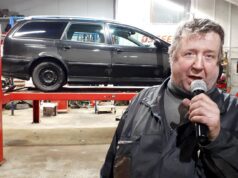
CPH:DOX interview: Karaoke Paradise by Einari Paakkanen
In his heartwarming film competing for Nordic:Dox Award, director Einari Paakkanen introduces us to a cast of Finns for whom karaoke is more than mere entertainment, rather a support mechanism that alleviates, at least temporarily, personal tragedies, problems and concerns. What’s more, the director explains to BDE, it is a particularly ubiquitous form of expression. “It's huge. You can go to any small town in Finland and there's two things you'll find - the alcohol shop and the karaoke place.”
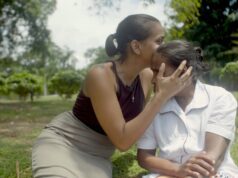
CPH:DOX interview: No Place Like Home by Emilie Beck
In Emilie Beck’s debut feature doc, screening in Nordic:Dox, a young woman, Priyangika, who was adopted at a young age, embarks on an existential odyssey to her birth country of Sri Lanka to discover her own story. “I knew that whatever she [Priyangika] found during the journey, I wanted to follow her emotions, her existential travel...[but] the further we went, the bigger the story got,” director Beck tells BDE.
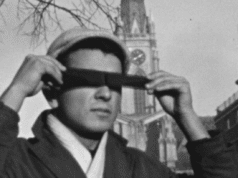
CPH:DOX interview: The Eclipse by Nataša Urban
It may be framed by images of the total eclipses of 1961 and 1999 which were observable in her former country of Serbia, but Nataša Urban’s DOX:Award documentary is not a study of astronomical phenomena. Far from it. Rather, the film comprises a heartfelt mea culpa for Serbian atrocities inflicted during the Balkan wars. “My homeland […] put me through hell, and much worse, had done unconceivable atrocities, genocide even, in neighbouring countries,” says Urban.
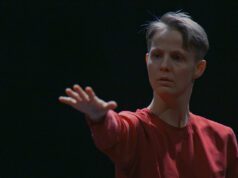
CPH:DOX interview: Dear Dancer by Marcus Lindeen
Swedish director Marcus Lindeen talks to Business Doc Europe about his short film Dear Dancer (international premiere), made in response to an interpretative dance event in Stockholm which was denied an audience because of lockdown, but which acclaimed choreographer Deborah Hay was determined should go ahead.
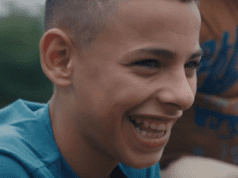
CPH:DOX interview: Hide And Seek by Victoria Fiore
TV dramas have long perpetuated the stereotype of Naples as a Mecca for gangsters. In her Dox:Award Competition film, director Victoria Fiore wanted to show another side of the city, and so follows the Neopolitan kids, especially the lovable but mischievous Entoni. “Entoni’s story just shone through,” the director tells BDE. “I fell in love with his energy. He had so much of it. We got along straight away.”
BDE Interview: East Doc Platform’s Zdeněk Blaha
Institute of Documentary Film Programme Director Zdeněk Blaha tells Business Doc Europe about East Doc Platform (25 March - 1 April) which welcomes projects and filmmakers from Ukraine as well as the rest of the region, and hosts nearly 400 international guests eager to explore new documentary output from Central and Eastern Europe. In total 46 projects are up for grabs this year (three from Ukraine), accompanied by a varied public and professional programme of events.
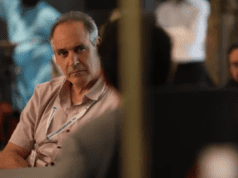
CPH:DOX interview: How To Survive A Pandemic by David France
If future generations want to know how the world’s scientific community responded to coronavirus, one of their first starting points is likely to be US director David France’s How To Survive A Pandemic, sold by Dogwoof. The film, screening in CPH: Science, tells the story of how scientists across the world raced to develop vaccines against a virus which has been killing millions. France explains his doc to BDE.
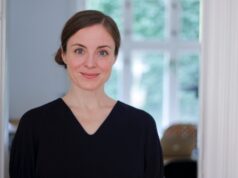
BDE interview: CPH:DOX Managing Director Katrine Kiilgaard
In late 2021, CPH:DOX 2022 seemed destined for digital roll-out a third year running. But to the relief of all, the Covid threat abated and Danish cinemas re-opened in January, which meant plans for a hybrid festival presentation of 200 new films, 76 world premieres and 6 international competitions comprising 59 titles could go ahead. Katrine Kiilgaard (MD of CPH PIX and BUSTER as well as CPH:DOX) explains her relief to BDE.
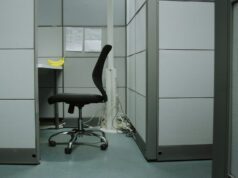
CPH:DOX interview: The Happy Worker – Or How Bullshit Took over the Workplace by...
Finnish/UK filmmaker John Webster talks to Business Doc Europe about his film that exposes how corporate jargon, fashionable management practice and ‘self-serving bureaucracy masquerading as efficiency’ threaten to drain all sense of satisfaction from the work process. “If people have burn-out, it is not because of weakness and personal flaws but because they’ve just been subjected to a toxic working environment,” he says.

CPH:DOX interview: Andreas Koefoed on The Fall
In 2015, Danish filmmaker Andreas Koefoed was shooting a promo video for a physical rehabilitation centre when he met Estrid, who was then just 12 years old. She was doing rehab after falling out a fifth-floor window four months beforehand, which left her with 17 fractures but remarkably no brain injury. The director discusses Estrid’s subsequent six-year odyssey with BDE.