“If you’re selected for ParisDOC, you are quite likely to find what you want,” says Catherine Bizern, speaking to every docmaker’s desired festival/market outcome.
Cinéma du Réel (21-28 March) Festival Director Catherine Bizern asserts that keeping ParisDOC (25-26 March) small but perfectly formed, combined with a deep understanding of the industry and who’s operating within it, both across France and internationally, is the winning formula of her professional platform. The festival selects only six projects for its Work in Progress presentations, and the professional audience is hand-picked for a likely match on each of the projects. The films themselves are all at late stage of development, mainly post-production, which, Bizern believes, makes for a more engaging proposition.
“It’s a very personal work with each project, and each professional who comes is very carefully selected… and the other reason [for success] is I think also we are, well, a good team,” says Bizern.
An important part of that team, Anais Desrieux , Head of ParisDOC expands on how this process works. She tells BDE how “a distinctive aspect of ParisDOC is that all film projects are screened in full. This allows professionals to fully grasp the artistic and narrative potential of each project, and to clearly assess whether it could fit within their respective line-ups. In that sense, it is also a real time-saver for them, enabling more informed and meaningful follow-ups.
“Equally important is the way the programme is curated and facilitated by the team. We work closely with the projects upstream, and we have a detailed understanding of both the films and the professionals we invite,” Desrieux adds.
Beyond the WIP sessions, professional events include the Public Forum where professionals gather to share experiences and reflect on the future of the documentary industry, the Classic Documentary Film Rendez-Vous which looks at heritage documentary, and First Contact – an invite only event where producers can discover nine writing-stage projects based on social science, hard science, or artistic creation research.
“It is interesting how ParisDOC now covers the full spectrum of documentary filmmaking, from early writing stages to near-completion, and through to questions of circulation and heritage. This creates a coherent ecosystem and reinforces our role in supporting the valorisation of documentary cinema in all its forms,” enthuses Desrieux.
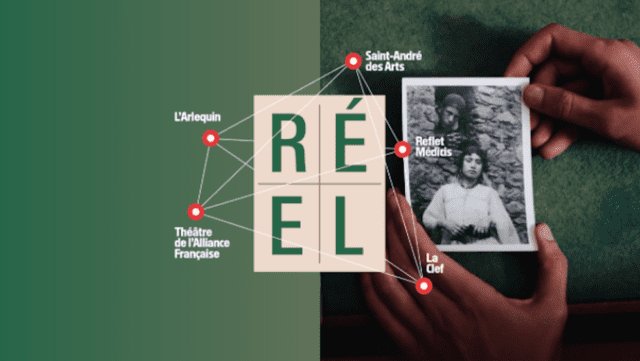
The public-facing festival, Cinéma du Réel, will once more leave its traditional home of the Pompidou Centre, and take place in arthouse cinemas around Saint-Germain. Having resided at the Pompidou since the festival’s inception 48 years ago, the team were concerned that they would see a fall in numbers last year, but this happily hasn’t been the case.
Bizern tells us: “We were a little bit afraid that our usual public wouldn’t come with us to the Rive Gauche, but we were pleasantly surprised, as the public were very, very happy to come with us. It was a great experiment and we had the same level of attendance as at the Pompidou.”
The change of venue of course is not the only change the festival has seen since it began in 1978, prompting reflections from Bizern.
In the 1980s, suggests Bizern, most festivals began as a way of putting films in front of the public within cinemas. In the ‘90s, many filmmakers began to use video and cinemas became less essential, but now every major festival has a documentary offer and it’s not just about the big-hitters, she conjectures.
“We have to be aware of emerging film-makers, and emerging forms of film, we have to be a strong supporter of the whole panorama that exists today.”
This brings up the perennial issue of funding. While there seems to be less and less money to go around, this perhaps can also be seen as a positive says Bizern. Ultimately, it can mean more freedom.
“I think that documentary is all the time a territory of experiment, because also the industry is not so interested in documentary, so when you make documentary out of the system [and into cinema] you have more freedom… And television wants to, not always, but often, have a normative idea of documentary. They want a person, a protagonist, they want a story, they want action, like a fiction. And documentary is not like fiction.”
Documentary filmmakers are an innovative, determined breed, Bizern observes. Indeed, for these reasons, this year’s festival describes its offer as a ‘cinema de resistance… the profusion of formal proposals and narrative structures delights in thwarting our habits as spectators.’
There are 37 films in competition this year which aim to ‘showcase contemporary documentary in all its diversity, as world, international or French premieres, putting the spotlight on the French documentary scene.’
The programme also includes ‘First Window’ presentations from debut and young creators in training, ‘Special Screenings’ of acclaimed French documentaries, ‘Ecofeminism,’ drawing inspiration from ecofeminist thinking and activism from the 1970s to the present day, and, for Bizern, the highlight of the festival, ‘Palestine, Ways of Refusal.’
“We see so many victims wounded and displaced, and we make this programme to give a face to the resistance of Palestinians. For me it’s very important to put these images out. We made the programme with Jumana Manna who is a young Palestinian artist, and we have tried to choose films which tell the story of Palestinian people.”
It’s a strong, diverse line-up, and one which Bizern hopes will move the dial if not change the world. She’s pragmatic about that.
“We will have the opportunity to be aware, to have the possibility to see the reality of us… but unfortunately, if cinema could change the world, the world wouldn’t be how it is now. We know it’s not possible. But perhaps it can change the way of life of several persons, perhaps a filmmaker will meet another filmmaker or producer, or perhaps a young man or woman will see a film and say, wow, I want to make a film, or perhaps I want to be more engaged in life,” Bizern ends.