When Oscar nominated Belgian director Lukas Dhont chose Sarah Lederman as one of the “Future Five” emerging filmmakers from Flanders to follow during Connext, he spoke of how struck he had been by a moment in her 2021 short The Roots Of Water.
This is a documentary about two Jewish women who meet in Brussels with the same goal – to define what their Jewish identity means to them. The moment that caught Dhont’s attention comes at the start when one of the women looks very intently into the camera. Lederman holds the shot for a mini-eternity.
“In making this documentary, there was also the question of how I portray someone I find interesting and yet is a mystery to me. I felt that if I asked her to look in the camera, I would get closer to her. I would get a grip on her,” the director explains the haunting and arresting shot. “It was also a challenge, to see how she would react. To my surprise, she was very serious about it. She really looked at me – and at the viewer.”
In many documentaries, audiences peer in a little voyeuristically at the lives of the subjects. Here, the subject was returning their gaze. “She is someone who is going to show her vulnerable side but she is also looking at you…it was something that really touched me.”
The Roots Of Water won the Best Short award at the UK Jewish Film Festival last year.
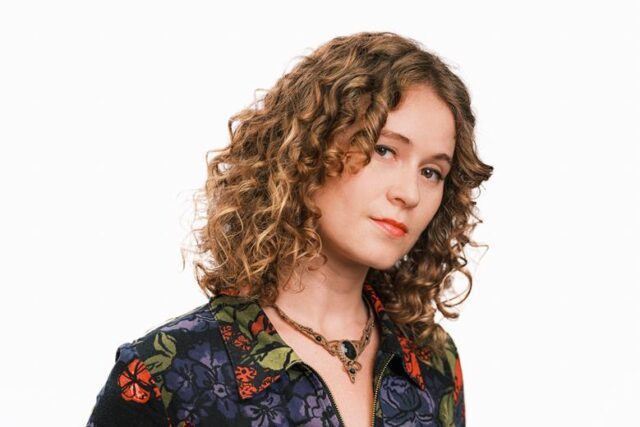
Lederman studied film at RITCS and at Sint-Lukas in Brussels. She works in both documentary and fiction and her work often has a deeply personal focus.
“At Sint-Lukas, they don’t separate documentary and fiction. It is all film. You succeed at the film school if you know at the end of the year who you are as a filmmaker. That was a very new perspective that I learned there,” Lederman says.
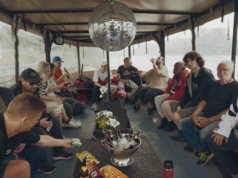
In her 2022 Ensor award-winning short Light, her subject is a young Jewish woman, Julie, who lost both her parents.
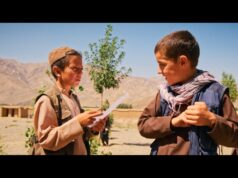
The director pays credit to her tutor Sofie Benoot (whose own film Apple Cider Vinegar is at CONNEXT) for pushing her to ask herself why she was making Light and why she regarded Julie, the orphaned teenager, as representing liberal Judaism. Benoot also convinced her it was possible to “wander” between documentary and fiction. There was no ironclad separation between the two forms.
At the time she was making the film, Lederman’s own father was dying. She met Julie at the liberal synagogue in Brussels they both attend. “It’s a community where I feel safe,” Lederman says of the synagogue.
Julie had faced tragic events in her life at a very young age. Her father died of cancer when she was seven. Two years later, her mother also died. The Rabbi at the synagogue had adopted her. In spite of the calamities she had endured, Julie had a very positive attitude toward life.
Light was made for KETNET and VRT as part of an initiative to produce docs for children. “I knew this was a movie that kids would want to see. I wanted kids to know her [Julie] and to see how resilient she is.”
This may seem like dark and heavy material for a young audience but Lederman points out that its tone is very positive and that the doc highlights Julie’s resilience. When she was trying to cope with her father’s condition, the director found herself turning to her teenage subject for advice and support.
Lederman believes it was “cathartic” to be working on Light during her own father’s final illness. “When I look at the film, it’s a way of grieving in an active way. I was able to make something good out of it too.”
Lederman comes from a family of film lovers. Her father was in the music business, working as a creative director at Universal Brussels. “I was always able to try all the hobbies I wanted. I was very privileged. When I was 16, I was able to go to an art school where I did theatre, dance, music, film and photography. There I really learned that film was a way for me to express feelings about the things that are happening [and] to get a grip of life.”
She talks of her obsession with “holding onto things” and preserving moments.
“In documentary, I love to capture things that are real and to find details I can film that otherwise maybe would pass by…people say sometimes about me that I see things they didn’t see,” Lederman reflects on her powers of observation. “I look deeply into things, I love details and I just love the things that make the everyday special.”
Lederman cites the late Chantal Akerman (the director of critics’ favourite Jeanne Dielman, 23, quai du Commerce, 1080 Bruxelles) as one of her main inspirations. “She [Akerman] was Jewish and from Brussels…my grandmother was a friend of a friend of hers, so that that was the closest [she got to her].”
Earlier this year, Lederman’s work was shown in an exhibition also featuring Akerman’s films at the Jewish Museum of Belgium.
Lederman is currently preparing a new fiction series for production outfit Caviar – but can’t reveal details yet of what it will be about. She also has a new documentary which will be about her father – and about how “everything is so fleeting…[but how] within this emptiness, how precious life is.” This is yet to be titled.
This week, Lederman has been in Antwerp for CONNEXT and has relished the “amazing spotlight” the Future Five initiative has given her to talk about her work.“It was a privilege… Lukas Dhont was very, very helpful. It was amazing, the work he put into it, looking at our work and really finding what makes it special. I am very grateful to him and to CONNEXT!”