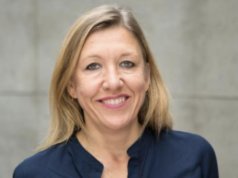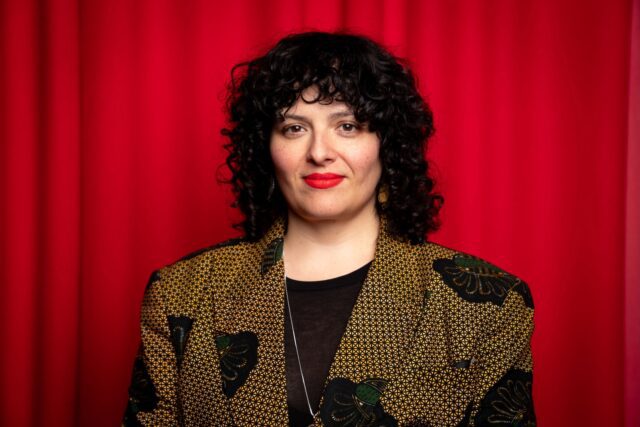
As doors open on this year’s CPH:DOX, Head of Industry and Training Mara Gourd-Mercado has last minute firefighting to do. With flights being cancelled all over the Middle East because of the US attack on Iran, certain guests are having to change travel plans.
“We do have a contingent coming from that region. It is affecting also our colleagues and industry representatives coming from India, for example, or south-east Asia because they transit usually through Dubai or Doha…but what is complicated is that it is such a fast-moving situation. We don’t know what it is going to look like from one day to another.”
“Already, we have so many colleagues that are in war zones or in countries with totalitarian governments where it’s really hard to practise documentary,” she adds.
Another perennial problem is ensuring that filmmakers get visas to come to Copenhagen. There have been heartrending situations in recent years when directors haven’t been able to attend their own premieres in person because the right paperwork isn’t in place.
Gourd-Mercado has now been Head of Industry for three years. Speaking a few days before this year’s industry programme (March 15-20) begins, she explains why she hasn’t looked to overhaul an event which industry delegates have long come to cherish.
“CPH:INDUSTRY was a space that was working really well when I started. What we have been trying to do with our industry team is little tweaks…” She talks therefore of trying to refine and improve the programmes that are already in place.
One policy shift has been to expand more into the “interactive and immersive work space.” All of the projects in the INTER:ACTIVE Exhibition [curated by Mark Atkin, Head of Studies at CPH:LAB] and this year featuring works based around the theme ‘hypervigilance,’ are now offered a space in the virtual market. This year, the Nordic film commissioners will also be given a guided tour of the INTER:ACTIVE Exhibition so they can have this work at the front of their minds.
Another change is the move away from having whole days at the CPH:CONFERENCE dedicated to certain themes, for example a “science day” or an “art day.”
“It worked well for many years but we started to see a shift in the way people actually navigate our events. We see more and more that people don’t necessarily follow an entire day…they go in-between meetings, when they have time, in a little break – so we broke down those silos and made those themes available throughout the three days of the conference plus the summit.”
Last year, CPH had around 770 attendees at the Forum and approximately 2000 accredited guests in all. Despite the travel chaos, Gourd-Mercado is expecting similar numbers this year. “We’ll maybe surpass them a little bit, but not by much.”
The CPH “formula” is to have different curators for different sections – and thereby to ensure freshness and a wide range of visions and approaches. “For example, the CPH:DOX SUMMIT [now in its second edition] is an idea that had been floating around CPH for a long time. Our managing director, Katrine Kiilgaard, when she was Head of Industry, already had that in her head, but it never materialised until last year.”
Last year’s inaugural summit was curated by industry veteran, ARTE and Netflix exec Mark Edwards. Edwards is again involved with this year’s summit, whose theme is “Media Sovereignty: Rethink, Envision, Redefine,” but other experts have also been drafted in, among them researcher and strategist Sameer Padania, who was a speaker last year, and Think-Film founder, Danielle Turkov-Wilson, likewise involved last year, but this time as a moderator.
“They already had an idea of what the Summit was and what we wanted. Together, we were just discussing, looking at the findings from the previous year, and also what is in the cultural zeitgeist and what is happening in the industry,” Gourd-Mercado says of the thinking behind this year’s event. Participants include, among many others, such prominent figures as Bruno Patino, President of ARTE France, who is giving the opening keynote; Bill Thompson, former Head of New Media at the Guardian; Bea Wangondu, founder of Kenyan-based creative studio, The Bea Company, and Pulitzer-nominated investigative journalist Carole Cadwalladr.
“Then for the Conference, we did the same thing,” Gourd-Mercado says of how the CPH team has harnessed experts and curators such as US-French producer and consultant, Heidi Fleisher; Brazilian transdisciplinary artist and director Diego Galafassi; indie producer Themba Bhebhe, and CPH’s own Head of Studies at the CPH:LAB, Mark Atkin, as a curator for some of the Conference sessions. They’re the ones who’ll be steering discussions on such subjects as the “shifting ecosystem of the creative documentary” and “AI and the future of storytelling.”
There will be some intriguing brainstorming going on during the Summit and Conference. For example, one workshop session being staged with Doc Society and Atmospherics Intelligence Initiative asks “what would an AI built by and for documentary filmmakers actually look like?”
As the Industry Head puts it, the impulse here is “let’s deconstruct this thing [AI] and see how we can use it to our advantage in a way that works for documentary.”
Gourd-Mercado acknowledges the challenges facing the doc industry amid declining theatrical revenues, public broadcaster apathy and sometimes baffling streamer changes in policy. “Globally, there has been such a shift in viewing habits and consumer habits from the new generation – and we [as a sector] haven’t caught up yet with how to grab the attention and find those audiences.”
She cites research in the US done by Keri Putnam revealing the huge potential audience for independent film. Similar surveys are being done in Europe. The challenge, which CPH:DOX continues to explore, is how to adapt to new viewing habits and to reach all those potential documentary lovers everyone knows are out there.
This year’s Forum is showcasing 30 new projects at different stages, including films from some very established names like Lea Glob, Kathryn Ferguson and Göran Hugo Olsson.
The CPH team looks very carefully at the progress of the Forum projects – and how they’ve been helped by being pitched in Copenhagen. “We measure success in very different ways and over a long period,” Gourd-Mercado says. Projects are selected very carefully – and with a view to giving the filmmakers the maximum help possible. “There are projects that we love and that we think will get made…we really focus on who do we have in the room, what does the project need and is there a match there. That is the first filter.”
Belgian director Pieter-Jan De Pue’s Ukraine doc Mariinka, which opens this year’s festival, is a strong example of a film that received an obvious boost by being selected for both CPH:FORUM and the Rough Cut presentations.
To Hold A Mountain from Biljana Tutorov and Petar Glomazić was in the Rough Cut section last year, went on to win an award in Sundance and is screening in Copenhagen this year – so that’s another obvious success that CPH’s industry team can claim.
Through the ‘Change’ programme, supported by IMS and EAVE, Gourd-Mercado and her team are also continuing to support projects from Armenia, Azerbaijan, Belarus, Georgia, Moldova, and Ukraine. This includes work from filmmakers who’ve been displaced and forced to work in exile.
“We will look at projects with a different eye because we know the hardships they’re going through and we know what their national film funds look like at the moment.”
Ask the Industry Head what she finds most rewarding about the job and she replies that it is “seeing the projects and pitches, how filmmakers are able to reflect the world in such a thoughtful way….and then just seeing the people! We work for so many months on Zoom calls and emails etc. To actually see them in person, I think that’s fantastic!”