Danish director Max Kestner sticks his neck out with his provocative and probing new film Life and Other Problems, which opens CPH:DOX on March 13. The documentary (sold by DR Sales) starts with the scandal over Marius, the giraffe who was ‘euthanised” at Copenhagen zoo a decade ago. The animal’s death provoked outrage across the world but Bengt Holst, the scientific director at the zoo, insisted there were sound reasons for killing him.
The giraffe is just the starting point as Kestner spins off in multiple other directions, discussing everything from biology to physics to the emotional lives of plants and why some humans like impersonating wolves.
“I was aware of the story about the giraffe because I live in Copenhagen and it was a big thing, but I didn’t pay too much attention,” Kestner remembers when the scandal broke in 2014.
A few years later, the director was approached by a producer who wondered if he would be interested in making a film on the subject. He looked at the incident again with “fresh eyes.”
“I liked the story, but to me that was not enough…”
That’s when he dived into the science. “I could have made a story about how media works and how it [the story] exploded in the media but to me it was the scientific and philosophical questions that I felt were there at the time, but weren’t really answered.”
Kestner was “very confused” by how the debate over Marius had unfolded. He had found himself swayed in opposite directions. When people argued that the giraffe’s life needed to be saved at all costs, he had though why not. But then when the zoo director Holst made a counter argument about how best to save the species, he saw the sense there too. Holst was decried as a murderer internationally but regarded as a local hero in Denmark where he quickly became a household name.
As different points of view collided and theory over the dead giraffe evolved, the filmmaker couldn’t help but see the irony. In Denmark and elsewhere, millions of animals, cattle and pigs among them, are killed every day and yet this enormous fuss was being made about a single giraffe.
“I think we have 25 million pigs living in our country and we are five million humans. We are the country that produces the most meat per citizen. My immediate reaction was that those who argued for saving the giraffe just weren’t understanding reality.”
How was Marius different from all the other livestock slaughtered for food? Wasn’t he the equivalent of a “cow with a long neck.” The talk about saving him began to seem increasingly meaningless.
What’s more, the confusion around the giraffe was matched by the confusion that the director was feeling about his own life as a middle-aged recently divorced man.
As he worked on the documentary, Kestner began to ask other questions about the relations of one being to another. “We are not as different from giraffes and dogs as we imagine,” he says.
When Kestner looks at his pet cat, he feels a connection with it. “Of course, some of it might be imagination…” He admits, though, that he doesn’t really know what the cat is feeling.
The director regards Life and Other Problems as a “sequel in a way” to his playful, autobiographical 2004 short, Max by Chance. “At that time, because I was young and stupid and innocent, I just embraced the idea that everything was made out of coincidences…now, closer to death, that gives the question another weight. I don’t feel satisfied with embracing coincidence. I want more. I feel that science owes me answers. They [scientists] are my religion in a way. I just wanted to know what they came up with.”
In other words, the director is now looking to science to explain nothing less than the meaning of life itself.
The experts the director approaches are brilliant figures but often also endearingly eccentric. For instance, the British scientist Charles Foster likes to imitate wild animals and to pretend he is a wolf or a deer.
Kestner didn’t know quite how the film would unfold when he was shooting it. “The structure was made in the editing room,” he admits. “We struggled with how to organise this material.”
The director himself became one of the unifying factors. His voice-over runs throughout the documentary and he’s the one speaking to the scientists. He’s not only wrestling with big philosophical problems but he is also trying to understand relationships in his own life.
Kestner reveals occasionally disturbing details about his family history. For example, he mentions that his grandfather starved to death during the Second World War.
“He was German and he lived in the part of Germany that was taken by the Russians. He went into a camp and he died from apparently not having enough to eat,” the director explains to Business Doc Europe.
Life and Other Problems was made through Copenhagen-based production outfit Bullitt Film. (They were also the producers of Max by Chance). Kestner, though, generally likes to “travel around” between different producers and often works with new editors and cinematographers.
“As a director, you have to decide to change your colleagues. I choose sometimes to work with new people,” he reflects. “I can use the buttons on the editing suite myself. That’s not why I hire an editor. I hire an editor because I want a discussion. If you’re all alone, my experience is that after a couple of weeks, I don’t know how to argue with myself any more. That becomes the problem. When I hire an editor, I hire a discussion I like, not a human who is very good at turning the buttons! I hire someone who can challenge my thoughts.”
What did Kestner feel after making his movie? Did speaking to all those scientists help him solve life’s most knotty problems or did he feel just as confused at the end as when he started?
“Less confused I would say. It’s partly because I have been thinking about these questions for so long. But I also feel that there are some answers in the film that I didn’t know and that most people won’t know.”
For example, we learn that cells have their own consciousness and that life doesn’t evolve without intelligence. “Those kind of things were new to me – and for me that is maybe enough. It pushed me to another understanding of what life is: that life is everywhere and that intelligence is everywhere [that] life is. And where there’s life, there is also consciousness.”
Kestner now sees intelligence, consciousness and life as “one unit.”
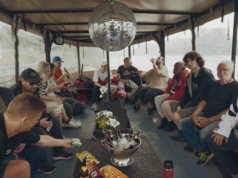
And, yes, the scientists are all due at the CPH:DOX premiere, so there will be a lot of heavy brain power in town. “But actually, they’re mostly there to party, to see the film and have a glass of wine,” the director reassures anyone who might be intimidated by their intellectual weight.
Life and Other Problems is produced by Vibeke Vogel at Bullitt Film in co-production with the Hopscotch Films and Plattform Produktion, with support from TV 2 Danmark, the Danish Film Institute, the Swedish Film Institute, UK Global Screen Fund, Screen Scotland, Creative Europe, Novo Nordisk Foundation, Nordisk Film & TV Fond, NRK and SVT. The doc will be released theatrically in Denmark shortly after CPH:DOX. It will also be screening at other festivals later in the year.