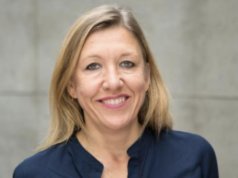
Elizabeth Klinck can justly be called one of the doyennes of the film archive world. She will be at DOK Leipzig this week for the inaugural edition of the DOK Archive Market. She will also be chairing case studies and a masterclass. The Emmy-nominated producer, visual researcher and clearance specialist continues to work on new films while sharing her expertise at festivals and markets.
Before coming to Leipzig, Klinck stopped off in Berlin for the European premiere of Werner Herzog – Radical Dreamer, a film on which she worked and which celebrates the life and career of the visionary German director, just turned 80. “I was delighted it worked out I was able to attend,” she says.
At DOK Leipzig she will also moderate, for the sixth year in a row, DOK Short n’ Sweet, the event which gives seven film professionals the chance to pitch a short project in front of some key decision makers.
Klinck joined forces with Nadja Tennstedt in organising archive-based events when Tennstedt was involved with Berlin’s European Film Market. She is delighted to be collaborating again now that Tennstedt is the Head of Industry at DOK Leipzig.
“We’ve been working along with some of the really fine archive producers from Germany to put together a day that will be really a highlight of archive,” she says of the market. “It will be a great opportunity for the German archives to have a presence at a festival which has not really happened before in any profound way.”
During Archive Day, the indefatigable Klinck will be speaking at the launch of Grap e.V., the new German association for archive producers and researchers. “This is something very near to my heart,” she says, pointing out that she was founding president of the equivalent Canadian organisation.
Along with Mark Edwards from Netflix, she will be chairing a case study of Volker Heise’s documentary, Gladbeck: The Hostage Crisis as well as another on Accessing Colonial History based around the Indonesian-Dutch film Tropic Fever.
Klinck believes these are exciting times for the archive world. The arrival of new streamers, “hungry for good quality material,” combined with market changes caused by the pandemic have given the sector a huge boost.
It’s not just DOK Leipzig which is putting archive at the heart of both its festival and industry schedule. Other events, for example MIP and Cannes, are expected to introduce new archive-based components to their programmes. Berlin’s European Film Market, IDFA and many other events are also showcasing and celebrating archive. “There is a real growing interest in it.”
Now that Covid travel restrictions have largely lifted, Klinck, like many others, has hit the road. Having done many virtual events, she is happy to be back at physical, on-site events.
Klinck worked with Herzog on his films Into The Inferno (2016) and Fireball: Visitors From Darker Worlds (2020), both experiences she relished. Her other recent projects include Jennifer Baichwal’s Into The Weeds (2022) and Robert Stone’s PBS TV project Taken Hostage, about the Iran hostage crisis. This is due to premiere next month.
In recent years, Klinck has noticed the emergence of “small, almost boutique” archives which deal with very specific sectors, whether natural history, performing arts or dance. She cites Reelin’ In The Years which licenses music footage as one good example of an outfit which has prospered by focusing on a specialist area. “Of course, we also have the big super archives, the Shutterstocks and the Gettys.”
Looking into the future, she sees a potential area of concern in the fact that some of the news archives in the US are becoming harder to access because of mergers and takeovers of companies. The Russian invasion of Ukraine has also caused problems for filmmakers looking to work with archival material from the region.
“But for the most part, archives have had a pretty good run because there has been so much demand for the material. Certainly, archive researchers and producers have never been busier.”
Filmmakers are becoming ever more inventive in their use of archive. Klinck talks of the increasing number of documentaries using archive in an “artistic and evocative” way rather than being strictly factual in their approach.
Klinck remembers one project on which she worked, Eat That Question: Frank Zappa in His Own Words (2016), that used the archive material to give the impression the radical musician and rock star was speaking in his own words. “It didn’t have interviews…it was just Frank all the time!”
Another trend that hasn’t changed is that everyone wants material that “has never been seen before.”
Klinck has worked on every type of documentary imaginable. However, these days, she tries to steer away from true crime, if only in order to sleep better at night. “I think people who work on true crime are special people because I think that looking at that material requires a certain constitution…”
She talks of her “delight” in working with young African filmmakers, staging workshops for them, and in attending events like DOK Leipzig.
“I am really enjoying the chance to pass on some of the knowledge that I’ve had the great honour to obtain,” she says. “Working with visual researchers from different countries and helping them organise as a group or helping them with extended medical packages and things like, that gives me a lot of delight too because that feels like giving back.”