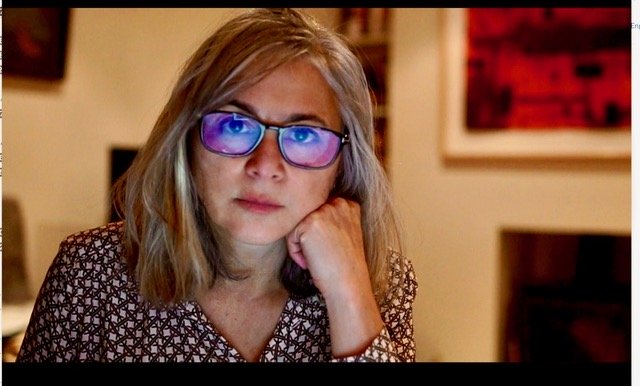
Mandy Chang, Commissioning Editor BBC Storyville, has been steeped in Forum projects this week, listening to pitches, holding one-on-one meetings and watching rough cuts. It’s all part of her ongoing quest to discover new doc gems that Storyville might board.
Chang and her team are already involved in one of this year’s Forum projects, One In A Million from directors Jack MacInnes and Itab Azzam.
“It’s a story about immigration, but it’s a story about what happens after refugees reach their destination. It’s about cultural assimilation,” Chang explains about the film which follows a Syrian girl as she grows up in Germany. “They’ve been filming her for five years and they’re filming her for a couple more years until she is 18.”
As these remarks suggest, Chang is ready to stay with projects for the long haul. “That’s the beauty of a lot of these feature documentaries, Their longitudinal nature allows you to really get deep insights into stories from around the world and people’s lives. There is such power in that. It’s a complete privilege to be able to do that sort of stuff.”
Storyville operates within a BBC commission cycle which sometimes imposes tight deadlines, but Chang is able to “juggle” when projects need more time. For example, The Trial of Ratko Mladic, directed by Rob Miller and Henry Singer, was filmed over five years.
Chang is also resilient. Her description of her recent collaboration with maverick Danish director Mads Brügger on The Mole: Infiltrating North Korea makes her sound more like an MI5 spy in a John Le Carré novel than a BBC commissioner.
“For most of my time at the BBC, I have been across that film and I’ve had to keep it secret from most people,” Chang explains. She told the then BBC4 Controller Cassian Harrison that she was working on it. “Cassian was really behind it but we didn’t really tell him anything. He just trusted us to get on with it.”
Only the people who “absolutely needed to know about it” were told. When there were meetings, they were held on “safe forums” which the North Koreans couldn’t hack into.
“There was always this fear that they (the North Koreans) might be on our tail and that they might sabotage the whole project,” Chang remembers. “He (Brügger) always has got these fantastical, larger than life stories. He is so bold and brave. It’s a bit scary being on a Mads journey, but you know you are going to get something fantastic.”
BBC Storyville is renowned for the depth, access and insight its films provide. The strand has some influential imitators.
“Netflix have understood this and really run with it. They’ve made a real success out of that feature documentary brand that was pioneered by Storyville. It’s ironic that they’ve made a commercial success out of it as well. People love these stories.”
Chang makes it very clear that she is ready to back projects from newcomers if their ideas are strong enough. Storyville may not have deep enough pockets to compete for projects against the big SVODs but Chang and her team will “take a punt” on young, inexperienced filmmakers.
“There are probably six films being made [for Storyville] by first-time filmmakers, all from varying backgrounds.” Chang says. “There is a real benefit in nurturing people from the beginning of their careers. You want those people to come back and be loyal to you because they’ve had a really great experience.”
One title Chang cites is Into The Storm which BBC Storyville will broadcast next year. Directed by Adam Brown and produced through RAW Films, this is about a young South American surfer from an impoverished background who rises to the top of the wave.
Another is Locked In: Breaking The Silence, directed by Xavier Alford in which the filmmaker turns the camera on himself as he confronts his own illness.
Last month, as part of BBC restructuring, BBC Storyville moved under the umbrella of BBC Films. Chang will now be reporting to BBC Films director, Rose Garnett.
“It’s a very similar model. They [BBC Films] do drama. We do documentaries, Similar model. Similar ambition. Similar journey that the films go on. We really encourage the [Storyville] films to have a theatrical release and a festival run. Then they come to us and find a different audience, the TV audience,” Chang says. “There is a lot we can learn from the theatrical experiences of BBC Films. It’s quite exciting to see how they are working – we have huge respect for them and what they do. They’re champions of diversity and new talent and we are the same.”
Speaking on a panel this summer, Chang acknowledged that Storyville needed more women. “I am looking for more women. That’s one of my missions at this year’s IDFA, to look for women protagonists in the films and women filmmakers.”
BBC Storyville is already aboard Camilla Hall’s new documentary. Chang has also been looking this week at IDFA Forum project Draw For Change!, the new series about female cartoonists which is being directed by a number of leading female documentary directors from around the world.
Chang is a very accomplished filmmaker in her own right. She won multiple awards for The Mona Lisa Curse (2008), a coruscating documentary about the art world fronted by the fiery Aussie art critic, Robert Hughes. Does she sometimes yearn to be back on the other side of the fence, making films rather than commissioning them?
“I do miss the directing,” Chang says. “I am such an attention to detail person. I love the details of things and going down rabbit holes with research. I get a lot of that from what I do now but I have a more curatorial role now.”
Chang adds that when she received the opportunity to work for BBC Storyville, she jumped at it. “It’s the most iconic documentary feature brand. There’s nothing like it. Even though all these others are doing feature docs, they can’t do the range and diversity of things we can because there’s a commercial imperative.
“Storyville doesn’t have that. Of course we are expected to bring in an audience. But there’s a certain amount of freedom and leeway because we are the public service broadcaster. There is this international remit that gives you scope and freedom I think others don’t have. That, for me, is a massive opportunity.”