Free money? It’s an idea that politicians and economists have long discussed – the possibility of universal basic income (UBI) transforming societies. During the pandemic, when Covid closed workplaces, many western countries subsidised their citizens.
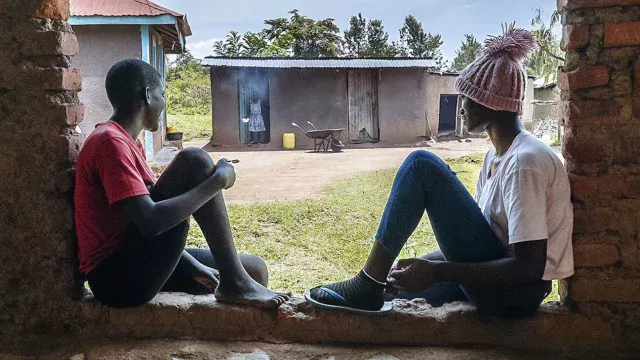
In the new documentary Free Money, directors Lauren DeFilippo and Sam Soko tell the story of how a well-meaning western non-profit, GiveDirectly, became the benefactors of Kogutu, a village in Kenya. Their idea was to provide every adult inhabitant with $22 a month, transferred directly to their phones. This, it was hoped, would be far more beneficial than investing in infrastructure. It would give recipients control of the cash and therefore of their destiny.
The film, sold by Dogwoof, had its European premiere earlier this month in IDFA’s Frontlight section. But as the two directors tell Business Doc Europe, the Kogutu scheme didn’t turn out quite as the western agency had hoped.
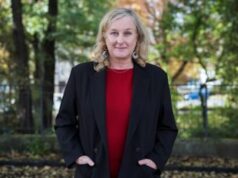
“We wanted both to show the people receiving the money (the people being “experimented on”) and also the people who are doing the experimenting,” DeFilippo explains why the documentary switches so frequently between rural Kenya and the sleek US offices of the affluent Silicon Valley backed social engineers.
Work on the documentary began in 2017 and the film world-premiered at TIFF 2022, although the overall experiment is due to last until 2031. “When we started the film, UBI was really a thing that was in some grim corners of the internet that you might read about,” she remembers how marginal and obscure the idea of free money used to seem. That quickly changed.
“It was really important to achieve that weave [between] inside the village world and the larger global context but, at the same time, to really get to know the characters who were living in this village and really get to identify with their experiences,” DeFilippo sums up how she and Soko tried to tell a big story with a very intimate core. “It was really walking a line between an issue-driven film and character-driven film – and we always wanted to prioritise the characters.”
Many viewers will regard the would-be western benefactors as being high-handed and out of touch with those they’re trying to help far away in Africa.
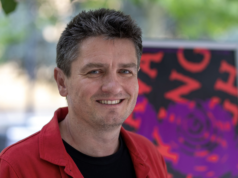
“There’s a lot of baggage when it comes to any non-profit coming and working in a place like Kenya,” Soko reflects. “That does carry and create some level of arrogance in terms of how an organisation works, especially when they’re coming with the premise ‘ we want to make a difference, we want to do good.’”
Inevitably, in this case, there were unintended consequences. No-one seemed to have realised how unfair and divisive the scheme might appear to those who don’t receive the money. The UBI enables some of the villagers to study in the big city or to provide their homes with fresh water. These are obvious positive results. However, that is not much consolation for the 18-year old Jael who misses out on the money because of a bureaucratic glitch.
The ever genial Michael Faye, boss of GiveDirectly, discovers that playing at god isn’t at all straightforward.
How have Faye and his team at GiveDirectly reacted to the film? “They definitely love the good parts – the parts that are actually showing the change and transformation which is something we experienced and saw as well,” Soko says. “However, there are larger questions when it comes to questions of giving cash and using cash…they’re learning and continue to learn to improve their engagement in the work they are doing,”
“They [GiveDirectly] are asking themselves some questions about their larger operations and how they’re presenting themselves in a place like Kenya as a result of the film,” DeFilippo agrees that Faye and his team are realising they don’t emerge in an entirely positive light from the documentary.
It remains to be seen whether GiveDirectly can transform the way it does business in future in places like Kenya. “If we make another film, we’ll find out,” Soko says. He believes this will happen. “In a sense, it’s a bit inevitable. We’ve created the relationships with the village and we’ve continued to stay in touch. As you know, five years is a long time to be part of a community. Even for ourselves, we are very curious to see what happens when the money stops coming…it’s something we will continue to pursue.”
The film has been shown in Kenya. “It’s so crazy that their response is, like, this [UBI) is such an amazing thing in terms of creating a difference…at the same, they’re super-sceptical about who is running the experiment. The people in Kogutu are benefiting directly but there is a general fear toward NGOs, a scepticism I would say,” Soko says of the village response to the doc.
Free Money sold out at all its recent screenings both in Toronto in September and at IDFA this month. Soko, though, has noticed a difference in the responses on each side of the Atlantic. The North American audiences are “generally not that sceptical of non-profits,” but European viewers tend to be far more questioning.
DeFilippo and Soko are both part of Insignia Films, the Emmy-award winning US documentary outfit behind such titles as Ailey (2021) and Citizen Hearst (2021).
Soko (co-founder of Kenyan production outfit LBx Africa) came to Free Money having made his Sundance prize-winning documentary Sofie (2020). DeFilippo has many credits to her name, among them her hit debut feature Red Heaven(2020), about preparation for a mission to Mars which she co-directed with Katherine Gorringe.
“We really were together through and through, and really shared most of the directing responsibilities throughout,” DeFilippo says of their collaboration on Free Money. As production went on, they were often thousands of miles apart. “For whatever reason we stumbled into this collaboration together but it has really been so positive. We lucked out in having a really similar sensibility.”
“In the last couple of years, I don’t think there’s a week when I have not spoken to Laura – and this includes the weeks for Christmas,” Soko says of their bond.
It is very likely that the duo will work again in the future. Getting the funding, though, may still be a challenge. After all, when it comes to documentary, you very rarely find free money on the table…